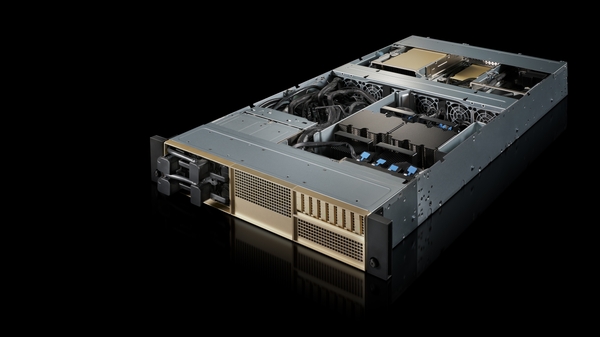
NVIDIA Vera Deployment: First AI Agent CPUs Reach Anthropic, OpenAI, and SpaceXAI
NVIDIA has officially commenced the distribution of its groundbreaking Vera CPU, the company's first processor specifically engineered for the era of AI agents. In a high-profile rollout, NVIDIA Vice President of Hyperscale and High-Performance Computing, Ian Buck, hand-delivered the initial units to three of the world's most prominent AI research organizations: Anthropic in San Francisco, OpenAI in Mission Bay, and SpaceXAI in Palo Alto. This initial delivery phase, which took place on Friday, was followed by a subsequent delivery to Oracle Cloud Infrastructure in Santa Clara on Monday. The arrival of Vera at these top-tier AI labs marks a significant milestone in computing architecture, signaling a shift toward hardware optimized for autonomous agentic workflows and high-performance AI environments.
Key Takeaways
- First Agent-Centric CPU: NVIDIA has delivered the Vera CPU, its first processor designed specifically to support the requirements of AI agents.
- Elite Distribution: The initial rollout targeted premier AI laboratories, including Anthropic, OpenAI, and SpaceXAI.
- Cloud Integration: Oracle Cloud Infrastructure became the first cloud provider to receive the new hardware following the lab deliveries.
- Executive Involvement: Ian Buck, NVIDIA’s VP of Hyperscale and High-Performance Computing, personally managed the hand-delivery of the processors.
- Strategic Locations: Deliveries were concentrated in the major AI hubs of San Francisco, Mission Bay, Palo Alto, and Santa Clara.
In-Depth Analysis
The Strategic Rollout to Elite AI Laboratories
The delivery of the NVIDIA Vera CPU represents a pivotal moment in the evolution of AI hardware. By selecting Anthropic, OpenAI, and SpaceXAI as the first recipients, NVIDIA is placing its most advanced agent-centric technology directly into the hands of the organizations currently defining the frontier of artificial intelligence. The geographical concentration of these deliveries—spanning San Francisco, Mission Bay, and Palo Alto—underscores the importance of the Silicon Valley ecosystem in the initial testing and implementation of next-generation computing architecture.
The fact that these units were hand-delivered by Ian Buck, NVIDIA’s Vice President of Hyperscale and High-Performance Computing, highlights the strategic significance of this product launch. This personal approach to delivery suggests a high level of collaboration between NVIDIA and these AI labs, ensuring that the first deployment of the Vera CPU is closely monitored and integrated into the most demanding AI development environments in the world.
The Emergence of Agent-Specific Architecture
The Vera CPU is distinguished as NVIDIA’s first CPU built specifically for agents. This categorization suggests a departure from general-purpose processing toward a more specialized architecture designed to handle the unique logic, memory, and throughput requirements of autonomous AI agents. While traditional CPUs are designed for a wide range of tasks, a CPU "built for agents" implies optimizations that facilitate the complex decision-making processes and iterative workflows characteristic of agentic AI.
The arrival of this hardware at Anthropic, OpenAI, and SpaceXAI indicates that these organizations are likely preparing to scale their agent-based models. The sequence of delivery—starting with research-heavy labs on Friday and moving to a major cloud infrastructure provider like Oracle on Monday—illustrates a clear path from research and development to broader cloud-based accessibility. This transition to Oracle Cloud Infrastructure in Santa Clara ensures that the capabilities of the Vera CPU will eventually be available to a wider range of developers and enterprises through high-performance cloud environments.
Industry Impact
The introduction of the Vera CPU is poised to redefine the hardware landscape for the AI industry. By creating a processor dedicated to AI agents, NVIDIA is addressing a specific bottleneck in the current computing paradigm where general-purpose CPUs may not provide the necessary efficiency for autonomous systems. This move reinforces NVIDIA's position as a leader in AI infrastructure, expanding its portfolio beyond GPUs into specialized CPU architecture that complements its existing ecosystem.
Furthermore, the adoption of Vera by industry leaders like OpenAI and Anthropic sets a new standard for AI development environments. As these labs integrate agent-specific hardware into their stacks, it may trigger a broader industry shift toward specialized silicon. The inclusion of Oracle Cloud Infrastructure in the initial rollout also suggests that the benefits of agent-centric computing will not be limited to private labs but will be integrated into the foundational infrastructure of the modern web, enabling the next generation of AI-driven applications and services.
Frequently Asked Questions
Question: What is the NVIDIA Vera CPU?
NVIDIA Vera is the company's first CPU specifically built for AI agents. It is designed to meet the specialized computing demands of autonomous AI systems and agentic workflows.
Question: Which organizations were the first to receive the Vera CPU?
The first units were delivered to Anthropic in San Francisco, OpenAI in Mission Bay, and SpaceXAI in Palo Alto on Friday, followed by Oracle Cloud Infrastructure in Santa Clara on Monday.
Question: Who oversaw the delivery of the new processors?
Ian Buck, NVIDIA’s Vice President of Hyperscale and High-Performance Computing, personally hand-delivered the first Vera CPUs to the recipient organizations.