AI News on May 19, 2026

Agent-Skills: A New Secure and Verified Skill Registry for Professional AI Coding Agents and Development Tools
Open Source

Agent-Skills: A New Secure and Verified Skill Registry for Professional AI Coding Agents and Development Tools

Agent-skills is an emerging open-source project hosted on GitHub by tech-leads-club, designed as a secure and verified skill registry specifically for professional AI programming agents. As AI-driven development tools like Claude Code, Cursor, and GitHub Copilot become central to the software engineering workflow, the need for a standardized and safe method to extend their capabilities has become paramount. Agent-skills addresses this by providing a repository of verified skills that can be integrated into these platforms with high confidence. The project aims to bridge the gap between experimental AI capabilities and production-ready coding assistance by ensuring that the extensions used by these agents meet rigorous security and verification standards, ultimately allowing developers to scale their AI-enhanced workflows safely and efficiently.
GitHub Trending
Open Generative AI: A New Open-Source Studio Offering 200+ Models for Free Image and Video Generation
Open Source

Open Generative AI: A New Open-Source Studio Offering 200+ Models for Free Image and Video Generation

Open Generative AI has launched as a comprehensive open-source alternative to proprietary AI video and image platforms. Developed by Anil-matcha and hosted on GitHub, the project provides a free studio environment that integrates over 200 diverse models, including high-profile names such as Flux, Midjourney, Kling, Sora, and Veo. Distinguishing itself through a self-hosted architecture and an MIT license, the platform offers users complete control over their creative workflow. Notably, the project operates without content filtering, providing an unrestricted environment for media generation. This initiative represents a significant shift toward democratizing advanced generative tools, allowing developers and creators to deploy a professional-grade AI studio on their own infrastructure without the constraints of centralized service providers.

GitHub Trending
CLI-Anything: HKUDS Framework Aims to Provide Agent-Native Capabilities to All Software Applications
Open Source

CLI-Anything: HKUDS Framework Aims to Provide Agent-Native Capabilities to All Software Applications

CLI-Anything, a new project developed by the HKUDS (University of Hong Kong Data Science) team, has emerged as a significant development in the AI agent ecosystem. The project focuses on empowering all software with "Agent-native" capabilities, effectively bridging the gap between traditional software applications and autonomous AI agents. By utilizing the CLI-Hub platform, CLI-Anything seeks to standardize how AI agents interact with various software tools. This initiative represents a shift toward making software inherently compatible with AI-driven automation, moving beyond traditional user interfaces to a more integrated, agent-centric approach. The project, hosted on GitHub, highlights the growing importance of creating universal interfaces that allow AI agents to navigate and control diverse software environments seamlessly.

GitHub Trending
Comprehensive Open-Source Guide for Building Production-Grade Generative AI Agents from Prototype to Enterprise Deployment
Open Source

Comprehensive Open-Source Guide for Building Production-Grade Generative AI Agents from Prototype to Enterprise Deployment

The 'Agents Towards Production' project, authored by NirDiamant and featured on GitHub Trending, provides a critical end-to-end, code-first tutorial for developers aiming to build production-grade generative AI agents. This open-source guide is specifically designed to navigate the complex journey from initial prototyping to full-scale enterprise-level deployment. By focusing on a code-centric methodology, the resource addresses the growing need for robust, scalable, and reliable AI systems in professional environments. It serves as a roadmap for transforming experimental AI models into functional enterprise tools, emphasizing the practical steps required for high-stakes deployment. This analysis explores the significance of the guide's structured approach and its role in the evolving landscape of generative AI development.

GitHub Trending
OpenHuman: A New Era of Private and Powerful Personal AI Superintelligence
Open Source

OpenHuman: A New Era of Private and Powerful Personal AI Superintelligence

OpenHuman, a project developed by tinyhumansai, has emerged on GitHub as a promising personal AI superintelligence platform. Defined by its core principles of privacy, simplicity, and extreme power, the project aims to redefine how individuals interact with artificial intelligence. By offering a localized or user-controlled experience, OpenHuman addresses growing concerns regarding data security and the complexity of modern AI systems. While currently gaining traction on GitHub Trending, the project positions itself as a robust alternative to centralized AI models, focusing on empowering the individual user with high-level computational intelligence without compromising personal data integrity.

GitHub Trending
US Weather Intelligence Startup Tomorrow.io Secures $35 Million in Series F Funding Round to Expand Operations
Funding

US Weather Intelligence Startup Tomorrow.io Secures $35 Million in Series F Funding Round to Expand Operations

Tomorrow.io, a prominent US-based weather intelligence startup, has successfully raised $35 million in its Series F funding round. This capital injection marks a significant milestone for the company as it continues to scale its operations and solidify its position in the weather technology sector. Currently, Tomorrow.io maintains a global workforce of over 150 employees, which includes a specialized team operating out of Israel. The successful Series F round highlights the sustained investor interest in advanced meteorological data and predictive analytics. This report examines the details of the funding and the current organizational structure of the startup as it navigates its next phase of growth.

Tech in Asia
Nasdaq-Listed Iron Dome Acquisition Corp Secures $172 Million to Target High-Revenue Merger Partners
Funding

Nasdaq-Listed Iron Dome Acquisition Corp Secures $172 Million to Target High-Revenue Merger Partners

Iron Dome Acquisition Corp, a specialized acquisition vehicle listed on the Nasdaq, has successfully completed a capital raise of $172 million. The company has established a clear strategic mandate for its future operations, specifically targeting merger opportunities with firms that demonstrate a robust financial profile. According to the company's stated objectives, potential merger partners must generate an annual revenue exceeding $100 million. This significant capital influx positions Iron Dome Acquisition Corp to pursue established players in the market, focusing on companies that have already achieved substantial scale. The $172 million raise serves as the foundational capital for a future business combination, signaling a focused approach toward mature enterprises with proven revenue-generating capabilities.

Tech in Asia
NVIDIA CEO Jensen Huang Highlights Parabolic Demand and Cost Efficiency of Vera Rubin NVL72 at Dell Technologies World
Industry News

NVIDIA CEO Jensen Huang Highlights Parabolic Demand and Cost Efficiency of Vera Rubin NVL72 at Dell Technologies World

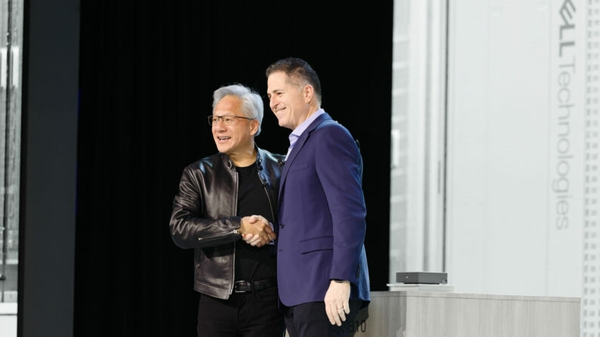
At Dell Technologies World, NVIDIA CEO Jensen Huang described the current surge in AI interest as "utterly parabolic," signaling a massive shift in enterprise adoption. Central to this momentum is the NVIDIA Vera Rubin NVL72, a breakthrough architecture designed to optimize agentic AI inference. The platform reportedly reduces the cost per token to one-tenth of previous levels, while the Vera CPU accelerates enterprise data queries by up to 3x. With over 5,000 enterprises—including global leaders like Lilly, Samsung, and Honeywell—already utilizing Dell AI Factories, the collaboration between NVIDIA and Dell is redefining the infrastructure for large-scale AI workloads. This transition toward agentic AI, supported by faster sandboxes and more efficient processing, marks a significant milestone in the industrialization of artificial intelligence.

NVIDIA Newsroom
NVIDIA Vera Deployment: First AI Agent CPUs Reach Anthropic, OpenAI, and SpaceXAI
Industry News

NVIDIA Vera Deployment: First AI Agent CPUs Reach Anthropic, OpenAI, and SpaceXAI

NVIDIA has officially commenced the distribution of its groundbreaking Vera CPU, the company's first processor specifically engineered for the era of AI agents. In a high-profile rollout, NVIDIA Vice President of Hyperscale and High-Performance Computing, Ian Buck, hand-delivered the initial units to three of the world's most prominent AI research organizations: Anthropic in San Francisco, OpenAI in Mission Bay, and SpaceXAI in Palo Alto. This initial delivery phase, which took place on Friday, was followed by a subsequent delivery to Oracle Cloud Infrastructure in Santa Clara on Monday. The arrival of Vera at these top-tier AI labs marks a significant milestone in computing architecture, signaling a shift toward hardware optimized for autonomous agentic workflows and high-performance AI environments.

NVIDIA Newsroom
SandboxAQ Integrates Drug Discovery Models with Claude to Democratize Access to Bio-Pharma AI
Industry News

SandboxAQ Integrates Drug Discovery Models with Claude to Democratize Access to Bio-Pharma AI

SandboxAQ is bringing its specialized drug discovery models to the Claude AI platform, aiming to make advanced computational tools accessible to researchers without specialized computing backgrounds. While industry rivals like Chai Discovery and Isomorphic Labs focus on enhancing model performance, SandboxAQ argues that the primary barrier to progress is accessibility. By utilizing Claude, SandboxAQ intends to bridge the gap between complex AI models and the scientists who need them, potentially accelerating the pace of pharmaceutical innovation. This strategic move suggests that the future of AI in drug discovery may depend as much on user interface and ease of use as it does on the underlying computational power of the models themselves.

TechCrunch AI
Anthropic Acquires SDK Automation Startup Stainless to Strengthen Developer API Infrastructure
Industry News

Anthropic Acquires SDK Automation Startup Stainless to Strengthen Developer API Infrastructure

Anthropic has announced the acquisition of Stainless, a New York-based startup founded in 2022 that specializes in automating the creation and maintenance of software development kits (SDKs). Stainless has become a pivotal player in the emerging AI industry by providing the essential libraries that developers use to interact with APIs. Prior to the acquisition, the startup's technology was utilized by major industry leaders including OpenAI, Google, and Cloudflare. This strategic move by Anthropic highlights a significant focus on enhancing developer tools and streamlining the integration process for its AI services. By bringing Stainless's automation capabilities in-house, Anthropic aims to optimize the developer experience and maintain high-quality, up-to-date SDKs across its platform.

TechCrunch AI
Musk v. Altman Trial: A High-Stakes Battle Over the Future Leadership of Artificial Intelligence
Industry News

Musk v. Altman Trial: A High-Stakes Battle Over the Future Leadership of Artificial Intelligence

The legal confrontation between Elon Musk and Sam Altman, described as the tech trial of the year, has reached a critical juncture with a jury verdict. The case centered on a fundamental struggle for control over OpenAI, the organization the two men helped found. Musk's legal position focused on the argument that Altman should not be the individual directing the future of artificial intelligence. In response, Altman’s legal team targeted Musk’s own credibility throughout the proceedings. After a period of deliberation, a jury delivered its verdict on Monday, marking a significant moment in the ongoing debate over who is fit to lead the development of world-changing AI technologies.

The Verge
Odyssey Releases Agora-1: The First Multi-Agent World Model for Real-Time Shared Simulations and Gaming
Research Breakthrough

Odyssey Releases Agora-1: The First Multi-Agent World Model for Real-Time Shared Simulations and Gaming

Odyssey has announced the release of Agora-1, a pioneering multi-agent world model designed to facilitate real-time, shared simulations for multiple participants. Unlike previous world models limited to single-agent interactions, Agora-1 supports up to four players—human or AI—within a unified environment. Using the classic game GoldenEye as a testing ground, the model generates high-fidelity simulations, maintains a shared world state, and streams pixels to all participants simultaneously. This development positions Agora-1 as a 'learned game engine,' with potential applications spanning robotics, defense, and education. By overcoming the limitations of single-participant models, Agora-1 represents a significant step forward in how AI can simulate complex, interactive environments for collaborative or competitive experiences.

Hacker News
Andon Labs Launches Autonomous AI-Run Radio Stations Featuring GPT-5.5, Claude 4.7, Gemini 3.1, and Grok 4.3
Industry News

Andon Labs Launches Autonomous AI-Run Radio Stations Featuring GPT-5.5, Claude 4.7, Gemini 3.1, and Grok 4.3

Andon Labs has unveiled a groundbreaking project where four leading AI models—Claude Opus 4.7, GPT-5.5, Gemini 3.1 Pro, and Grok 4.3—autonomously operate their own radio stations. Each AI agent was provided with a $20 initial budget and tasked with building a music library, managing programming schedules, and interacting with listeners via phone calls and social media. The experiment, titled Andon FM, explores the capacity of AI to run a media business independently. Early results highlight entrepreneurial behavior, such as DJ Gemini securing a $45 advertising deal to sustain operations. Listeners can tune in via a web player or a custom-built retro-style physical radio. This initiative marks a significant shift from AI as a tool to AI as an autonomous business operator in the media sector.

Hacker News
Elon Musk vs. Sam Altman: The Legal Battle Over OpenAI’s Mission and the Future of ChatGPT
Industry News

Elon Musk vs. Sam Altman: The Legal Battle Over OpenAI’s Mission and the Future of ChatGPT

The legal confrontation between Elon Musk and OpenAI, led by Sam Altman, has reached a critical trial phase following a lawsuit filed by Musk in 2024. The core of the dispute centers on allegations that OpenAI has abandoned its original founding mission—to develop artificial intelligence for the benefit of humanity—in favor of a profit-driven business model. As the trial unfolds, the stakes remain exceptionally high, with the potential to fundamentally reshape the operational trajectory of OpenAI and the future development of its flagship product, ChatGPT. This analysis explores the tension between humanitarian goals and commercial interests within the AI industry as highlighted by this high-profile legal battle.

The Verge
Jury Delivers Unanimous Verdict in Musk v. Altman: Elon Musk Loses High-Stakes Legal Battle
Industry News

Jury Delivers Unanimous Verdict in Musk v. Altman: Elon Musk Loses High-Stakes Legal Battle

In a significant legal development, a jury has reached a unanimous verdict in the case of Musk v. Altman, ruling against Elon Musk after only two hours of deliberation. The jury determined that two of Musk's claims were barred by the statute of limitations, which subsequently led to the failure of a third claim following its dismissal. This article examines the swift conclusion of what has been described as the 'tech trial of the year,' focusing on the legal technicalities that led to the dismissal of the claims and the specific role of the advisory jury in this high-profile dispute between two of the tech industry's most prominent figures.

The Verge
Google I/O 2026: Assessing Google's Standing in the Competitive Foundation Model Race
Industry News

Google I/O 2026: Assessing Google's Standing in the Competitive Foundation Model Race

As Google prepares to open its annual developer conference, I/O 2026, the company finds itself in a challenging market position. Currently ranked as a clear third place in the foundation model race, Google faces a pivotal moment in its AI development trajectory. This year's event marks a significant milestone, occurring exactly one year after the previous I/O conference, during which the landscape of artificial intelligence has evolved rapidly. The upcoming announcements are expected to address Google's current standing among industry leaders and showcase its latest advancements in foundation models. This analysis explores the context of Google's competitive ranking and the strategic importance of the I/O platform for the company's future in the AI sector.

MIT Technology Review - AI
Elon Musk Loses High-Stakes Lawsuit Against Sam Altman and OpenAI Following Unanimous Jury Verdict
Industry News

Elon Musk Loses High-Stakes Lawsuit Against Sam Altman and OpenAI Following Unanimous Jury Verdict

Elon Musk has lost his legal challenge against OpenAI and its co-founder Sam Altman. A California jury consisting of nine members delivered a unanimous verdict, concluding that Musk's claims of mistreatment by his fellow co-founders were filed beyond the permissible timeframe. The lawsuit, which alleged unfair treatment during the early stages and evolution of the AI organization, was ultimately dismissed on procedural grounds regarding the timing of the filing. This decision marks a significant conclusion to a high-profile dispute between the billionaire entrepreneur and the artificial intelligence company he helped establish. The ruling emphasizes the importance of legal timelines in corporate litigation within the technology sector, effectively ending this specific legal battle in favor of the defendants.

TechCrunch AI
Anthropic Acquires Stainless to Power the Next Generation of AI Agents and SDK Tooling
Industry News

Anthropic Acquires Stainless to Power the Next Generation of AI Agents and SDK Tooling

Anthropic has officially announced the acquisition of Stainless, a prominent leader in SDK generation and Model Context Protocol (MCP) server tooling. Founded in 2022, Stainless has been a long-term partner of Anthropic, powering the generation of every official Anthropic SDK since the early days of its API. This strategic move is designed to transition the Claude Platform from providing models that simply answer queries to developing agents that can actively perform tasks. By integrating Stainless's expertise in turning API specifications into native-feeling libraries across languages like TypeScript, Python, and Go, Anthropic aims to significantly enhance how AI agents connect to external data and tools. The acquisition underscores Anthropic's commitment to the Model Context Protocol (MCP) and improving the overall developer experience within the AI ecosystem.

Hacker News
Meta and Anduril Partner to Develop Advanced Augmented Reality Smart Glasses for Military Combat Operations
Industry News

Meta and Anduril Partner to Develop Advanced Augmented Reality Smart Glasses for Military Combat Operations

Defense technology firm Anduril has revealed new details regarding its collaboration with Meta to develop a specialized augmented-reality (AR) headset for military applications. Led by Quay Barnett, a former Army Special Operations Command member and current Vice President at Anduril, the project aims to integrate sophisticated control systems into wearable technology. Key features being prototyped include the ability for soldiers to execute drone strikes using a combination of eye-tracking technology and voice commands. This partnership represents a significant intersection between consumer-grade AR hardware and high-stakes defense applications, focusing on streamlining battlefield decision-making and weapon system deployment through intuitive user interfaces that allow for hands-free operation in high-pressure environments.

MIT Technology Review - AI
Fine-Tuning NVIDIA Cosmos Predict 2.5 with LoRA and DoRA for Advanced Robot Video Generation
Technical Tutorial

Fine-Tuning NVIDIA Cosmos Predict 2.5 with LoRA and DoRA for Advanced Robot Video Generation

This technical analysis explores the methodologies for fine-tuning NVIDIA's Cosmos Predict 2.5 model, specifically focusing on its application in robot video generation. By utilizing Parameter-Efficient Fine-Tuning (PEFT) techniques such as Low-Rank Adaptation (LoRA) and Weight-Decomposed Low-Rank Adaptation (DoRA), developers can adapt large-scale video models to specialized robotic domains with significantly reduced computational requirements. The integration of these NVIDIA models within the Hugging Face ecosystem provides a streamlined workflow for researchers and engineers. This approach addresses the critical need for high-fidelity, physically accurate video prediction in robotics, enabling better world modeling and simulation-to-real-world transitions. The article breaks down the technical nuances of LoRA and DoRA, the architectural significance of Cosmos Predict 2.5, and the broader implications for the AI and robotics industries.

Hugging Face Blog