AI News on August 20, 2026

Stripe Acquires OpenRouter: Moving Beyond 'The Singularity' to Practical AI Infrastructure
Industry News

Stripe Acquires OpenRouter: Moving Beyond 'The Singularity' to Practical AI Infrastructure

Stripe, the global payments giant, has officially acquired OpenRouter, a startup specializing in the routing of prompts across various artificial intelligence models. While Stripe's public justification for the acquisition centers on the philosophical concept of 'the singularity,' industry observers and the original report suggest a more grounded and potent motivation. This strategic move highlights a significant shift in the AI landscape, where infrastructure for model orchestration is becoming a critical asset for financial technology leaders. By integrating OpenRouter’s capabilities, Stripe positions itself at the center of AI model interoperability, moving beyond mere payment processing into the fundamental layer of how businesses interact with diverse AI ecosystems. The acquisition underscores the growing necessity for efficient prompt management and the strategic value of controlling the gateway between users and multiple AI providers.

TechCrunch AI
OpenAI and Anthropic Compete to Provide Superior Privacy Protections for Enterprise Data
Industry News

OpenAI and Anthropic Compete to Provide Superior Privacy Protections for Enterprise Data

A significant competition is emerging between AI industry leaders OpenAI and Anthropic. The two companies are currently vying to establish themselves as the primary provider of robust privacy protections for enterprise customer data. This rivalry highlights a strategic shift in the AI landscape, where the security and confidentiality of corporate information have become central to market leadership. As both firms attempt to outmaneuver each other, the focus remains on which entity can offer the most comprehensive safeguards for sensitive data, reflecting the growing demand for secure AI solutions within the business sector.

TechCrunch AI
Cognition CEO Refutes Claims of SpaceX Acquisition Attempt Amid Growing Enterprise AI Competition
Industry News

Cognition CEO Refutes Claims of SpaceX Acquisition Attempt Amid Growing Enterprise AI Competition

Cognition's CEO has officially denied reports suggesting that SpaceX attempted to acquire the AI coding startup. This development comes at a time when SpaceX is actively expanding its footprint in the artificial intelligence sector, having recently acquired the AI-powered code editor Cursor. The move highlights SpaceX's strategic push to compete with established AI giants like OpenAI and Anthropic. While the rumored acquisition of Cognition—known for its AI software engineering capabilities—would have signaled a massive consolidation in the coding assistant market, the denial clarifies the current independence of the startup. The situation underscores the intensifying race for enterprise AI dominance and the high stakes involved in securing top-tier AI technology to rival industry leaders.

TechCrunch AI
The Adoption-Acceptance Gap: Why Ubiquitous AI is Facing Growing Consumer Wariness
Industry News

The Adoption-Acceptance Gap: Why Ubiquitous AI is Facing Growing Consumer Wariness

Despite the rapid integration of artificial intelligence into daily digital experiences, a significant disconnect has emerged between the technology's ubiquity and its public approval. Recent observations indicate that as AI becomes increasingly unavoidable in the modern landscape, consumers are responding with heightened wariness rather than comfort. This trend challenges the long-held assumption in Silicon Valley that widespread adoption naturally facilitates social acceptance. The industry is now discovering that while users may be utilizing AI-driven tools—often due to a lack of alternatives—this usage does not equate to genuine trust or endorsement of the technology's role in society.

TechCrunch AI
Google Launches Dedicated Gemini Student Hub to Streamline Research, Flashcards, and Practice Quizzes for Back-to-School Season
Product Launch

Google Launches Dedicated Gemini Student Hub to Streamline Research, Flashcards, and Practice Quizzes for Back-to-School Season

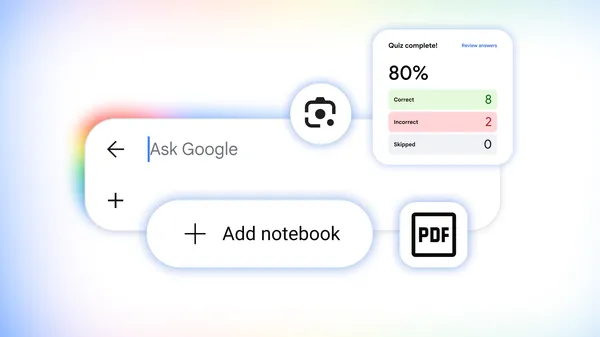
Google has announced the launch of a dedicated student hub within its Gemini AI platform, timed for the upcoming back-to-school season. This new feature serves as a centralized repository designed to assist students with various academic tasks. Key functionalities include a study notebook for organizing research, tools for creating flashcards, and the ability to generate practice quizzes. Furthermore, Google is enhancing the study notebook's capabilities by adding support for visual elements such as graphs and images. The hub also integrates organizational features, such as the ability to track and add test dates, positioning Gemini as a comprehensive digital study assistant for students looking to optimize their learning workflows.

The Verge
Industry News

OpenAI Reaffirms Zero Data Retention and Previews Private Safety Processing for Frontier Models

OpenAI has officially reaffirmed its commitment to Zero Data Retention (ZDR) for eligible API customers, ensuring that data processed through its frontier models is not stored. In addition to this privacy measure, the organization has introduced a preview of Private Safety Processing (PSP). This new feature is designed to integrate advanced AI safety mechanisms while strictly adhering to data privacy requirements. The announcement highlights OpenAI's dual focus on providing high-performance AI capabilities to developers and enterprises while addressing the critical need for data security and safety in the deployment of frontier AI technologies. These updates aim to provide a secure environment for users who require the highest levels of data confidentiality.

OpenAI Blog
Google Search Enhances Educational Support with Five New Learning and Test Prep Tools
Product Launch

Google Search Enhances Educational Support with Five New Learning and Test Prep Tools

Google has announced a significant update to its Search platform, introducing five new features designed to assist students in their academic journeys. According to the Google AI Blog, these tools are specifically engineered to help users study for their regular classes and prepare for standardized tests. By integrating advanced learning aids directly into the search interface, Google aims to streamline the educational process for students globally. This update reflects a broader trend of search engines evolving from simple information retrieval systems into comprehensive functional environments that support complex tasks like exam preparation and academic research.

Google AI Blog
Google Integrates New AI Study Tools into Search and Gemini to Capture Student Market and Compete with OpenAI
Product Launch

Google Integrates New AI Study Tools into Search and Gemini to Capture Student Market and Compete with OpenAI

Google has officially launched a suite of new AI-driven study tools integrated into both Google Search and its Gemini AI platform. This strategic move is specifically designed to position Gemini as the primary AI assistant for students during their learning and study processes. By enhancing these platforms with educational features, Google aims to strengthen its competitive edge against rivals like OpenAI in the rapidly evolving AI education sector. The update reflects Google's ongoing commitment to integrating advanced artificial intelligence into everyday academic workflows, providing students with more robust resources for information retrieval and comprehension. The launch marks a significant step in Google's effort to ensure its AI ecosystem remains the top choice for the next generation of learners.

TechCrunch AI
Unsloth Dynamic 3.0 GGUFs Released: Delivering 10% Better Accuracy for Local LLM Quantization
Product Launch

Unsloth Dynamic 3.0 GGUFs Released: Delivering 10% Better Accuracy for Local LLM Quantization

Unsloth has officially launched Dynamic v3.0, the latest iteration of its quantization technology, representing a significant leap over the previous v2.0 version. The highlight of this release is the Qwen3.8-27B Dynamic v3.0 quants, which achieve over 10% better top-1% accuracy compared to other providers at equivalent sizes. These new GGUF files are designed for broad compatibility, working seamlessly with llama.cpp and the newly introduced Unsloth Desktop—a local application for running and training models. By preserving higher model quality while maintaining compact sizes, Unsloth Dynamic 3.0 aims to redefine performance standards for local AI inference and deployment across various model architectures including Qwen, DeepSeek, and Meta Muse.

Hacker News
Stripe Acquires OpenRouter to Scale the World's Largest AI Model Marketplace and Gateway
Industry News

Stripe Acquires OpenRouter to Scale the World's Largest AI Model Marketplace and Gateway

OpenRouter, the industry-leading AI model gateway, has officially announced it is joining Stripe. Since its inception in early 2023, OpenRouter has experienced explosive growth, now processing over 10 trillion tokens per day across a library of 400+ AI models. Serving a community of 10 million developers, the platform provides a unified interface for model discovery, routing, and cost management. The acquisition by Stripe is intended to fuel the next wave of global economic growth through AI. Crucially, OpenRouter will continue to operate under its own name and roadmap, maintaining its model-agnostic stance and commitment to providing users with the best performance and price without bias toward specific providers or parent companies.

Hacker News
OpenAI Slows AI Development Pace to Prioritize Security and Safeguards Amid Competitive Pressures
Industry News

OpenAI Slows AI Development Pace to Prioritize Security and Safeguards Amid Competitive Pressures

OpenAI has officially announced a strategic deceleration in its artificial intelligence development, opting for a "voluntary pacing" approach to enhance security protocols and safety safeguards. This decision includes a specific two-week pause on certain development tracks. The move comes at a pivotal moment for the organization, which is currently navigating the complexities of a looming Initial Public Offering (IPO). Despite intense market pressure from major competitors such as Anthropic, as well as rising challenges from Chinese AI firms and the open-weight model sector, OpenAI has prioritized internal safety measures over rapid deployment. This shift signals a significant moment in the AI industry, where the leader is choosing to "hit the brakes" to ensure foundational security, potentially reshaping the balance between innovation speed and institutional responsibility.

The Verge
Meta AI Launches Dedicated Mac App Featuring Screen Sharing and System-Wide Dictation
Product Launch

Meta AI Launches Dedicated Mac App Featuring Screen Sharing and System-Wide Dictation

Meta has officially announced the launch of a dedicated Mac application for its AI chatbot, marking a significant expansion of its AI ecosystem into desktop environments. The new app introduces a window-sharing feature that allows the AI to analyze on-screen content to provide real-time suggestions, answer questions, and generate content based on the user's active workspace. Additionally, Meta AI on Mac supports system-wide dictation, enabling users to interact with the chatbot across all applications. This release positions Meta AI as a more integrated productivity tool, moving beyond a standard browser-based interface to offer deeper integration with the macOS operating system and user workflows.

The Verge
Google Pixel 11 Series and Pixel Watch 5 Reviews: Initial Hardware Analysis and Subscriber Engagement
Product Launch

Google Pixel 11 Series and Pixel Watch 5 Reviews: Initial Hardware Analysis and Subscriber Engagement

The official embargo has lifted for Google's latest hardware offerings, including the Pixel 11 series and the Pixel Watch 5. Initial assessments from professional reviewers describe the new hardware as high-quality, with four comprehensive reviews now available for public consumption. To enhance reader engagement, a subscriber-exclusive 'Ask Me Anything' (AMA) session has been launched, allowing for direct interaction with the editorial team. This release marks a significant milestone in Google's 2026 hardware roadmap, focusing on both smartphones and wearable technology. The positive early reception suggests a strong performance for the new lineup as it enters a competitive market, emphasizing Google's commitment to refining its hardware ecosystem and fostering community-driven tech journalism.

The Verge
Liquid AI Releases LFM2.5 Q4_0 Checkpoints via Quantization-Aware Distillation
Product Launch

Liquid AI Releases LFM2.5 Q4_0 Checkpoints via Quantization-Aware Distillation

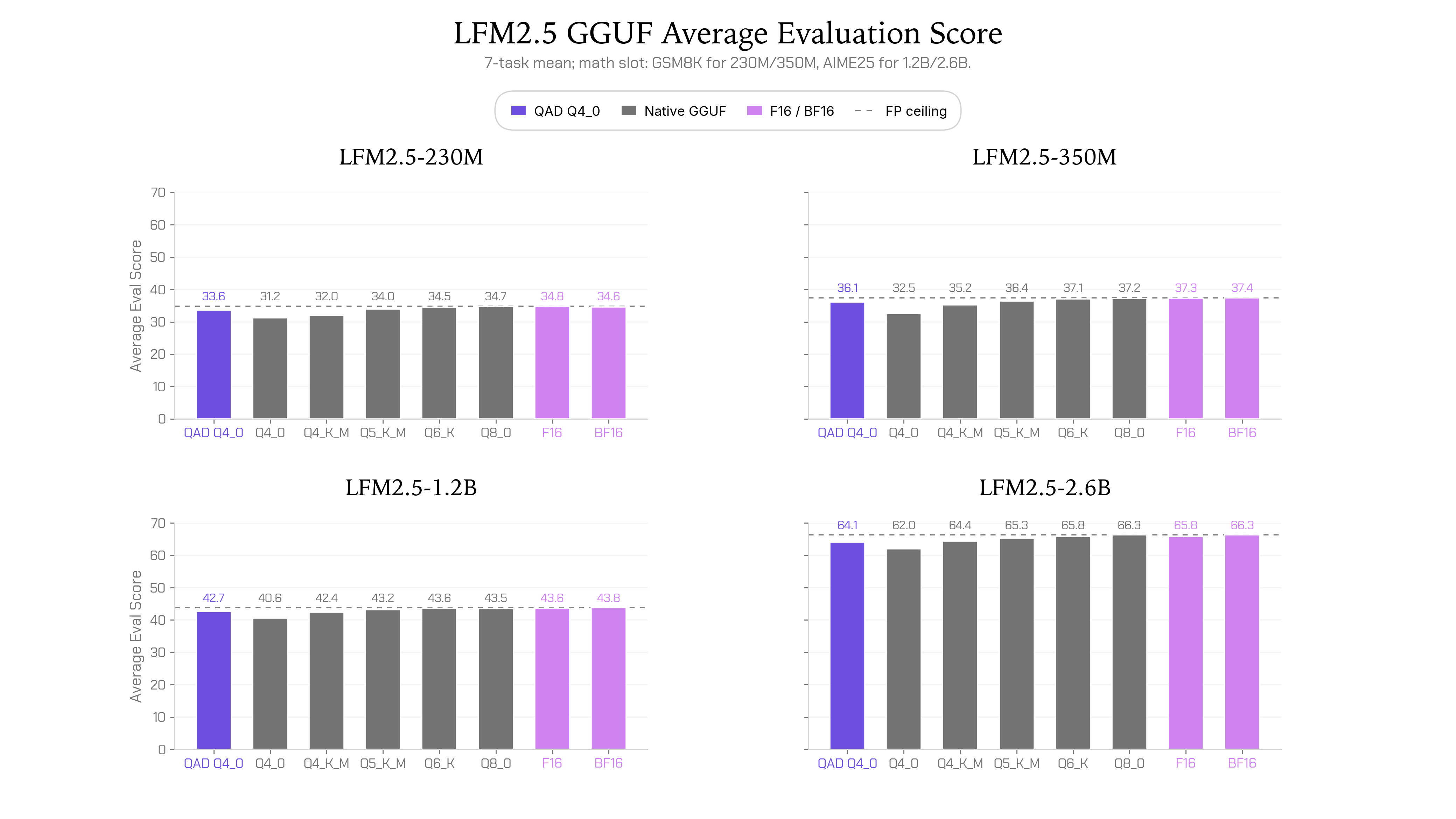
Liquid AI has announced the release of LFM2.5 Q4_0 checkpoints, a development achieved through the application of Quantization-Aware Distillation (QAD). This release, hosted on the Hugging Face platform, introduces optimized 4-bit quantized versions of the LFM2.5 model. By utilizing QAD, the developers aim to maintain the model's performance integrity while significantly reducing its memory footprint and computational requirements. The availability of these checkpoints marks a technical progression in the LFM2.5 ecosystem, focusing on the intersection of model compression and knowledge distillation to facilitate more efficient AI deployment.

Hugging Face Blog
Chery’s Robotics Subsidiary AiMOGA Explores Potential IPO Amid Deep Integration with Automotive Ecosystem
Industry News

Chery’s Robotics Subsidiary AiMOGA Explores Potential IPO Amid Deep Integration with Automotive Ecosystem

AiMOGA, a robotics unit established by the Chinese automaker Chery in January 2025, is reportedly preparing for a potential Initial Public Offering (IPO). Despite being a relatively new entity, AiMOGA is characterized by its deep integration into Chery’s existing corporate infrastructure. The subsidiary is closely linked to the parent company’s research and development (R&D) operations, its established supply chain, and its extensive dealership network. This strategic alignment suggests that AiMOGA is designed to leverage the industrial strengths of its parent company to accelerate its own development and market presence. The move toward an IPO indicates a significant step in Chery’s broader strategy to expand its technological footprint beyond traditional automotive manufacturing and into the burgeoning field of robotics, utilizing its existing resources to support the subsidiary's growth.

Tech in Asia
SK hynix Announces $28.6 Billion Share Buyback Program Amid Surging Global AI Demand
Industry News

SK hynix Announces $28.6 Billion Share Buyback Program Amid Surging Global AI Demand

SK hynix, a prominent leader in the semiconductor industry, has announced a massive share buyback program valued at $28.6 billion. This strategic financial move is directly attributed to the ongoing artificial intelligence boom, which has significantly driven up demand for the company's products. The buyback plan involves the repurchase of up to 24 million shares, representing approximately 3.4% of the company's total outstanding stock. This initiative underscores SK hynix's robust financial health and its commitment to returning value to shareholders during a period of unprecedented market growth. By leveraging the capital gains from the AI-driven surge, the company aims to optimize its equity structure and signal long-term confidence in the semiconductor sector's trajectory.

Tech in Asia
US Software Startup Temporal Eyes $500 Million Funding Round at a $12 Billion Valuation
Funding

US Software Startup Temporal Eyes $500 Million Funding Round at a $12 Billion Valuation

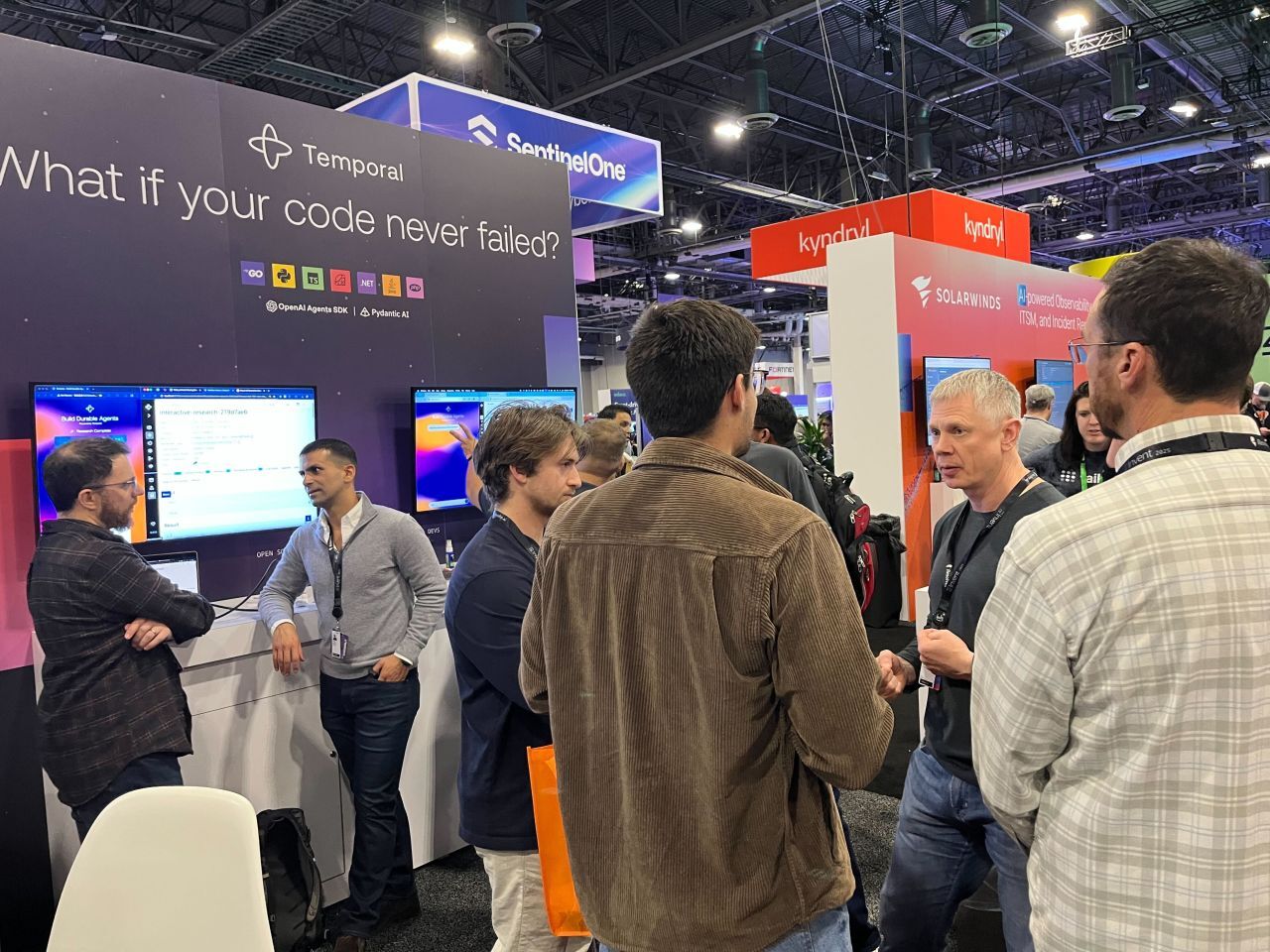
Temporal, a prominent US-based software startup, is reportedly seeking to raise $500 million in a new funding round that would value the company at $12 billion. This significant financial milestone highlights the company's growing influence in the software infrastructure sector. A critical factor in Temporal's market positioning is its relationship with OpenAI, which utilizes Temporal’s technology to manage and maintain complex, long-running systems. The proposed funding and valuation reflect a high level of investor confidence in the startup's ability to provide essential backend solutions for major AI players. This development underscores the increasing value of robust software systems capable of handling the intricate demands of modern, large-scale technological operations.

Tech in Asia
SpaceX-Owned Cursor Launches Origin Feature for Paid Users Amidst Competitive Shifts Against GitHub
Product Launch

SpaceX-Owned Cursor Launches Origin Feature for Paid Users Amidst Competitive Shifts Against GitHub

In a significant move within the software development industry, Cursor, the AI-powered code editor now under the ownership of SpaceX, has officially announced the launch of its new feature, Origin. This strategic release coincides with a period of reported instability for the industry leader, GitHub. According to the latest updates, Origin is being positioned as a premium offering, made available exclusively to Cursor users who are currently enrolled in any of the platform's paid subscription plans. The launch underscores SpaceX's expanding footprint in the developer tools market and highlights a shifting landscape where emerging AI-native tools are challenging established platforms during their moments of vulnerability. This development marks a pivotal point for Cursor as it seeks to convert its technological momentum into a sustainable, subscription-based business model.

Tech in Asia
Product Launch

Replit Democratizes Software Creation with Free Mode Powered by GPT-5.6 Luna

Replit has announced the launch of 'Free Mode,' a transformative feature powered by OpenAI's GPT-5.6 Luna model. This initiative is designed to remove the financial barriers associated with AI-driven development by eliminating token costs for users. By integrating the advanced capabilities of GPT-5.6 Luna, Replit enables individuals to convert their conceptual ideas into functional, working software seamlessly. This move marks a significant shift in the accessibility of software engineering tools, focusing on empowering a broader range of creators regardless of their technical background or budget. The announcement, shared via the OpenAI Blog, highlights a strategic collaboration aimed at streamlining the software creation process and fostering innovation through unrestricted access to high-performance language models within the Replit environment.

OpenAI Blog
Product Launch

Claude Watermark Remover: New Utility by Ofir Smolinsky Debuts on Product Hunt

On August 19, 2026, a new tool titled "Claude Watermark Remover" was officially launched on the product discovery platform Product Hunt. Developed by Ofir Smolinsky, the utility enters the market at a time of heightened discussion regarding AI-generated content and digital provenance. While the original listing provides a concise introduction to the tool, its emergence signifies a growing demand for software capable of managing or altering the identifiers associated with Claude, the AI model developed by Anthropic. This launch marks a notable addition to the ecosystem of third-party tools designed to refine AI outputs for various user requirements.

Product Hunt
Vois 2.0 Launch: Praney Behl Debuts Major Update on Product Hunt
Product Launch

Vois 2.0 Launch: Praney Behl Debuts Major Update on Product Hunt

Vois 2.0, a new iteration of the Vois platform, was officially launched on Product Hunt on August 19, 2026, by developer Praney Behl. This release marks a significant milestone in the product's lifecycle, transitioning to a major version 2.0. While the specific feature set was not detailed in the initial announcement, the launch on a premier platform like Product Hunt indicates a strategic move to engage with the early adopter community and gather feedback. As a version 2.0 release, it signifies a period of substantial development and refinement following its predecessor, positioning the tool for broader visibility within the tech ecosystem of 2026.

Product Hunt
AI-Memory: A Solution for Long-Term Memory and Cross-Provider Handovers in AI Agent CLIs
Open Source

AI-Memory: A Solution for Long-Term Memory and Cross-Provider Handovers in AI Agent CLIs

AI-Memory, a project by developer akitaonrails, introduces a specialized solution designed to provide long-term memory for AI agent programming Command Line Interfaces (CLIs). The project addresses a significant hurdle in the development of autonomous agents: the retention of context over extended periods and across different sessions. Furthermore, AI-Memory aims to facilitate the seamless handover of tasks and data between different AI agent providers. By offering a persistent memory layer, the tool enables developers to maintain continuity in complex workflows, ensuring that AI agents can leverage historical data and transition between various vendor ecosystems without losing critical operational context.

GitHub Trending
MoneyPrinterTurbo: Revolutionizing Short Video Creation with One-Click AI-Powered Automated Workflows
Open Source

MoneyPrinterTurbo: Revolutionizing Short Video Creation with One-Click AI-Powered Automated Workflows

MoneyPrinterTurbo is an innovative open-source tool designed to streamline the creation of high-definition short videos. By leveraging advanced AI large models and automated workflows, the project allows users to generate complete video content simply by providing a theme or specific keywords. This "one-stop" solution aims to bridge the gap between conceptual ideas and visual content, automating the complex steps typically involved in video production. As an emerging project on GitHub, it highlights the growing trend of integrating AI into creative workflows to enhance productivity and accessibility for content creators. The tool focuses on high-definition output, ensuring that the automated results are suitable for modern social media platforms and professional use cases, all while maintaining a user-friendly "one-click" interface.

GitHub Trending
Anthropic Cybersecurity Skills: A Comprehensive Framework of 817 Structured Capabilities for AI Agents and Developers
Open Source

Anthropic Cybersecurity Skills: A Comprehensive Framework of 817 Structured Capabilities for AI Agents and Developers

The "Anthropic-Cybersecurity-Skills" project, recently trending on GitHub, introduces a robust library of 817 structured cybersecurity skills tailored specifically for AI agents. Developed by contributor mukul975, this initiative maps these skills across six critical industry frameworks, including MITRE ATT&CK, NIST CSF 2.0, and MITRE ATLAS. By adhering to the agentskills.io standard, the repository ensures seamless integration with leading AI-driven development tools such as Claude Code, GitHub Copilot, and Cursor. This development marks a significant step in standardizing how AI agents interact with and defend against cybersecurity threats, providing a structured bridge between large language models and practical security operations across more than 20 supported platforms.

GitHub Trending
Volcengine Launches OpenViking: A Unified Self-Evolving Context Database for AI Agents
Open Source

Volcengine Launches OpenViking: A Unified Self-Evolving Context Database for AI Agents

Volcengine has introduced OpenViking, an open-source self-evolving context database specifically engineered for AI agents. This project aims to solve the fragmentation in agent development by unifying three core components: agent memory, knowledge through Retrieval-Augmented Generation (RAG), and operational skills. By consolidating these elements into a single, self-evolving framework, OpenViking provides a specialized infrastructure layer that allows AI agents to maintain long-term context and adapt their capabilities dynamically. Hosted on GitHub, the project represents a strategic move by Volcengine to provide the foundational data tools necessary for the next generation of autonomous and intelligent agentic workflows, focusing on the persistence and evolution of agent intelligence.

GitHub Trending
Munder-Difflin: Exploring the Rise of Local Multi-Agent Management Tools in the AI Ecosystem
Open Source

Munder-Difflin: Exploring the Rise of Local Multi-Agent Management Tools in the AI Ecosystem

Munder-Difflin, a new project developed by chaitanyagiri, has recently gained traction on GitHub Trending as a dedicated local multi-agent management tool. As the AI industry shifts from single-model interactions to complex, multi-agent workflows, the need for robust orchestration frameworks has become critical. Munder-Difflin addresses this by providing a localized environment for managing multiple autonomous agents, catering to the growing demand for privacy, reduced latency, and cost-effective AI development. While the project is in its early stages, its emergence highlights a significant trend toward decentralized AI management. This analysis examines the context of local multi-agent systems, the technical challenges of agent orchestration, and the broader implications for developers seeking to build sophisticated AI applications without relying on cloud-based proprietary platforms.

GitHub Trending