AI News on August 15, 2026

AI-Driven Security Advancements and the Potential for Law Enforcement to Go Dark in the Digital Age
Industry News

AI-Driven Security Advancements and the Potential for Law Enforcement to Go Dark in the Digital Age

Following the Usenix Security conference, a new concern has emerged regarding the intersection of artificial intelligence and cybersecurity. While AI is often viewed as a tool for potential threats, there is a growing worry that AI-driven advancements could make software "too secure." This shift poses a significant challenge for U.S. intelligence and law enforcement agencies, potentially leading to a "going dark" scenario where traditional surveillance and hacking capabilities are rendered obsolete. By examining the evolution of electronic surveillance—from the voice-call era of the early 2000s to the data-rich environment of modern smartphones—this analysis explores how AI-enhanced security might disrupt the current balance between law enforcement access and digital privacy, impacting both national security and the broader field of computer security.

Hacker News
Google Pixel 11 Exclusive Camera Looks Feature Aims to Eliminate the Traditional Smartphone Photography Aesthetic
Product Launch

Google Pixel 11 Exclusive Camera Looks Feature Aims to Eliminate the Traditional Smartphone Photography Aesthetic

Google has unveiled a significant update to its mobile photography suite with the introduction of "Camera Looks," a feature exclusive to the newly announced Pixel 11 series. Unlike standard software filters, Camera Looks operates by processing image data differently at the sensor level. This foundational change allows the device to produce images that move away from the typical, often over-processed "smartphone" look. One of the headline styles, "Digi," specifically mimics the aesthetic of early digital cameras. Despite the potential demand for these styles on older hardware, Google has confirmed that this sensor-level processing capability will remain a Pixel 11 exclusive, marking a clear hardware-software boundary for the company's latest flagship lineup.

The Verge
Universitas Gadjah Mada, Indosat, and NVIDIA Launch Indonesia’s First University-Based AI Technology Center
Industry News

Universitas Gadjah Mada, Indosat, and NVIDIA Launch Indonesia’s First University-Based AI Technology Center

Indonesia has officially inaugurated its first university-based artificial intelligence center, the UGM Indosat NVIDIA AI Technology Center (NVAITC), located at Universitas Gadjah Mada in Yogyakarta. This landmark initiative is a collaborative effort involving the Ministry of Communication and Digital Affairs (Komdigi), Indosat Ooredoo Hutchison, NVIDIA, and UGM. Established as part of the broader Indonesia’s AI Center of Excellence framework, the center is dedicated to developing local AI talent and securing the nation's digital future. By integrating industry-leading technology from NVIDIA and the telecommunications infrastructure of Indosat with UGM's academic environment, the NVAITC aims to foster innovation and provide a dedicated space for AI research and development within the Indonesian higher education system.

NVIDIA Newsroom
Google Updates Gemini and Flow to Allow Removal of Visible AI Watermarks from Media
Product Launch

Google Updates Gemini and Flow to Allow Removal of Visible AI Watermarks from Media

Google has introduced a significant update to its AI media generation tools, Gemini and Flow, allowing users to disable visible watermarks on their creations. By introducing a new "Media watermark" toggle in the settings, Google provides a way to remove the signature "sparkle" icon that typically appears in the bottom-right corner of AI-generated images, videos, and music. This move offers creators more control over the visual presentation of their digital assets. The update applies across Google's suite of generative tools, marking a shift in how the company handles the branding of AI-produced content while maintaining the core functionality of its generative platforms.

The Verge
Google Updates AI Generation Settings to Allow Removal of Visible Watermarks While Retaining Invisible Identifiers
Product Launch

Google Updates AI Generation Settings to Allow Removal of Visible Watermarks While Retaining Invisible Identifiers

Google has announced a significant update to its AI generation tools, granting users the ability to remove visible watermarks from their AI-generated content. This new setting provides users with greater control over the aesthetic presentation of AI media, allowing for cleaner outputs. However, the company emphasized that this change is strictly limited to the visible layer of the content. Disabling the visible watermark does not affect the invisible benchmarks or metadata embedded within the files. These invisible markers remain active and serve as the primary method for identifying and verifying AI-generated content, ensuring that transparency and provenance are maintained even when visual indicators are absent. This move reflects a balance between user flexibility and the technical requirements for AI content tracking.

TechCrunch AI
Meta Releases Glimmer AI Model as Mark Zuckerberg Advocates for Open Access to Artificial Intelligence
Industry News

Meta Releases Glimmer AI Model as Mark Zuckerberg Advocates for Open Access to Artificial Intelligence

Meta has officially released Glimmer, a new open-weight AI model designed to be downloaded and executed on personal hardware. This launch represents a strategic move toward decentralized AI, as highlighted in a concurrent letter from CEO Mark Zuckerberg. In his message, Zuckerberg argues that artificial intelligence should be "for everyone" rather than being monopolized by a small group of elite laboratories. However, the release also underscores a dual-track strategy at Meta: while Glimmer is open to the public, the company’s more advanced and powerful model, Muse Spark, remains restricted behind proprietary APIs. This development highlights the ongoing industry debate regarding the balance between open-source contributions and the retention of high-performance proprietary technology.

TechCrunch AI
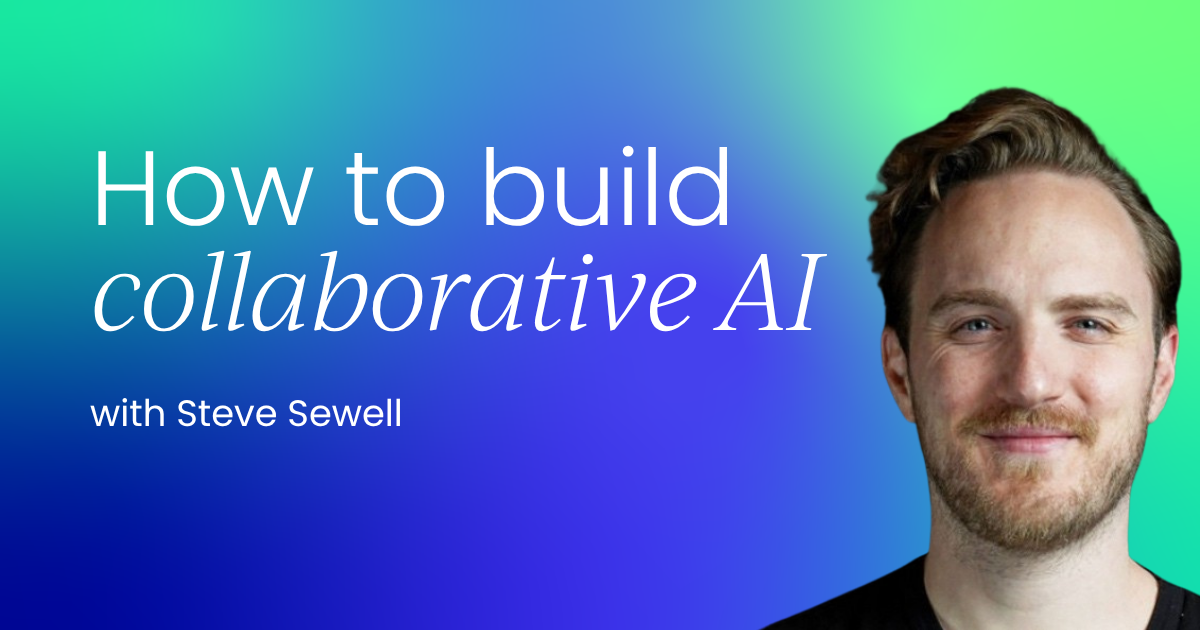
Building AI in the Age of Collaborative Coding: Insights from Builder.io CEO Steve Sewell
Industry News

Building AI in the Age of Collaborative Coding: Insights from Builder.io CEO Steve Sewell

Steve Sewell, the co-founder and CEO of Builder.io, challenges the current approach many development teams are taking toward AI integration. While AI adoption is high, Sewell argues that most teams are failing to capture its true potential by treating it as a simple productivity tool rather than a collaborative partner. The core of the issue lies in the traditional, fragmented workflow between design and development. By shifting toward 'collaborative coding' and AI-native workflows, teams can bridge the design-to-code gap, moving beyond basic autocomplete features to a more integrated, visual development process. This analysis explores Sewell's perspective on why the industry must rethink its AI strategy to achieve meaningful gains in software delivery and innovation.

AI Accelerator Institute
Qwen 3.8 27B Release: Advancing AI Democratization Through Open Source and Open Science
Open Source

Qwen 3.8 27B Release: Advancing AI Democratization Through Open Source and Open Science

The release of Qwen 3.8 27B marks a pivotal moment in the ongoing effort to democratize artificial intelligence. By making this 27-billion parameter model available through open source and open science initiatives, the project aims to lower the barriers to entry for advanced AI research and application. Hosted on Hugging Face, the Qwen 3.8 27B model (specifically the FP8 version) represents a commitment to transparency and community-driven innovation. This move is designed to empower developers and researchers worldwide, ensuring that the benefits of high-level AI technology are not restricted to a few large entities, but are accessible to the broader scientific community for further advancement and exploration.

Hacker News
Kog Challenges Industry Norms by Optimizing GPU Inference for Agentic AI Workflows
Industry News

Kog Challenges Industry Norms by Optimizing GPU Inference for Agentic AI Workflows

French startup Kog is challenging the prevailing industry belief that Graphics Processing Units (GPUs) are inherently inefficient for agentic AI workflows. According to the company, the notion that GPUs are poorly suited for the complex, iterative demands of AI agents is a misconception. Kog is focusing on "going deeper" into the technical stack to extract significantly more inference performance from existing GPU hardware. This strategic shift suggests that through specialized optimization, current hardware infrastructure can meet the high-concurrency and low-latency requirements of autonomous agents, potentially reshaping how developers approach AI hardware utilization and inference efficiency in the evolving agentic landscape.

TechCrunch AI
Hyperscalers Face Financial Risks as Natural Gas Prices Forecast to Triple in U.S.
Industry News

Hyperscalers Face Financial Risks as Natural Gas Prices Forecast to Triple in U.S.

A recent forecast indicates that natural gas prices in various regions of the United States could potentially triple, creating a significant financial challenge for hyperscalers. These large-scale operators, who have increasingly relied on natural gas to fuel their expanding AI data centers, may soon be confronted with massive operational bills. The report suggests that the strategic decision to embrace natural gas as a primary power source for AI infrastructure could lead to significant regret if these price projections prove accurate. As the energy demands of artificial intelligence continue to scale, the volatility of natural gas markets poses a direct threat to the cost-efficiency of data center operations, potentially forcing a reevaluation of long-term energy strategies within the tech industry.

TechCrunch AI
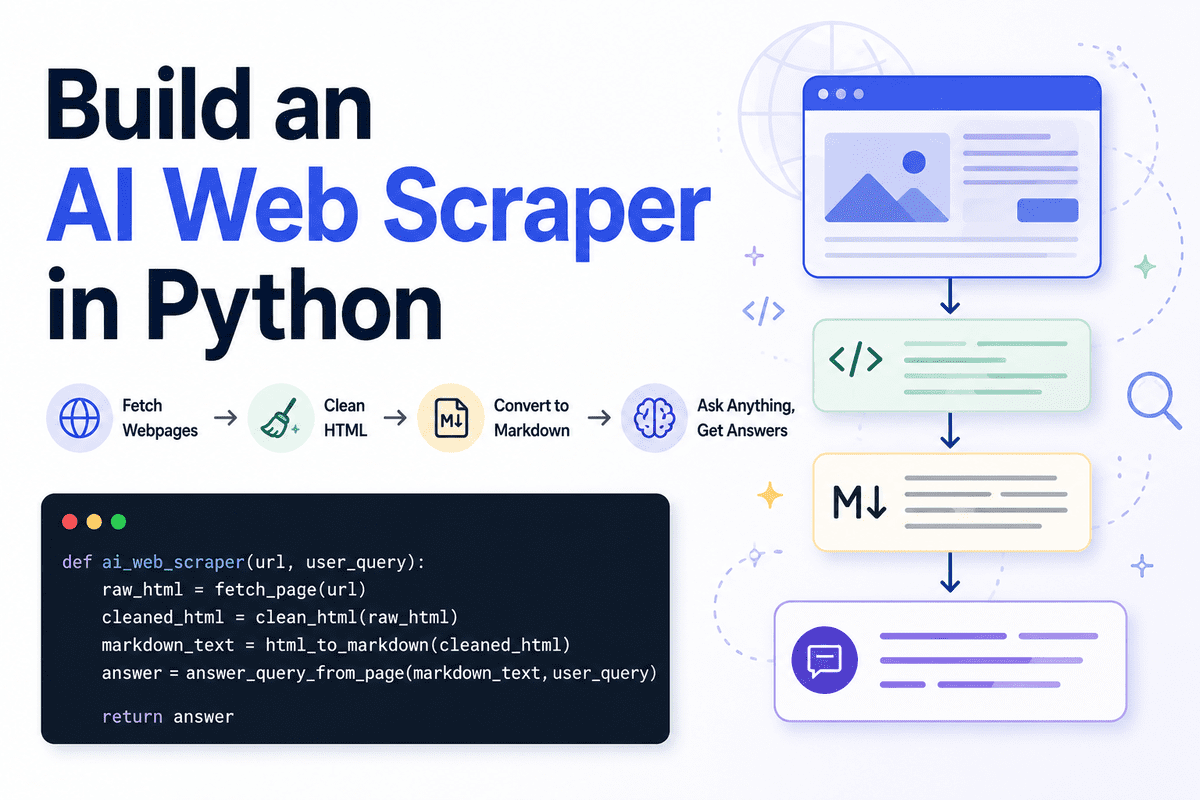
How to Build a Simple AI Web Scraper with Python for Efficient LLM-Powered QA Engines
Technical Tutorial

How to Build a Simple AI Web Scraper with Python for Efficient LLM-Powered QA Engines

This technical guide, authored by Abid Ali Awan for KDnuggets, outlines a streamlined approach to building an AI-powered web scraper using Python. The methodology focuses on transforming raw webpages into efficient, lightweight Question-and-Answer (QA) engines. By implementing a pipeline that cleans HTML and converts content into Markdown, the process ensures that Large Language Models (LLMs) receive structured, relevant data. This optimization is critical for reducing token usage and improving the accuracy of the AI's responses. The article provides a conceptual framework for developers to move beyond traditional scraping toward intelligent data extraction that prioritizes focused answers and cost-effective model interaction, making it a vital resource for those integrating real-time web data into AI applications.

KDnuggets
Meta Launches Glimmer Open-Weight AI Model as Mark Zuckerberg Advocates for Decentralized Technology
Industry News

Meta Launches Glimmer Open-Weight AI Model as Mark Zuckerberg Advocates for Decentralized Technology

Meta has officially released Glimmer, a new open-weight AI model designed to be downloaded and executed on personal hardware. This move marks a significant step in Meta's strategy to democratize AI, contrasting with its more powerful Muse Spark model, which remains restricted behind proprietary APIs. The release was accompanied by a public letter from CEO Mark Zuckerberg, who argued that AI should be accessible to everyone rather than being controlled by a small group of elite laboratories. Despite this push for openness, the company is navigating a complex landscape, highlighted by a $250 million deal that has reportedly gone wrong. This analysis explores the implications of Meta's dual-model strategy and Zuckerberg's vision for the future of the AI industry.

TechCrunch AI
5 Fun Agentic AI Papers to Read: A Curated Selection by KDnuggets Technical Editor
Industry News

5 Fun Agentic AI Papers to Read: A Curated Selection by KDnuggets Technical Editor

On August 14, 2026, KDnuggets released a highly anticipated recommendation list titled '5 Fun Agentic AI Papers to Read,' authored by technical editor Kanwal Mehreen. The article identifies five specific research papers as essential reading for anyone looking to master the field of AI agents. This curated selection comes at a pivotal moment in the industry, as the focus shifts from static language models to autonomous, agentic systems. By highlighting 'fun' yet foundational papers, Mehreen provides a unique entry point into complex topics like reasoning, tool use, and autonomous behavior. This analysis explores the significance of this curated list, the authority of the source, and the broader implications for the AI research community as it navigates the transition toward more interactive and agentic artificial intelligence.

KDnuggets
MSI Claw 8 EX AI Plus Analysis: Why This Intel Panther Lake Handheld is a Major Milestone
Product Launch

MSI Claw 8 EX AI Plus Analysis: Why This Intel Panther Lake Handheld is a Major Milestone

The MSI Claw 8 EX AI Plus marks a significant evolution in the portable gaming PC market, being hailed as the most important handheld release since the Steam Deck. Featuring Intel's next-generation Panther Lake chip and a refined design, the device represents a major step forward for MSI's hardware lineup. Despite its status as a top-tier performer that outshines many competitors in daily use, critical perspectives suggest that being the 'most powerful' does not automatically make it a definitive purchase for every consumer. This analysis explores the balance between MSI's technical achievements with the Panther Lake architecture and the practical considerations that influence its market positioning.

The Verge
Industry News

Why Opus 5 User Experience Declines Despite Higher Benchmarks: An Analysis of AI Coding Agent Behavior

Recent feedback from the developer community suggests that Anthropic's Opus 5, while technically more capable and benchmark-competitive with models like Fable, represents a functional downgrade in user experience compared to Opus 4.7 and 4.8. Users report that Opus 5 requires significant "babysitting" because it makes bold assumptions and reinterprets plans without seeking clarification. This shift is theorized to be a result of two primary forces: the pursuit of self-improving AI for AGI bootstrapping and the industry-wide pressure to excel in benchmarks. Because benchmarks typically reward self-contained, definitive answers and penalize models that ask for hints or clarification, the resulting models lose the communicative nuances essential for handling the inherent ambiguity of real-world software development tasks.

Hacker News
SK Hynix R&D Spending Surges 73% in First Half of 2026 Driven by Rising AI Demand
Industry News

SK Hynix R&D Spending Surges 73% in First Half of 2026 Driven by Rising AI Demand

SK Hynix has reported a significant increase in its financial commitment to innovation, with research and development spending jumping by 73% during the first half of 2026. According to the company's half-year report released on August 14, 2026, R&D expenditure nearly doubled to reach 6 trillion won, equivalent to approximately US$4.23 billion. This substantial investment highlights the company's strategic focus on meeting the intensifying demand for artificial intelligence technologies. The data, provided by the company's latest financial disclosures, underscores the rapid scaling of resources required to maintain competitiveness in the evolving semiconductor landscape as AI-driven requirements continue to shape industry priorities.

Tech in Asia
Uber Co-Founder Travis Kalanick: Why We Must Treat Buildings Like Computers to Unlock AI Potential
Industry News

Uber Co-Founder Travis Kalanick: Why We Must Treat Buildings Like Computers to Unlock AI Potential

Travis Kalanick, the co-founder of Uber and current CEO of Atoms, has introduced a provocative perspective on the intersection of artificial intelligence and physical infrastructure. Kalanick argues that for AI to reach its full potential within physical industries, the traditional view of real estate must evolve. He suggests that buildings should be treated with the same logic and flexibility as computers. According to Kalanick, the primary constraints currently hindering AI integration in the physical world are rooted in real estate limitations and the complexities of asset ownership. By reframing buildings as computational entities, Kalanick highlights a critical shift necessary for industrial evolution, emphasizing that the way we own and manage physical space will ultimately determine the scale and efficacy of AI applications in the tangible economy.

Tech in Asia
Unitree Set for Shanghai Market Debut Following Landmark $905 Million Initial Public Offering
Industry News

Unitree Set for Shanghai Market Debut Following Landmark $905 Million Initial Public Offering

Unitree is preparing for its official debut on the Shanghai stock exchange after successfully completing a $905 million Initial Public Offering (IPO). The company's financial milestone is accompanied by strong commercial performance data, revealing that Unitree has shipped more than 5,500 humanoid robots to date. This shipment volume places the company in a leading position within the competitive robotics landscape, specifically surpassing its Shanghai-based competitor, Agibot. Recent figures show that Agibot has sold 5,168 units, trailing Unitree’s shipment count. This move to the public market and the reported sales figures underscore the accelerating commercialization and scale of the humanoid robotics industry as major players vie for market dominance through both capital acquisition and manufacturing output.

Tech in Asia
Zhipu AI Unveils GLM-5.3: Delivering a 50% Surge in Programming Capabilities
Product Launch

Zhipu AI Unveils GLM-5.3: Delivering a 50% Surge in Programming Capabilities

Chinese AI startup Zhipu has announced the release of its latest model, GLM-5.3, marking a significant advancement in its Generative Language Model series. The core highlight of this update is a reported 50% improvement in programming capabilities compared to the previous GLM-5.2 version. These findings are based on Zhipu's proprietary internal subjective evaluation. The release underscores Zhipu's commitment to rapid iterative development and technical optimization, specifically targeting the coding and development sector. As the AI landscape becomes increasingly competitive, this substantial performance jump positions GLM-5.3 as a potent tool for technical tasks, reflecting the startup's focus on enhancing logic and syntax-related model performance.

Tech in Asia
Macro: Revolutionizing Team Collaboration Through a Unified AI-Powered Workspace
Product Launch

Macro: Revolutionizing Team Collaboration Through a Unified AI-Powered Workspace

Macro has introduced a comprehensive unified workspace designed to consolidate the fragmented landscape of modern team productivity tools. By integrating essential functions such as email, chat, documentation, tasks, agents, calls, and CRM into a single platform, Macro aims to streamline workflows and reduce context switching. The platform's defining feature is its "shared AI memory," which utilizes a unique @linking mechanism to connect disparate data points across different modules. This architectural approach ensures that information from a client call or an email thread is instantly accessible and contextualized within project tasks or CRM entries. As teams increasingly seek efficiency through consolidation, Macro’s AI-centric integration offers a glimpse into the future of synchronized digital work environments, where communication and operational data coexist within a single, intelligent memory layer.

GitHub Trending
Semantica: Introducing Graph-Native Infrastructure for Contextual and Accountable AI Systems
Open Source

Semantica: Introducing Graph-Native Infrastructure for Contextual and Accountable AI Systems

Semantica-agi has unveiled Semantica, a pioneering graph-native infrastructure designed specifically to address the growing needs for context and accountability in artificial intelligence. As the AI industry shifts toward more complex reasoning and autonomous agents, the limitations of traditional data structures have become apparent. Semantica aims to bridge this gap by providing a foundation that prioritizes the relational nature of information. By focusing on a graph-native approach, the project seeks to enable AI systems that are not only more aware of their operational context but also more transparent and accountable in their decision-making processes. This development marks a significant step in the evolution of AI infrastructure, moving away from flat data processing toward a more interconnected and traceable model of machine intelligence.

GitHub Trending
FluidVoice Launches as High-Speed macOS Dictation Tool Featuring On-Device STT and Custom AI Models
Product Launch

FluidVoice Launches as High-Speed macOS Dictation Tool Featuring On-Device STT and Custom AI Models

FluidVoice, a new dictation application developed by altic-dev, has launched on macOS, positioning itself as the fastest solution in its category. The application utilizes on-device Speech-to-Text (STT) technology combined with custom-trained AI-enhanced models to provide a high-performance user experience. Designed as a local alternative to Wispr Flow, FluidVoice emphasizes privacy and speed by processing data directly on the user's hardware. While currently available for macOS users, the developer has announced that waitlists for Windows and iOS versions are now open, with a Linux release planned for the near future. This launch highlights a growing trend toward localized AI productivity tools that reduce reliance on cloud-based processing.

GitHub Trending
Unsloth Launches Local UI for Training and Running Next-Gen Models Including Qwen3.8 and DeepSeek-V4
Product Launch

Unsloth Launches Local UI for Training and Running Next-Gen Models Including Qwen3.8 and DeepSeek-V4

Unsloth has introduced a specialized local user interface designed to streamline the training and execution of advanced Large Language Models (LLMs) and Diffusion Models. This new tool provides a unified environment for high-performance models such as Qwen3.8, Kimi K3, MiniMax-H3, Gemma 4, and DeepSeek-V4. Notably, the platform also extends its capabilities to image generation by supporting the FLUX diffusion model. By enabling both inference and training locally, Unsloth offers developers a robust alternative to cloud-based development, focusing on accessibility and efficiency for the latest iterations of open-weight and proprietary-derived architectures. This release marks a significant step in local AI orchestration, bringing sophisticated fine-tuning and deployment tools directly to the user's hardware.

GitHub Trending
Needle 2: The Ultra-Compact 14MB Base Model Designed for Wearables and Micro-Devices
Product Launch

Needle 2: The Ultra-Compact 14MB Base Model Designed for Wearables and Micro-Devices

Cactus-compute has unveiled Needle 2, a remarkably efficient 14MB base model specifically engineered for deployment on micro-devices. This ultra-lightweight model is designed to bring foundational AI capabilities to hardware with significant resource constraints, including smartphones, wearable technology, smart home systems, and robotics. By maintaining a footprint of only 14MB, Needle 2 addresses the critical challenge of running sophisticated AI locally on the edge, potentially reducing the reliance on cloud-based processing for small-scale intelligent devices. This release represents a significant milestone for the TinyML ecosystem, offering a specialized solution for developers working within the strict memory and power limitations of portable and embedded hardware.

GitHub Trending
New Open-Source Diagram Design Library Offers 29 High-Quality Editorial Templates Specifically Optimized for Claude Code Integration
Product Launch

New Open-Source Diagram Design Library Offers 29 High-Quality Editorial Templates Specifically Optimized for Claude Code Integration

Cathryn Lavery has introduced 'diagram-design,' a specialized repository featuring 29 editorial diagram types tailored for Claude Code. This project addresses the aesthetic limitations of standard AI-generated visuals by providing standalone HTML and SVG files that bypass the common 'low-quality' appearance of tools like Mermaid. By focusing on clean, shadow-free designs that professional designers approve of, the library enables developers to integrate sophisticated visual communication directly into their AI-assisted workflows. The release marks a significant step in improving the visual output of coding assistants, moving away from generic automated charts toward polished, editorial-grade graphics that maintain high standards of clarity and professional presentation.

GitHub Trending
Anthropic Launches Public Agent Skills Repository for Claude to Standardize AI Agent Capabilities
Open Source

Anthropic Launches Public Agent Skills Repository for Claude to Standardize AI Agent Capabilities

Anthropic has officially released a public repository titled "skills," specifically designed to house Agent Skills implemented for its AI model, Claude. This repository serves as a foundational resource for developers and researchers, providing a transparent look at how functional capabilities are structured for AI agents. Central to this release is the alignment with the "Agent Skills" standard, a framework detailed at agentskills.io. By making these implementations public, Anthropic is contributing to the broader effort of standardizing how AI agents interact with tools and execute complex tasks. The repository acts as a bridge between theoretical standards and practical, model-specific applications, highlighting a significant step toward interoperability and transparency in the development of agentic AI systems.

GitHub Trending
Product Launch

Theos[RFM]: Michael Martinez Launches New Remote Facility Manager on Product Hunt

On August 14, 2026, developer Michael Martinez officially introduced Theos[RFM], a specialized Remote Facility Manager tool, on the popular product discovery platform Product Hunt. The launch marks a significant entry into the facility management software niche, focusing on remote operational capabilities. While specific technical specifications were not detailed in the initial announcement, the branding of Theos[RFM] suggests a streamlined approach to managing physical infrastructure and facilities from a distance. As a product debut on Product Hunt, it aims to capture the attention of early adopters and industry professionals seeking modern solutions for facility oversight. This launch reflects the ongoing digital transformation within the facility management sector, emphasizing the shift toward remote-first management tools in an increasingly decentralized professional landscape.

Product Hunt
Product Launch

ChordViz Launch: Charles-Antoine Pouliot Debuts New Visualization Project on Product Hunt

On August 14, 2026, developer Charles-Antoine Pouliot officially introduced ChordViz to the global tech community via Product Hunt. While the initial launch announcement provides a concise overview, it marks a significant entry into the digital product marketplace. ChordViz, as the name suggests, appears to focus on the intersection of structural or musical 'chords' and data visualization. This launch highlights the ongoing trend of independent developers utilizing discovery platforms to debut specialized utility tools. Although specific technical specifications and feature sets were not detailed in the primary source, the project's arrival on Product Hunt signifies its transition from development to public availability, inviting early adopters to explore its visualization capabilities.

Product Hunt