
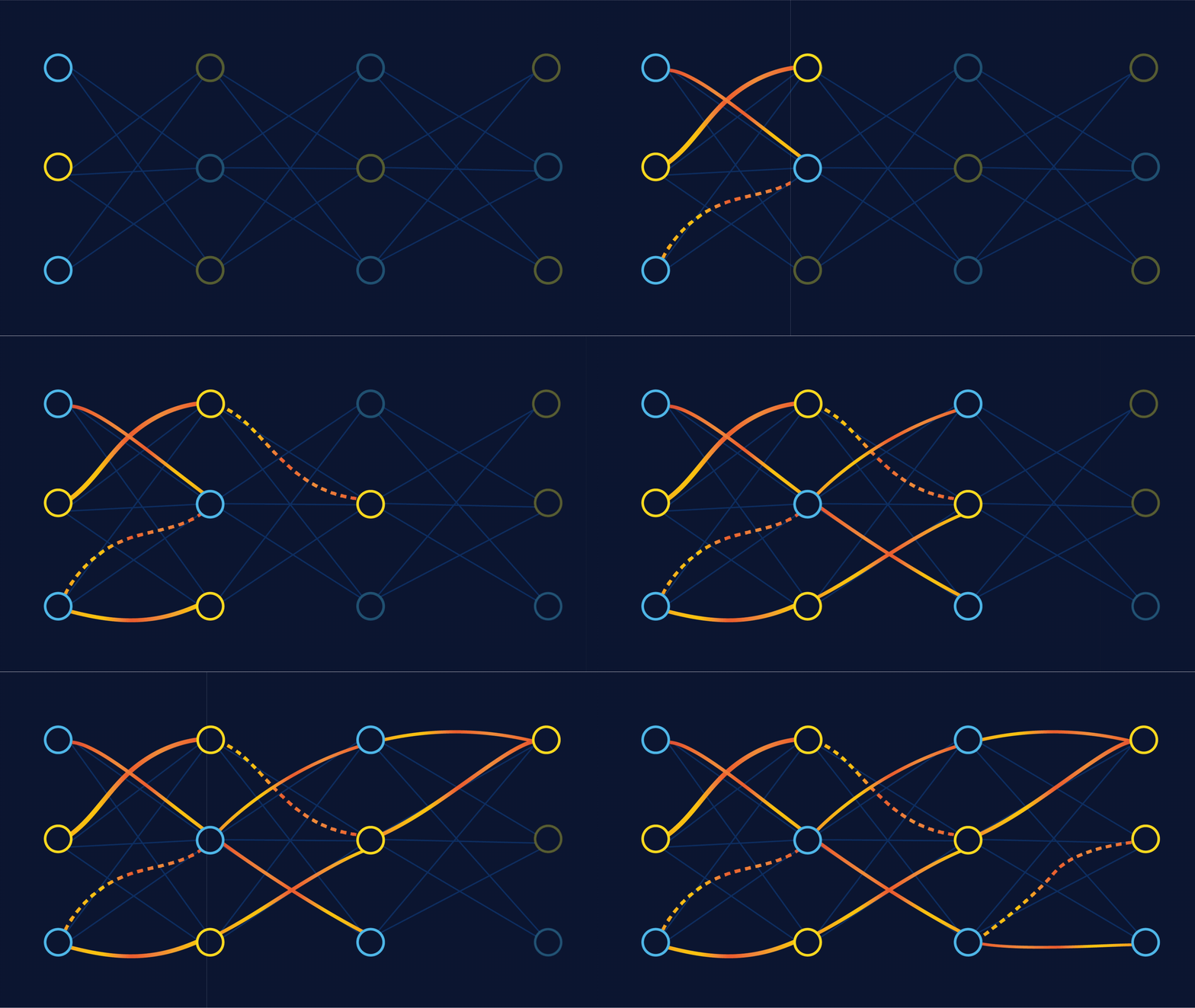
Supercharging Transformer Residual Connections: Insights from Google Research
Google Research blog presents 'Supercharging transformer residual connections', exploring advanced algorithms and theory in machine learning models. This overview highlights developments in optimizing transformer architectures through improved residual connections, published on November 23, 2026.
Key Takeaways
- Focuses on algorithms and theory related to transformer residual connections.
- Published by Google Research on November 23, 2026.
- Explores ways to supercharge and optimize transformer architecture foundations.
In-Depth Analysis
Advancing Transformer Architectures
Google Research has released new insights focusing on transformer residual connections under their algorithms and theory updates. Residual connections are a critical component of transformer models, enabling stable training and gradient flow through deep neural networks. By supercharging these connections, researchers look at ways to enhance the overall efficiency and capability of modern machine learning models.
Theoretical Foundations and Algorithms
The update bridges practical implementation with foundational theory, aiming to address inherent bottlenecks in standard transformer architectures. Understanding the theoretical underpinnings of residual streams allows for better scaling properties and performance enhancements across various AI applications.
Industry Impact
Optimizations to transformer residual connections carry significant implications for the broader AI industry. As models continue to scale in size and complexity, improving the core architectural components ensures more efficient training processes, reduced computational overhead, and better performance outcomes for large-scale machine learning deployments.
Frequently Asked Questions
What is the main focus of the Google Research update?
The update focuses on algorithms and theory regarding supercharging transformer residual connections.
Who published this research?
It was published by the Google Research Blog on November 23, 2026.