Back to list
Technical TutorialLocal AIInklingQwen

A Beginner’s Guide to Local AI with Inkling, Qwen, and Unsloth

The Hacker News listing credits Retell15 and links to a beginner’s guide to local AI that names Inkling, Qwen, and Unsloth. No article text was supplied, so the guide’s instructions and the role of each tool cannot be verified.

Hacker News

Key Takeaways

  • The title presents the article as a beginner’s guide to local AI.
  • It names Inkling, Qwen, and Unsloth.
  • The Hacker News listing links to a GPU Partner blog page, but the supplied record contains no article text.

In-Depth Analysis

What the title establishes

The title identifies the audience and topic: beginners interested in local AI. It names three tools but does not say how the guide uses them.

What remains unknown

Without the article text, the listing does not establish what setup, instructions, or examples the guide covers.

Industry Impact

The supplied listing does not provide enough information to assess the guide’s significance for the AI industry.

Frequently Asked Questions

Who is the guide for?

The title identifies beginners as its intended audience.

Where can I find the guide?

The Hacker News listing points to the GPU Partner blog.
Related News

Decision AI Explained: How Decision Models Help LLMs Make Faster Decisions
Technical Tutorial

Decision AI Explained: How Decision Models Help LLMs Make Faster Decisions

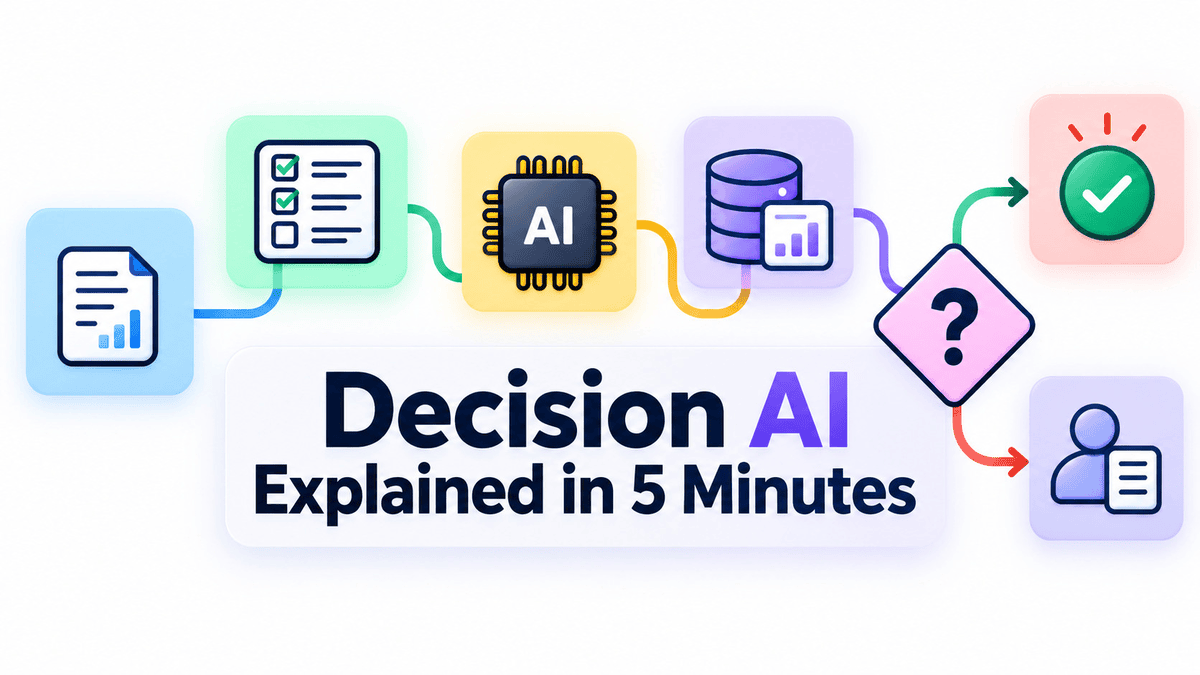
In “Decision AI Explained in 5 Minutes,” KDnuggets author Abid Ali Awan introduces decision models and their role in making decisions faster with large language models (LLMs). The article is presented as a short explainer with three aims: to show how decision models work, to explain how they turn LLMs into faster decision-making systems, and to show how to run open-source alternatives locally. The supplied description identifies these topics but does not explain the models’ mechanics, quantify the speed improvement, or name the open-source alternatives. It therefore establishes what readers can expect to learn without providing enough detail to compare models or reproduce a local setup.

Why Coding Agent Bills Spiral and How LangChain Frames the Fix
Technical Tutorial

Why Coding Agent Bills Spiral and How LangChain Frames the Fix

In a November 19, 2026 post, LangChain addresses a problem for coding agent users: bills that rise unexpectedly and become difficult to manage. The headline uses a doubled bill to frame the issue, while the description points to three ways to bring spending under control: trace it, compare it, and govern it. The post names Claude Code, Cursor, and Copilot and presents the ability to manage spending across those tools and others in one place as its focus. The supplied excerpt does not explain what drives bills higher, describe how spending is tracked, or provide prices or savings figures. Its central point is that coding agent costs should be understood across tools, not just as a total on a bill.

Why Fine-Tuning Jobs Take Longer Than Theoretical FLOP Calculations Predict in Practice
Technical Tutorial

Why Fine-Tuning Jobs Take Longer Than Theoretical FLOP Calculations Predict in Practice

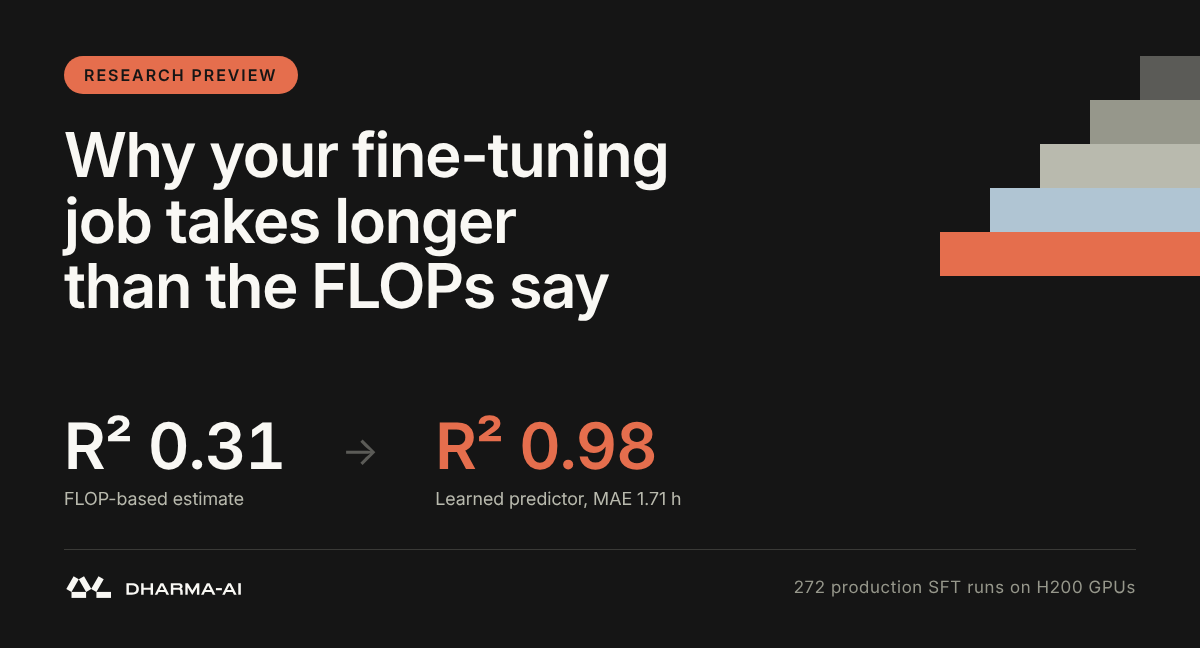
Published on the Hugging Face Blog by Dharma-AI, the article titled 'Why your fine-tuning job takes longer than the FLOPs say' investigates the practical discrepancies between theoretical FLOP estimations and actual fine-tuning duration. In machine learning workflows, calculating expected runtime purely based on floating-point operations often overlooks real-world engineering bottlenecks and hardware constraints. This analysis examines the primary factors contributing to extended execution times in model fine-tuning and provides insights into predicting actual project runtimes more accurately without relying solely on idealized computational metrics.