
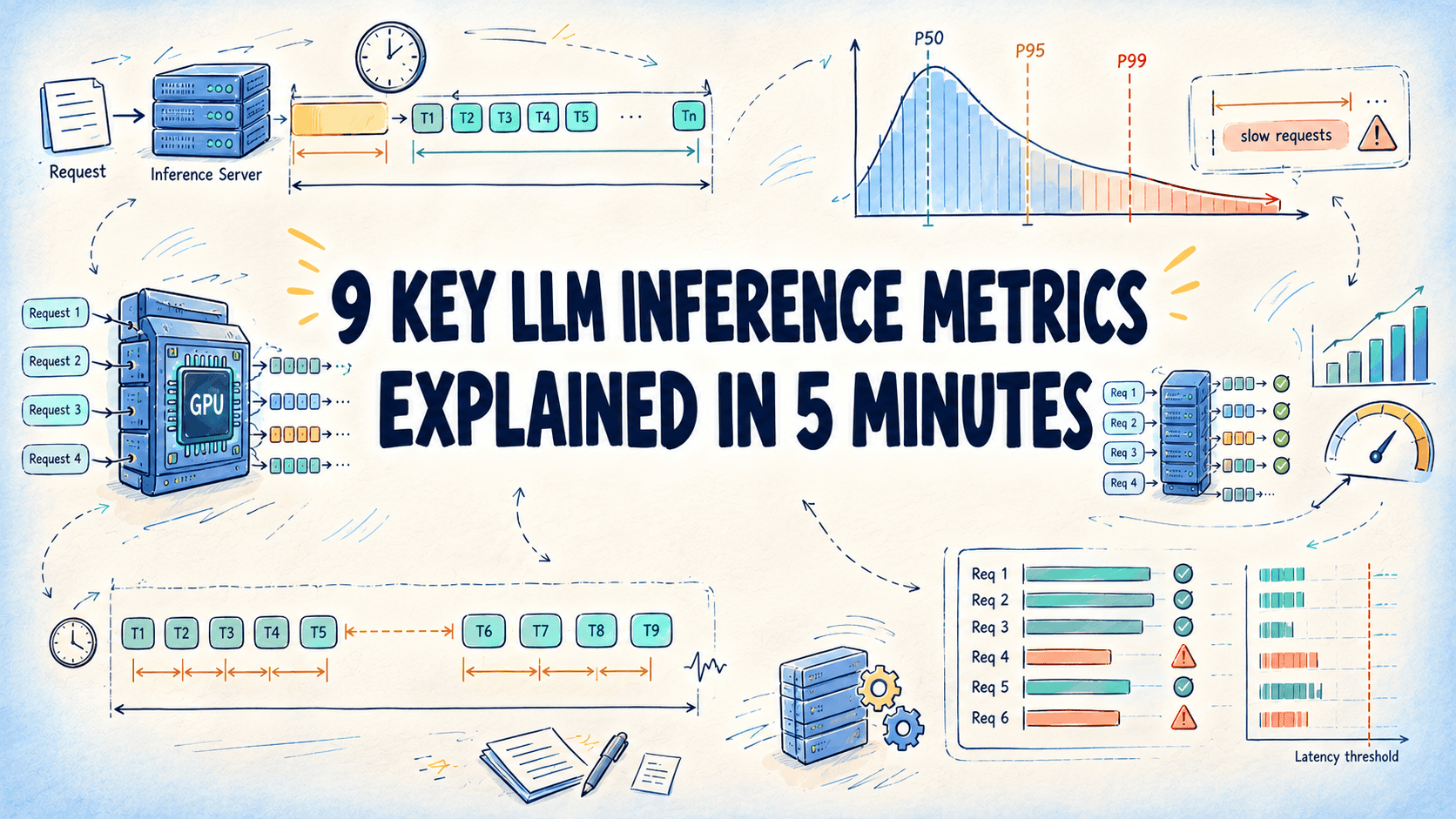
Understanding 9 Key LLM Inference Metrics for Performance and System Load Optimization
Learn how to measure Large Language Model inference performance using key metrics and formulas for latency, token generation speed, and system load. This comprehensive guide breaks down essential evaluation techniques to help developers and engineers assess and monitor LLM deployment efficiency, performance characteristics, and resource utilization in just five minutes.
Key Takeaways
- Learn how to measure LLM inference performance effectively.
- Understand key metrics and formulas for evaluating latency.
- Explore token generation speed measurements.
- Analyze system load characteristics during LLM deployment.
In-Depth Analysis
Measuring Latency and Token Generation Speed
Evaluating Large Language Model inference performance requires tracking specific metrics related to latency and generation speed. The original guidance focuses on understanding how to measure these performance indicators using precise formulas. By looking at latency and token generation speed, teams can better understand the responsiveness of deployed models.
Assessing System Load and Overall Performance
In addition to speed and latency, monitoring system load is critical for understanding how an LLM handles operational demands. The core methodology involves using established metrics to quantify system performance under varying workloads, ensuring a clear view of operational efficiency.
Industry Impact
Properly measuring LLM inference performance through key metrics like latency, token generation speed, and system load has significant implications for AI deployment. It enables organizations to optimize resource utilization, evaluate operational efficiency, and maintain reliable performance standards in production environments.
Frequently Asked Questions
What are the main areas covered by the LLM inference metrics?
The metrics focus on measuring latency, token generation speed, and system load.
Why is it important to measure LLM inference performance?
It helps in understanding how well a model performs in terms of speed, responsiveness, and handling system load during deployment.