
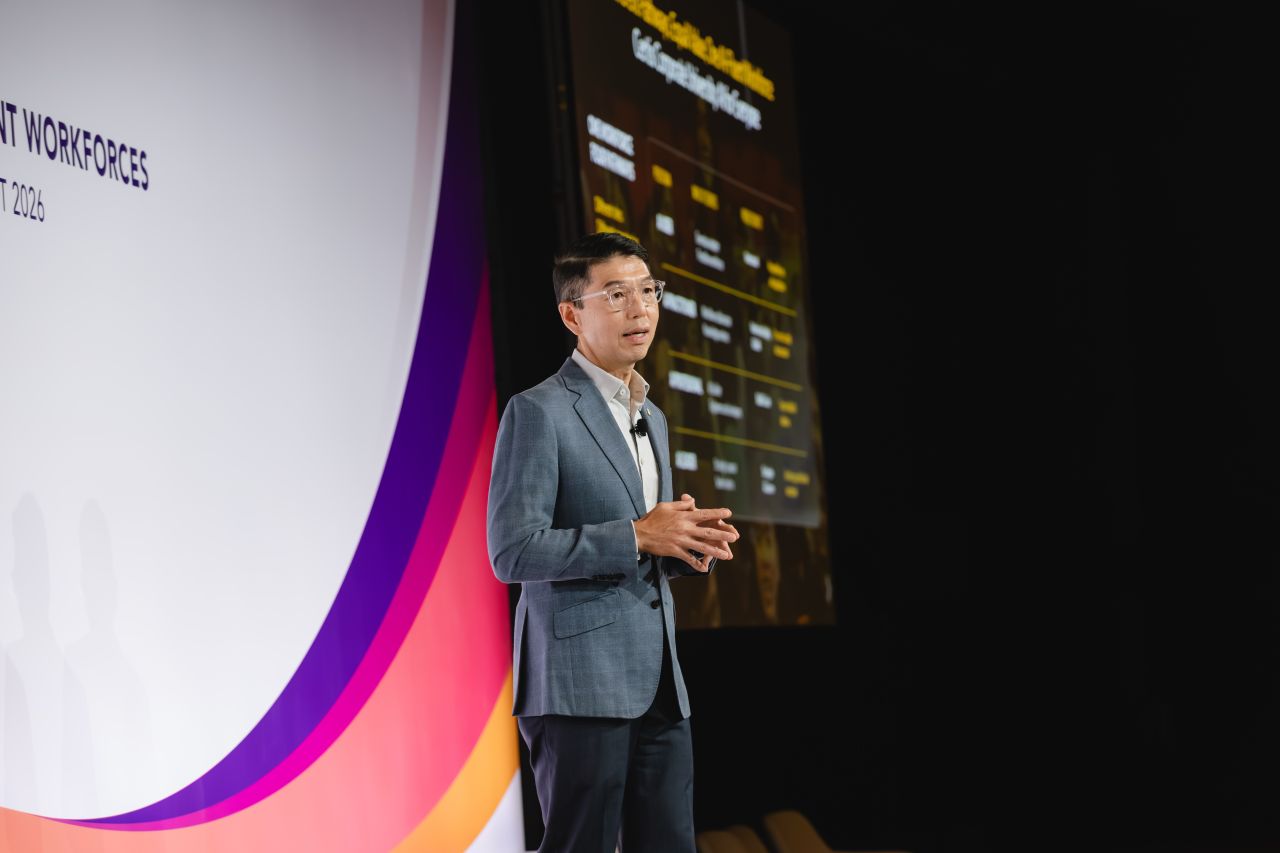
Scaling Security Bots: How Certis Combines Employee Trust, Digital Oversight, and Human Accountability in AI
As artificial intelligence and automated robotics become central to mission-critical operations, organizations face the dual challenge of technological acceleration and operational governance. According to Certis Group CEO Tian Beng Ng, successfully scaling security bots requires establishing robust employee trust while addressing the critical relationship between algorithmic velocity and human responsibility. In security environments where AI models generate high-speed automated decisions, maintaining rigorous human accountability is essential. Furthermore, Ng highlights that autonomous security bots—operating effectively as digital employees—must be subjected to the identical standards of supervision, performance management, and governance applied to traditional human personnel. This analysis examines the operational imperatives of integrating autonomous systems alongside human workforces, detailing why organizational trust, clear accountability boundaries, and parity in oversight are indispensable for deploying automated security robotics at enterprise scale.
Key Takeaways
- Human Accountability Remains Essential: High-speed decisions made by artificial intelligence systems must be anchored by clear human accountability, especially within mission-critical security environments.
- Parity in Workforce Oversight: Autonomous bots and automated agents, acting as digital employees, require the exact same rigorous supervision and governance frameworks as traditional human staff.
- Workforce Trust as a Prerequisite for Scale: Successfully expanding and deploying security bots across operational environments depends directly on fostering trust among human employees.
- Bridging Velocity and Responsibility: While AI can dramatically accelerate threat detection and response calculations, automated outputs cannot operate in an ethical or operational vacuum without human oversight.
In-Depth Analysis
Human Accountability in High-Speed AI Decision-Making
In modern security environments, the deployment of artificial intelligence is predominantly driven by the demand for velocity. Automated algorithms, computer vision pipelines, and sensor arrays process vast volumes of surveillance data instantaneously, identifying patterns, anomalies, and operational deviations far faster than human operators ever could. However, as Certis Group CEO Tian Beng Ng emphasizes, rapid decision-making capabilities cannot replace the fundamental requirement for human accountability. When AI systems make critical determinations at lightning speed, the risk of unmonitored edge cases, misclassifications, or unintended escalations increases significantly.
Establishing human accountability within fast-paced AI workflows ensures that automated systems do not operate autonomously without definitive checks and balances. Instead of allowing automated agents to act as isolated decision-makers, organizations must embed human judgment into the escalation and intervention loops. This dynamic ensures that while algorithms provide the computational speed needed to parse complex operational inputs, human personnel retain ultimate responsibility for actions taken in the field. Accountability structures ensure that whenever an autonomous security bot detects an incident or proposes an intervention, an identifiable human authority evaluates the context, verifies the action, and remains answerable for the outcome.
Treating Digital Employees with Human-Grade Oversight
A defining insight shared by Tian Beng Ng is the operational categorization of automated security bots as "digital employees." By conceptualizing autonomous systems not merely as static software tools or isolated mechanical hardware, but as members of an integrated workforce, Certis frames AI governance in terms of human-grade oversight. Traditional staff members are subject to clear codes of conduct, regular performance evaluations, defined standard operating procedures, and continuous managerial supervision. Ng points out that digital employees must be held to the very same standard.
Applying equivalent oversight to digital employees addresses a critical gap in enterprise AI deployment. In many conventional settings, autonomous systems are deployed with initial validation protocols but lack ongoing day-to-day governance once operationalized. By holding digital staff to the same standards as physical personnel, organizations establish consistent monitoring protocols, performance audits, and compliance checks. If an autonomous bot encounters operational drift, misinterprets an environmental variable, or fails to uphold operational safety protocols, supervision mechanisms identify and remediate the fault immediately—mirroring the corrective feedback and coaching provided to human workers.
Cultivating Employee Trust to Enable Robotic Scalability
The ability to scale autonomous security systems across diverse facilities depends fundamentally on organizational culture and workforce acceptance. Technologists frequently focus on the mechanical, algorithmic, and computational barriers to scaling robotics, yet employee sentiment and trust represent equally decisive factors. When frontline workers perceive automated systems as opaque, unpredictable, or unaccountable, adoption resistance naturally emerges. Security officers and site operators must trust that the autonomous bots operating alongside them will perform consistently, communicate accurately, and respect established operational boundaries.
Building this internal trust requires transparency regarding how AI decisions are reached and how responsibilities are distributed between human teams and robotic assets. When personnel observe that security bots are subjected to the same operational scrutiny, disciplinary standards, and supervision as human teams, skepticism diminishes. Human officers recognize that automated bots are not arbitrary actors, but rather governed operational partners designed to operate within transparent rules of engagement. This organizational confidence enables enterprises to transition robotics from limited pilot projects into widespread, scalable production deployments without fracturing workforce morale or operational integrity.
Industry Impact
The perspective articulated by Certis offers vital implications for the broader artificial intelligence and robotics industries. For years, technology developers have prioritized algorithmic autonomy and raw processing speed as the primary benchmarks of AI advancement. However, Certis' strategic approach indicates that the future of physical and enterprise AI hinges just as heavily on governance architectures, workforce integration, and ethical accountability.
As enterprise adoption moves deeper into physical security, autonomous logistics, and critical infrastructure, the concept of digital workforce parity will likely become an industry standard. Regulators, enterprise clients, and labor stakeholders increasingly require organizations to demonstrate who is legally and operationally liable for autonomous machine behavior. By asserting that fast AI decisions must remain accountable to human authorities and that digital workers require identical oversight to human staff, industry leaders establish a blueprint for sustainable automation. Organizations that implement robust governance and focus on building employee trust will successfully deploy and scale autonomous systems, whereas those treating bots as unmonitored automation tools risk operational failure, employee resistance, and liability exposure.
Frequently Asked Questions
Why do fast AI decisions require human accountability in security operations?
While artificial intelligence can rapidly process vast data streams and identify operational anomalies, it lacks human ethical judgment, contextual discernment, and moral responsibility. Human accountability ensures that rapid AI-driven decisions are verified and governed, preventing automated errors or algorithmic anomalies from causing unchecked operational consequences.
What does it mean to treat security bots as digital employees?
Treating security bots as digital employees means applying the same governance, managerial oversight, operational guidelines, and performance standards to automated systems as those applied to human staff. Rather than operating as uncontrolled software, these digital workers are subject to routine monitoring, continuous auditing, and transparent accountability frameworks.
How does building employee trust facilitate the scaling of security robotics?
When human workers trust that autonomous robots operate reliably, adhere to rigorous oversight standards, and complement operational workflows under clear human accountability, adoption barriers decline. This trust fosters collaboration between human staff and autonomous bots, allowing enterprise security providers to expand deployments seamlessly across diverse sites.


