
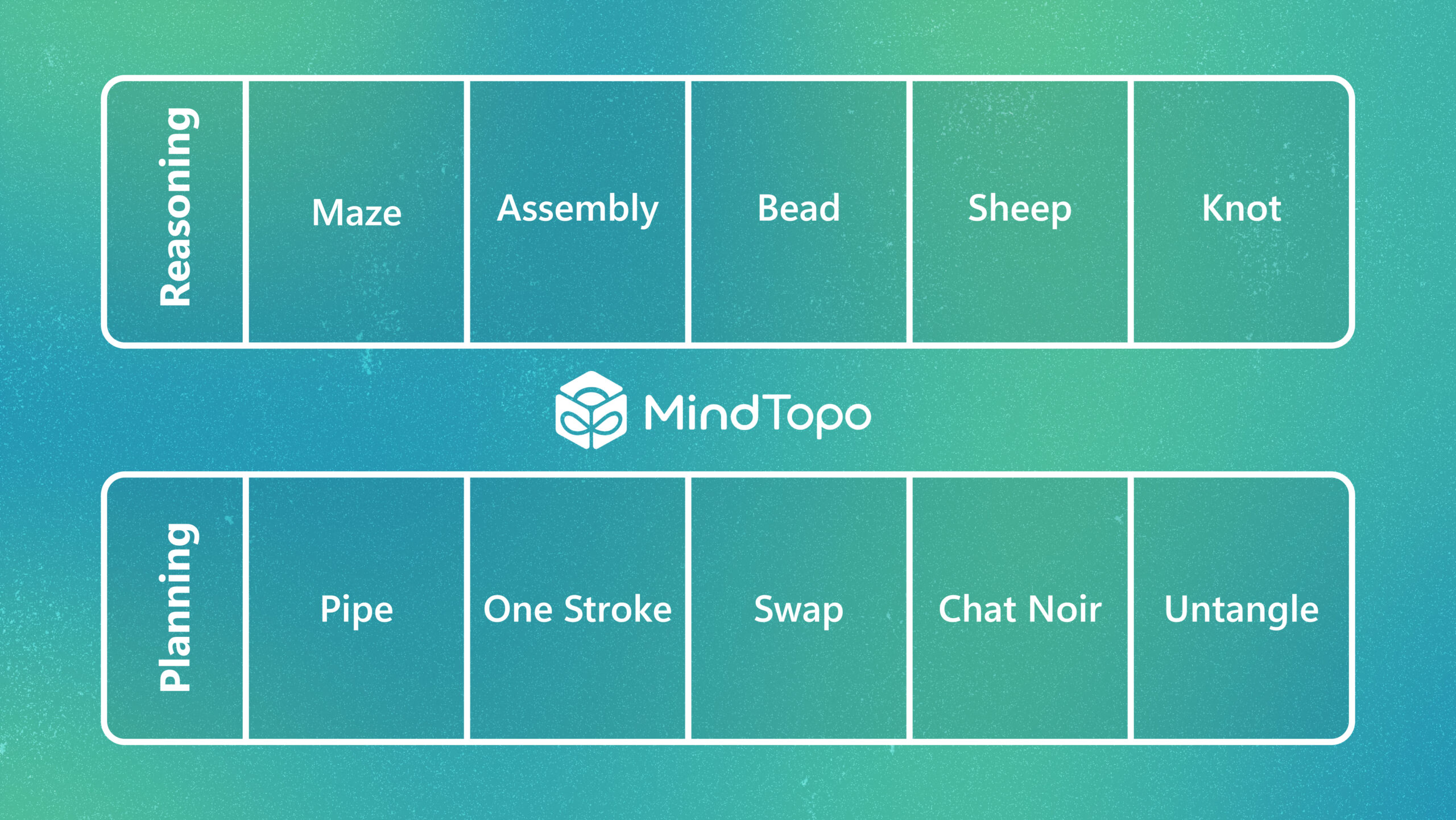
Microsoft Research Unveils MindTopo: A New Frontier in Evaluating Spatial Reasoning Abilities of Vision-Language Models
Microsoft Research has announced the development of MindTopo, a research framework designed to reveal and analyze the spatial reasoning capabilities of Vision-Language Models (VLMs). Authored by a prominent team including Yunfei Ge and Jianfeng Gao, this research addresses a critical gap in multimodal AI: the ability to interpret and reason about the physical and topological relationships between objects in a visual environment. While modern VLMs have demonstrated significant progress in image recognition and natural language processing, spatial awareness remains a complex challenge. MindTopo serves as a diagnostic tool to uncover how these models perceive and process spatial configurations. This analysis explores the significance of Microsoft’s latest contribution to the field of AI and the broader implications for developing models with a more sophisticated understanding of the physical world.
Key Takeaways
- Introduction of MindTopo: A new research initiative from Microsoft Research focused on evaluating the spatial reasoning limits of Vision-Language Models (VLMs).
- Addressing the Spatial Gap: The research targets the specific difficulty VLMs face when moving beyond simple object identification to complex topological reasoning.
- Expert Collaboration: The project involves a multi-disciplinary team of researchers, signaling a high-priority effort to refine multimodal AI benchmarks.
- Industry Significance: Improved spatial reasoning is essential for the advancement of robotics, autonomous systems, and intuitive human-AI interaction.
In-Depth Analysis
The Challenge of Spatial Reasoning in Multimodal AI
In the current landscape of artificial intelligence, Vision-Language Models (VLMs) have achieved remarkable milestones in tasks such as image captioning, visual question answering, and object detection. However, a persistent bottleneck remains: spatial reasoning. Spatial reasoning involves more than just identifying that an object exists within a frame; it requires an understanding of the relationships between objects—concepts such as "behind," "to the left of," "overlapping," or "contained within."
Microsoft Research’s introduction of MindTopo highlights a growing recognition that current benchmarks may not fully capture the nuances of how models handle these topological complexities. For a VLM to truly understand a scene, it must construct a mental map that respects the laws of physics and geometry. Without this ability, AI applications in the physical world, such as robotic navigation or augmented reality, remain limited. MindTopo is positioned as a mechanism to "reveal" these hidden abilities or lack thereof, providing a structured way to measure how well a model can translate visual pixels into logical spatial constructs.
MindTopo: Probing the Topological Understanding of VLMs
The research led by Yunfei Ge, Jianfeng Gao, and their colleagues suggests a shift toward more rigorous evaluation metrics. By focusing on "MindTopo," the research likely emphasizes the topological aspects of vision—the properties of space that are preserved under continuous deformations. This is a sophisticated layer of reasoning that goes beyond simple coordinate-based localization.
When a VLM processes an image, it often relies on statistical correlations found in its training data rather than a true understanding of 3D space. For instance, a model might correctly guess that a keyboard is "in front of" a monitor because that is a common occurrence in its training set, not because it understands the depth of the scene. MindTopo aims to peel back these layers of correlation to see if the model possesses a foundational ability to reason spatially. This is crucial for developing models that are robust and capable of handling novel or out-of-distribution environments where common correlations might not apply.
The Role of Microsoft Research in Advancing VLM Benchmarks
Microsoft Research has a long history of setting the standard for AI evaluation. With the publication of MindTopo, the organization continues to lead the conversation on what constitutes "intelligence" in multimodal systems. The diverse team of authors—including experts like Manling Li and Jiajun Wu—indicates a collaborative effort that likely bridges the gap between computer vision, natural language processing, and cognitive science.
By creating tools that specifically target spatial reasoning, Microsoft is providing the industry with a roadmap for the next generation of VLM development. The goal is no longer just to make models that can talk about what they see, but to make models that can reason about what they see. This transition from perception to reasoning is the next great frontier in AI, and MindTopo represents a significant step toward that objective.
Industry Impact
The implications of MindTopo extend far beyond academic research. In the field of Robotics, the ability to reason spatially is the difference between a machine that can safely navigate a home and one that constantly encounters obstacles. If VLMs can be trained to have better spatial awareness through the insights provided by MindTopo, we could see a surge in the capabilities of service robots and automated manufacturing systems.
Furthermore, in the realm of Autonomous Driving, spatial reasoning is paramount. Vehicles must understand the topological relationship between themselves, pedestrians, and other vehicles in real-time. Benchmarks like MindTopo help developers identify the weaknesses in their models' spatial logic before they are deployed in high-stakes environments.
Finally, for Augmented and Virtual Reality (AR/VR), AI that understands space can provide more immersive and context-aware experiences. Whether it is a virtual assistant that knows exactly where you placed your keys or an AR interface that interacts seamlessly with the physical furniture in a room, the spatial reasoning abilities revealed by MindTopo will be the foundation for these future technologies.
Frequently Asked Questions
What is MindTopo?
MindTopo is a research framework developed by Microsoft Research designed to evaluate and reveal the spatial reasoning abilities of Vision-Language Models (VLMs). It focuses on how these models understand topological relationships and spatial configurations in visual data.
Why is spatial reasoning important for AI?
Spatial reasoning allows AI to understand the physical relationships between objects, which is essential for tasks like navigation, manipulation, and complex scene understanding. Without it, AI models are limited to simple identification rather than true comprehension of the physical world.
Who are the primary researchers behind MindTopo?
The research was conducted by a team at Microsoft Research, including Yunfei Ge, Anbang Liu, Qineng Wang, Johnalbert Garnica, Zihan Wang, Reuben Tan, Jianfeng Gao, Ruohan Zhang, Yining Hong, Jiajun Wu, and Manling Li.

