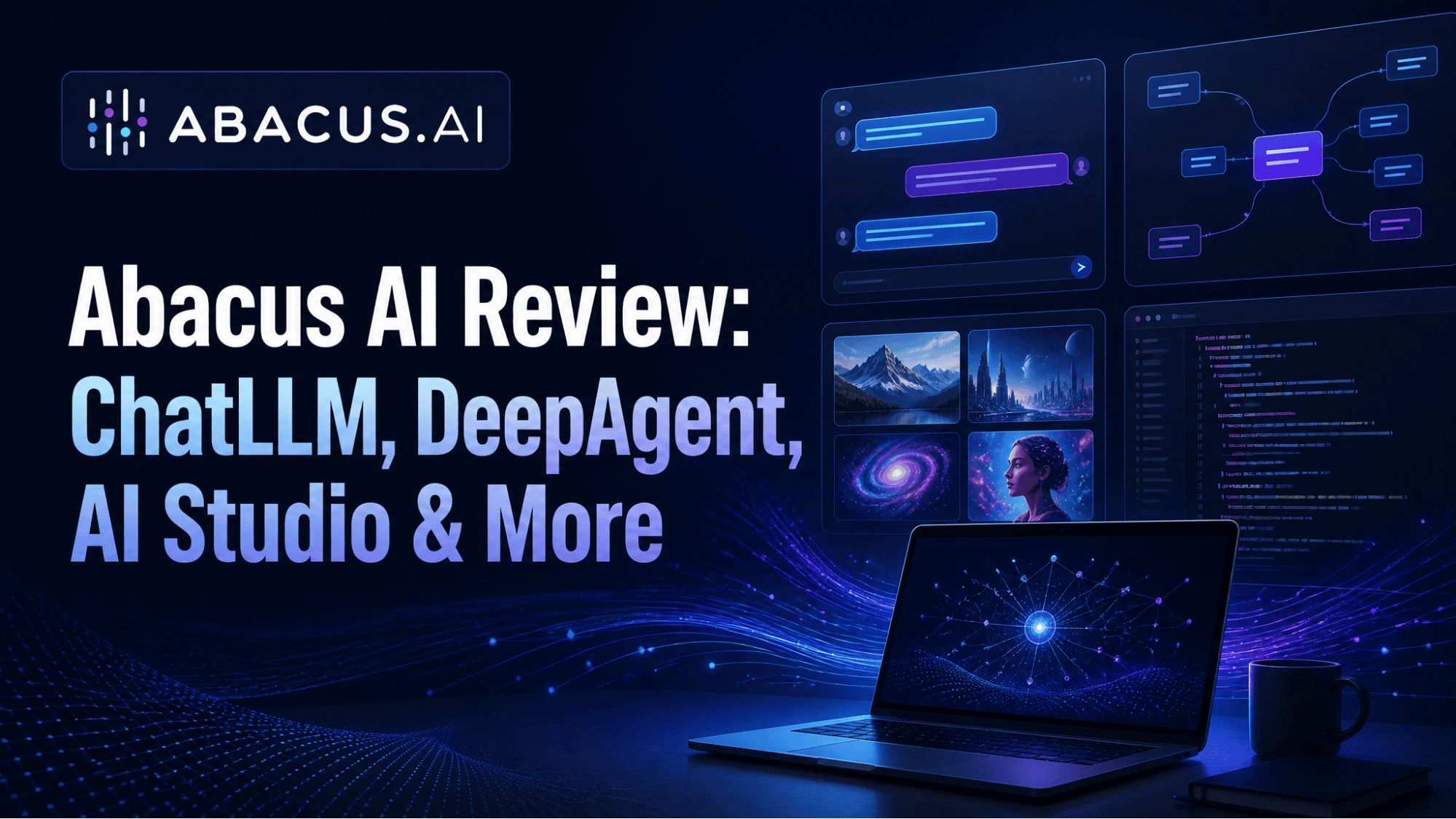
Honest Abacus AI Review: An In-Depth Analysis of ChatLLM, DeepAgent, and AI Studio Capabilities
This comprehensive analysis explores the recent review of Abacus AI published by KDnuggets, focusing on the platform's core offerings: ChatLLM, DeepAgent, and AI Studio. As the AI industry shifts toward integrated, end-to-end solutions, this review evaluates how Abacus AI positions itself to meet enterprise demands. The analysis covers the functional scope of the tools mentioned in the review, highlighting their roles in the modern AI development lifecycle. By examining the intersection of large language model interfaces, autonomous agents, and centralized development environments, this article provides a structured overview of the key components that define the Abacus AI ecosystem as presented in the latest industry evaluation.
Key Takeaways
- Comprehensive Platform Evaluation: The review provides a detailed look at Abacus AI, focusing on its multi-faceted approach to artificial intelligence through specialized tools.
- Focus on ChatLLM: A significant portion of the review is dedicated to ChatLLM, examining its role as a primary interface for interacting with large language models.
- DeepAgent Integration: The analysis highlights DeepAgent, showcasing the platform's capabilities in the realm of autonomous AI agents and complex task automation.
- AI Studio Centralization: The review identifies AI Studio as the central hub for development, emphasizing the importance of a unified environment for AI project management.
- Enterprise Readiness: The scope of the review suggests a focus on how these integrated tools serve the needs of professional and enterprise-level AI implementations.
In-Depth Analysis
The Role of ChatLLM in the Abacus AI Ecosystem
The review by KDnuggets places a significant emphasis on ChatLLM, which serves as a cornerstone of the Abacus AI user experience. In the current landscape of generative AI, the ability to interact seamlessly with various large language models (LLMs) is paramount. The analysis of ChatLLM within the review suggests an evaluation of how this tool simplifies the complexities associated with model selection, prompting, and output refinement. By providing a structured interface, ChatLLM aims to bridge the gap between raw model capabilities and practical business applications. The review likely scrutinizes the efficiency of this interface and its ability to handle diverse conversational AI tasks, which is a critical factor for organizations looking to deploy LLM-based solutions at scale.
Furthermore, the inclusion of ChatLLM in a comprehensive review indicates its importance in the broader MLOps (Machine Learning Operations) strategy. As enterprises move beyond simple experimentation, tools that offer a consistent and manageable way to interact with LLMs become essential. The review's focus on this component underscores the industry's demand for robust, user-friendly interfaces that do not sacrifice the underlying power of the models they support.
DeepAgent and the Shift Toward Autonomous AI
Another critical component examined in the review is DeepAgent. This represents Abacus AI's foray into the rapidly evolving field of autonomous agents. Unlike standard AI models that require constant human intervention, agents are designed to perform multi-step tasks with a degree of independence. The review's focus on DeepAgent suggests an analysis of how Abacus AI handles agentic workflows, including task decomposition, tool usage, and iterative problem-solving.
The significance of DeepAgent in this review cannot be overstated, as the AI industry is currently pivoting from passive models to active agents. By evaluating DeepAgent, the review addresses the platform's ability to support complex automation scenarios that go beyond simple text generation. This includes the integration of AI into existing business processes where the agent must interact with external data sources or software modules to achieve a specific goal. The analysis likely explores the reliability and sophistication of these autonomous capabilities, which are becoming a key differentiator for high-end AI platforms.
AI Studio: A Unified Development Environment
The third pillar of the review is AI Studio, which serves as the integrated development environment (IDE) for the Abacus AI platform. The review evaluates how AI Studio consolidates various aspects of the AI lifecycle—from data preparation and model training to deployment and monitoring—into a single interface. In many organizations, AI development is often fragmented across multiple tools and platforms, leading to inefficiencies and data silos. The review's focus on AI Studio highlights the value of a centralized workspace that provides developers and data scientists with the necessary tools to build and manage AI models effectively.
By analyzing AI Studio, the review provides insights into the platform's usability and the breadth of its feature set. A successful AI studio must balance ease of use for non-experts with the deep technical control required by experienced data scientists. The review likely assesses how well Abacus AI achieves this balance, providing a streamlined path for moving projects from the conceptual stage to production-ready status. This centralized approach is increasingly seen as a requirement for modern enterprise AI platforms seeking to improve time-to-market for new AI initiatives.
Industry Impact
The review of Abacus AI and its core components—ChatLLM, DeepAgent, and AI Studio—reflects a broader trend in the AI industry toward consolidation and end-to-end platform solutions. As the market matures, individual tools are being integrated into comprehensive ecosystems that can handle the entire AI lifecycle. This shift is driven by the need for greater efficiency, better governance, and more scalable AI deployments within the enterprise sector.
For the AI industry, the existence of such detailed reviews indicates a high level of competition among platform providers. Companies like Abacus AI are being evaluated not just on the performance of their underlying models, but on the quality of their developer tools and the cohesiveness of their entire software suite. The focus on autonomous agents (DeepAgent) and specialized LLM interfaces (ChatLLM) suggests that these are the new frontiers where AI platforms must excel to remain relevant. As organizations continue to invest heavily in AI, the insights provided by these reviews will play a crucial role in shaping purchasing decisions and guiding the future development of AI infrastructure.
Frequently Asked Questions
Question: What are the primary components of Abacus AI covered in the review?
According to the review title and scope, the primary components evaluated are ChatLLM, DeepAgent, and AI Studio. These tools represent the platform's capabilities in LLM interaction, autonomous agent development, and centralized AI project management, respectively.
Question: How does DeepAgent differ from standard AI models within the Abacus platform?
While standard models like those accessed through ChatLLM focus on generating responses based on prompts, DeepAgent is designed for autonomous task execution. This involves the ability to perform multi-step processes and interact with various tools or data sources to complete complex objectives with minimal human intervention.
Question: Why is AI Studio considered a central part of the Abacus AI review?
AI Studio is highlighted because it serves as the unified development environment for the entire platform. It is designed to streamline the AI lifecycle by providing a single interface for data handling, model building, and deployment, which is a critical factor for enterprise-scale AI operations.