Microsoft Research Introduces Echoverse: Advancing Computer-Use Agents Through Deep and Evolving Environments
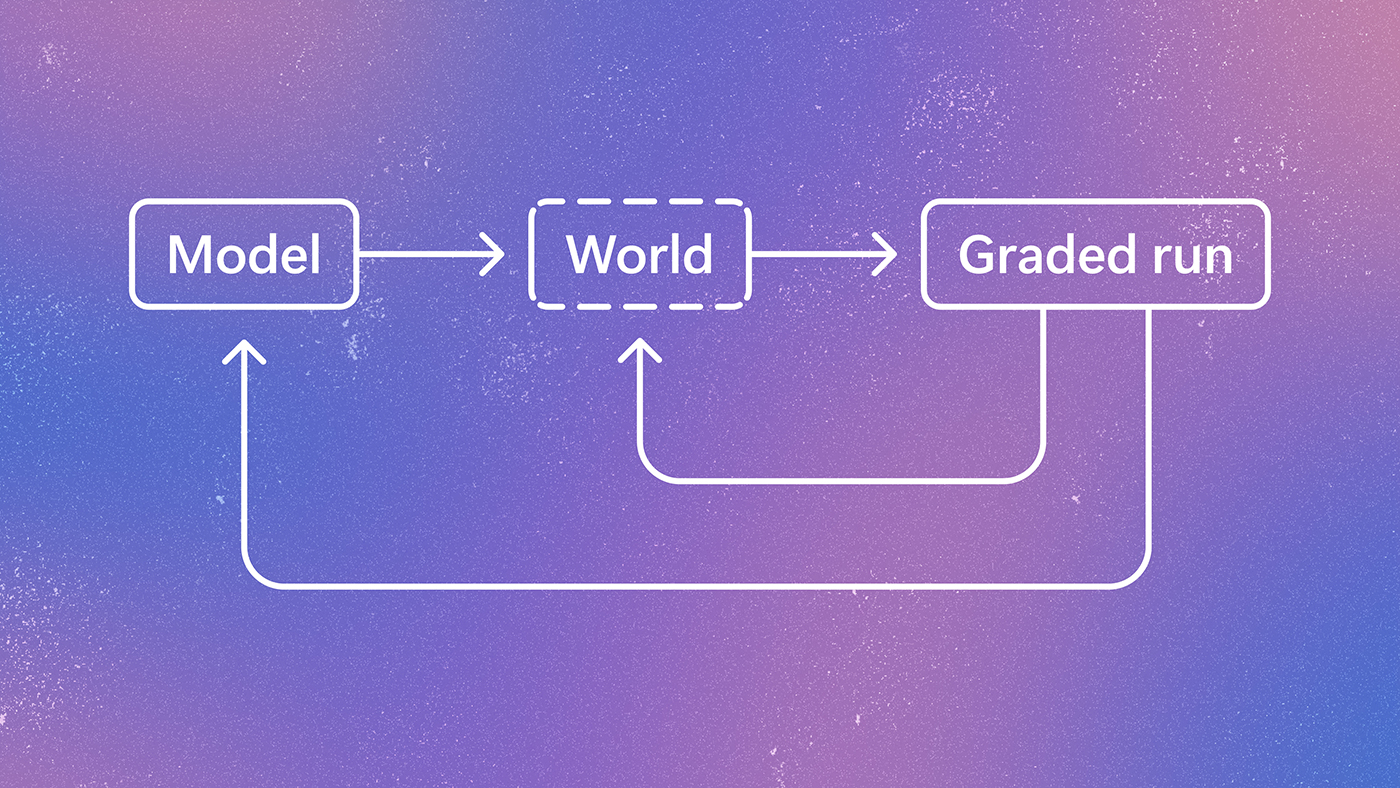
Microsoft Research has announced the development of Echoverse, a specialized framework designed to create deep and evolving environments for computer-use agents. Authored by a multi-disciplinary team including Akshay Nambi, Ahmed Awadallah, and Ece Kamar, the project addresses the critical need for dynamic training grounds for AI agents that interact with digital interfaces. Unlike static benchmarks, Echoverse focuses on environments that can evolve, providing the complexity required for agents to master human-like computer interactions. This initiative marks a significant step forward in the development of autonomous systems capable of navigating sophisticated software ecosystems and performing complex tasks across various digital platforms.
Key Takeaways
- New Research Framework: Microsoft Research has unveiled Echoverse, a project dedicated to enhancing the capabilities of computer-use agents.
- Dynamic Environments: The core focus of Echoverse is the creation of "deep" and "evolving" environments, moving beyond traditional static testing models.
- Expert Authorship: The project is led by a prominent team of researchers, including Akshay Nambi, Ahmed Awadallah, and Ece Kamar, highlighting its significance within Microsoft’s AI strategy.
- Agent Autonomy: The research aims to improve how AI agents navigate and interact with complex computer interfaces and software systems.
In-Depth Analysis
The Evolution of Computer-Use Agents
The announcement of Echoverse by Microsoft Research signals a pivotal shift in the trajectory of artificial intelligence development. For several years, the industry has focused on Large Language Models (LLMs) that excel at text generation and reasoning. However, the next frontier involves "computer-use agents"—AI systems that do not just talk about tasks but execute them by interacting directly with operating systems, applications, and web interfaces.
Echoverse enters this space with a focus on "deep" environments. In the context of AI research, depth often refers to the complexity and multi-layered nature of the tasks an agent must perform. For a computer-use agent, this involves understanding hierarchical file systems, navigating intricate UI elements, and managing long-term dependencies across different software applications. By providing these deep environments, Echoverse allows for the training of agents that can handle more than just single-step commands, moving toward comprehensive workflow automation.
The Significance of Evolving Environments
One of the most striking aspects of the Echoverse announcement is the emphasis on "evolving" environments. Traditional AI benchmarks are often static; once an agent learns the layout of a specific interface or the logic of a particular software version, its performance can be measured reliably. However, real-world computing environments are far from static. Software receives updates, UI layouts change, and network conditions fluctuate.
By introducing evolving environments, Microsoft Research is likely addressing the "brittleness" of current AI agents. An evolving environment forces an agent to develop generalized problem-solving skills rather than memorizing specific paths. This approach ensures that computer-use agents remain functional even when the underlying digital landscape shifts. This focus on evolution suggests that Echoverse is designed to test the adaptability and resilience of AI, which are essential traits for any agent intended for deployment in professional or consumer-facing production environments.
Collaborative Research and Institutional Context
The authorship of the Echoverse project includes a diverse group of researchers such as Akshay Nambi, Yash Pandya, Sahil Gupta, and Ahmed Awadallah. The involvement of these individuals, many of whom have extensive backgrounds in machine learning, human-computer interaction, and agentic workflows, underscores the interdisciplinary nature of the project.
Microsoft Research has a long history of pioneering work in autonomous systems. With Echoverse, the institution is positioning itself at the center of the "Agentic AI" movement. The project likely leverages Microsoft's vast ecosystem of software and services to create realistic simulations of computer use. This institutional backing provides the necessary infrastructure to simulate the "deep" environments mentioned in the title, potentially setting a new standard for how the industry evaluates agent performance.
Industry Impact
The introduction of Echoverse has several profound implications for the AI industry:
- Standardization of Agent Training: As more companies develop autonomous agents, there is a growing need for sophisticated environments to train them. Echoverse could serve as a blueprint for high-fidelity, dynamic training grounds.
- Acceleration of Autonomous Workflows: By improving the robustness of computer-use agents through evolving environments, the industry moves closer to reliable AI assistants that can handle administrative, technical, and creative tasks across various software suites without human intervention.
- Shift Toward Generalization: The focus on evolving environments encourages the development of AI that can generalize across different interfaces, reducing the need for custom-coded integrations for every new piece of software.
Frequently Asked Questions
Question: What are computer-use agents in the context of Echoverse?
Computer-use agents are AI systems designed to interact with computer interfaces—such as clicking buttons, typing text, and navigating menus—to perform tasks that a human would typically do using a mouse and keyboard.
Question: Why is the "evolving" nature of Echoverse important?
Evolving environments are crucial because they mimic the real-world digital landscape where software and interfaces are constantly updated. This forces AI agents to be adaptable and prevents them from relying on static, memorized patterns.
Question: Who is the primary organization behind Echoverse?
Echoverse is a research initiative from Microsoft Research, involving a team of experts in AI, machine learning, and autonomous agents.