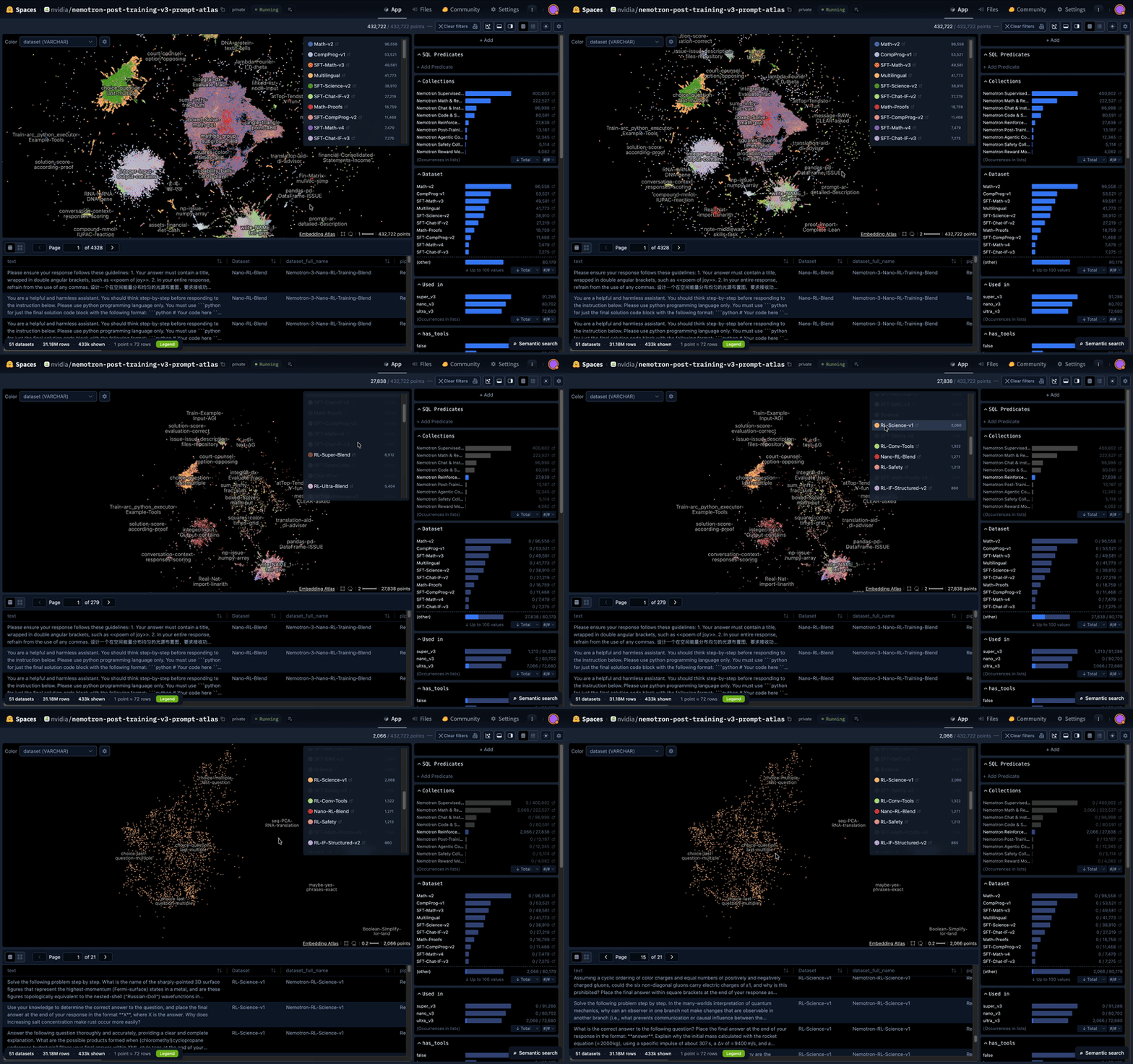
NVIDIA and Hugging Face Announce 'Data for Agents' Initiative for Open-Source AI Development
On July 8, 2026, NVIDIA and Hugging Face officially released a collaborative announcement titled 'Data for Agents.' Published on the Hugging Face Blog, this initiative focuses on the provision of open data specifically curated for the development and training of AI agents. The collaboration represents a strategic alignment between the world's leading AI hardware provider and the primary hub for open-source machine learning. While specific dataset specifications were not detailed in the initial announcement summary, the project aims to address the growing demand for specialized data structures required to build autonomous systems capable of complex reasoning and task execution. This move signals a significant step toward standardizing the data layer of the agentic AI ecosystem.
Key Takeaways
- Strategic Partnership: NVIDIA and Hugging Face have collaborated on a new project focused on data resources for AI agents.
- Open Data Focus: The initiative, titled 'Data for Agents' (and referenced as 'Open Data for Agents'), emphasizes the importance of accessible datasets for the AI community.
- Agentic AI Infrastructure: The announcement targets the specific data needs of autonomous agents, distinguishing them from general-purpose large language models.
- Release Date: The initiative was officially documented and published on July 8, 2026.
In-Depth Analysis
The Collaboration Between NVIDIA and Hugging Face
The announcement of 'Data for Agents' marks a significant collaboration between two of the most influential entities in the modern AI landscape. NVIDIA, primarily known for its dominance in AI compute and hardware, and Hugging Face, the central repository for open-source models and datasets, have joined forces to address a critical bottleneck in AI development: the availability of high-quality, specialized data. By hosting this initiative on the Hugging Face Blog, the partners are leveraging a platform that reaches millions of developers, ensuring that the 'Data for Agents' resources are integrated directly into the open-source workflow.
Defining 'Data for Agents'
While the provided information focuses on the announcement itself, the title 'Data for Agents' implies a shift in the focus of data curation. Unlike standard text corpora used for training Large Language Models (LLMs), data for agents typically requires a focus on trajectories, tool-use interactions, and multi-step reasoning chains. The inclusion of 'Open Data' in the project's metadata suggests that these resources will be made available to the public, fostering a more transparent and collaborative environment for building autonomous systems. This initiative appears designed to provide the foundational building blocks that allow AI models to transition from passive information retrievers to active task executors.
Industry Impact
The 'Data for Agents' initiative is poised to have a substantial impact on the AI industry by lowering the barriers to entry for developing agentic systems. By providing open-source data specifically tailored for agents, NVIDIA and Hugging Face are helping to standardize the way autonomous behaviors are trained and evaluated. This standardization is crucial for the interoperability of AI agents across different platforms and industries. Furthermore, the emphasis on open data promotes a safer and more auditable development process, as the community can scrutinize the data used to define the decision-making processes of autonomous AI.
Frequently Asked Questions
Question: What is the 'Data for Agents' initiative?
'Data for Agents' is a collaborative project between NVIDIA and Hugging Face aimed at providing open-source data resources specifically designed to train and improve AI agents.
Question: When was this initiative announced?
The initiative was published on the Hugging Face Blog on July 8, 2026.
Question: Why is this collaboration significant for the AI community?
It combines NVIDIA's computational expertise with Hugging Face's open-source ecosystem to provide the specialized data necessary for the next generation of autonomous AI systems.