
Unconventional AI Introduces Un-0: A Breakthrough Image Generator Powered by Coupled Oscillators
Unconventional AI has unveiled Un-0, a novel image generation model that departs from traditional GPU-based deep neural networks by utilizing a simulated system of coupled oscillators. This approach represents a shift toward physical computing substrates, where the laws of physics perform the computation to achieve significantly higher energy efficiency. Un-0 has demonstrated a Fréchet Inception Distance (FID) of 6.74 on the ImageNet 64x64 dataset, matching the quality of early state-of-the-art conventional models. By targeting a 1,000x reduction in energy consumption, Unconventional AI aims to redefine the hardware foundations of modern AI. The project is fully open-source, providing weights and training code to the research community to foster further development in unconventional computing architectures.
Key Takeaways
- Innovative Architecture: Un-0 utilizes a simulated system of coupled oscillators instead of traditional GPU-dependent deep neural networks.
- Energy Efficiency Goal: The project aims to reduce AI energy consumption by approximately 1,000x by leveraging physical computing substrates.
- Competitive Performance: On the ImageNet 64x64 benchmark, Un-0 achieved an FID of 6.74, matching the initial performance of leading conventional methods.
- Open Source Commitment: Unconventional AI has released the weights, training code, and ablation studies for Un-0 to the public.
- Shift to Analog Dynamics: The model explores the use of analog-like physical dynamics, such as voltage and current, over traditional digitized numbers.
In-Depth Analysis
The Transition from Digital to Physical Computing
For the past decade, the field of artificial intelligence has been dominated by the execution of deep neural networks on Graphics Processing Units (GPUs). While this has led to significant breakthroughs in model capability, it has also resulted in massive energy requirements. Unconventional AI argues that the next leap in efficiency requires a fundamental departure from this paradigm. Their solution, Un-0, introduces a system where physics itself performs the computation. By using a simulated system of coupled oscillators, the model moves away from the rigid structure of transformer backbones and digitized numerical processing.
This approach draws inspiration from a long lineage of alternative computing methods. The developers cite historical influences such as Neuromorphic Computing, Hopfield networks, and reservoir computing. These systems prioritize the noisy, time-varying behavior of physical systems—similar to how analog circuits operate with continuous voltage and current—rather than the discrete logic of standard processors. By harnessing these dynamical systems, Un-0 represents a first step toward a new kind of computer designed specifically for the demands of modern AI.
Benchmarking Un-0: Quality and Scalability
A critical question for any unconventional computing method is whether it can scale to meet the performance of established digital models. Unconventional AI addressed this by testing Un-0 on the ImageNet 64x64 dataset. The model reached a Fréchet Inception Distance (FID) of 6.74. This metric is significant because it indicates that Un-0's image generation quality is on par with the results produced by leading conventional image generation methods when they were first introduced.
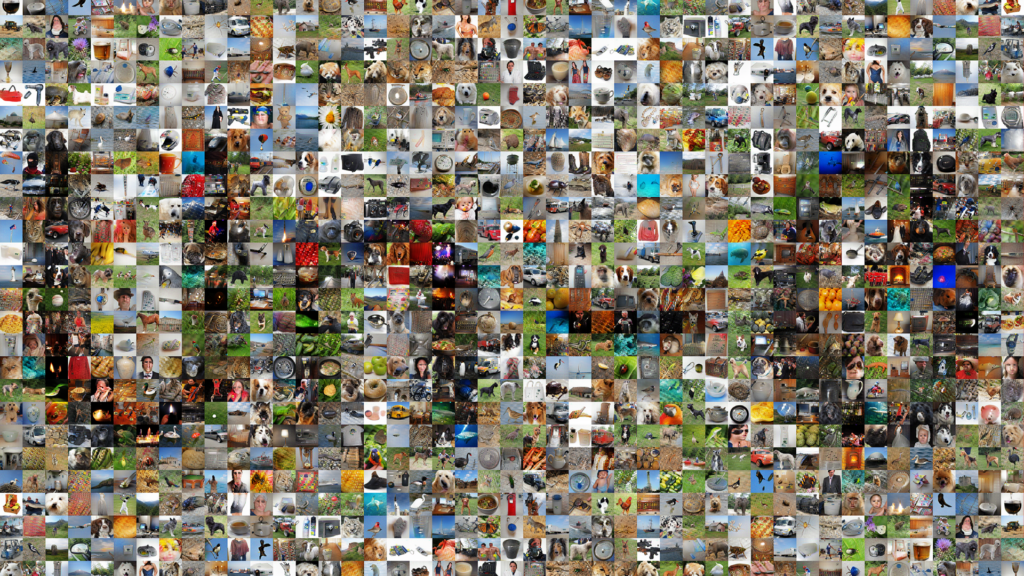
The ability of a physical dynamical system to generate high-quality images at scale suggests that the 1,000x energy efficiency target is not just a theoretical goal but a practical possibility. The trajectories of Un-0 generations over time demonstrate how the system evolves to produce class-specific images, proving that complex generative tasks can be mapped onto the dynamics of coupled oscillators. This successful demonstration on ImageNet provides a baseline for future iterations of physical computing models.
Open Source and the Unconventional Journey
By releasing the weights, training scripts, and ablation code, Unconventional AI is positioning Un-0 as a foundational tool for the broader research community. This open-source approach is intended to invite collaboration on what the company calls an "Unconventional journey." The inclusion of ablation code is particularly noteworthy, as it allows researchers to understand which components of the coupled oscillator system contribute most to its generative capabilities. This transparency is essential for moving physical computing from a niche experimental area into the mainstream of AI development.
Industry Impact
The introduction of Un-0 could signal a major shift in how the AI industry views hardware and energy consumption. As the environmental and financial costs of training massive transformer models on GPUs continue to rise, the industry is under increasing pressure to find sustainable alternatives. If Unconventional AI can realize its goal of 1,000x energy efficiency, it would drastically lower the barrier to entry for high-performance AI and enable more sophisticated models to run on edge devices with limited power budgets.
Furthermore, the success of Un-0 validates the continued relevance of alternative architectures like Liquid networks and Hamiltonian networks. It encourages hardware manufacturers to look beyond traditional silicon-based digital logic and explore analog or neuromorphic substrates that can natively support the dynamical systems required by models like Un-0. This could lead to a diversification of the AI hardware ecosystem, moving away from a GPU-centric monoculture.
Frequently Asked Questions
Question: What makes Un-0 different from standard AI models like DALL-E or Stable Diffusion?
Unlike standard models that rely on digital computations and transformer architectures running on GPUs, Un-0 uses a simulated system of coupled oscillators. It leverages the laws of physics and dynamical systems to perform computations, aiming for much higher energy efficiency than traditional digital methods.
Question: How energy-efficient is the Un-0 approach compared to current technology?
Unconventional AI aims for Un-0 and its successors to run on a fraction of the energy required by today's machines—specifically targeting a reduction of approximately 1,000x. This is achieved by using physical computing substrates rather than conventional digitized numerical processing.
Question: Is the Un-0 model available for public use?
Yes, Unconventional AI has open-sourced the project. The weights, training code, and ablation studies are all available, allowing researchers and developers to experiment with and build upon the coupled oscillator framework.

