
Meituan Unveils Six Research Papers at ACL 2026 Focusing on Reasoning Optimization and Generative Paradigms
Meituan's technical team has announced the acceptance of six research papers at ACL 2026, a premier international conference for computational linguistics and natural language processing. The selected works cover a broad spectrum of cutting-edge AI domains, including large-scale model evaluation, complex process reasoning, and competition-level mathematical thinking optimization. Additionally, the research explores advancements in reinforcement learning and generative recommendation systems. This collection of papers highlights Meituan's commitment to building a new paradigm for generative AI, focusing on both theoretical breakthroughs and practical optimizations. By addressing complex reasoning and evaluation, Meituan aims to push the boundaries of how AI handles intricate tasks and provides more accurate, context-aware recommendations in real-world applications.
Key Takeaways
- Academic Recognition: Meituan has successfully had six papers accepted by ACL 2026, a top-tier global conference in the field of computational linguistics and Natural Language Processing (NLP).
- Diverse Research Scope: The research spans five critical areas: large model evaluation, complex process reasoning, mathematical thinking optimization, reinforcement learning, and generative recommendation.
- Focus on Reasoning: A significant portion of the research is dedicated to enhancing reasoning capabilities, specifically in complex processes and competition-level mathematics.
- New Generative Paradigm: The collective goal of these papers is to establish a new paradigm for generative AI that prioritizes optimization and structured reasoning over simple text generation.
In-Depth Analysis
Advancing Evaluation and Reasoning Frameworks
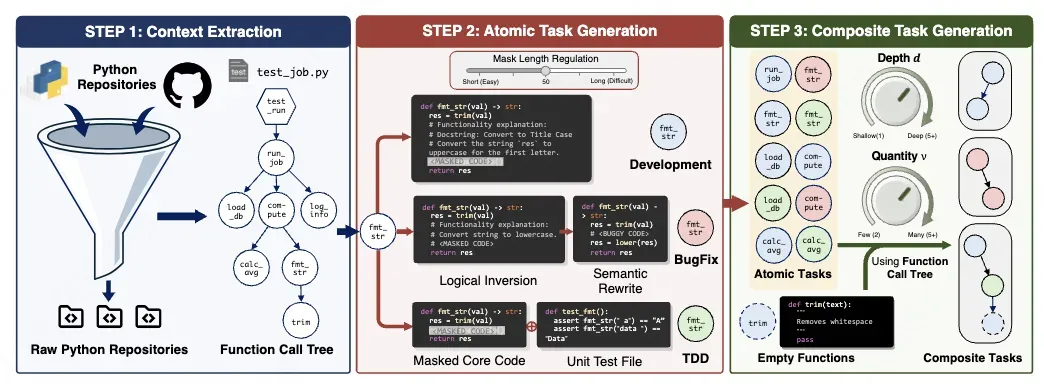
At the core of Meituan's contributions to ACL 2026 is a focus on the fundamental capabilities of Large Language Models (LLMs). The research into large model evaluation suggests a shift toward more rigorous and nuanced ways of measuring AI performance. Rather than relying on basic benchmarks, Meituan's work explores how models can be assessed in more dynamic and demanding environments. This is closely linked to their research on complex process reasoning, which addresses the challenge of moving AI beyond simple pattern matching. By focusing on how models navigate multi-step logic and intricate workflows, Meituan is contributing to the development of AI that can handle the sophisticated demands of industrial-scale applications.
Optimization of Mathematical Thinking and Reinforcement Learning
Another pillar of Meituan's recent research involves competition-level mathematical thinking optimization. This area of study is particularly significant as it tests the limits of a model's logical consistency and problem-solving depth. Optimizing for this level of difficulty ensures that the underlying reasoning engines are robust enough for high-stakes decision-making. Complementing this is the work on reinforcement learning (RL) optimization. Reinforcement learning remains a critical component in fine-tuning models to align with human preferences and specific task requirements. Meituan’s focus here indicates a push toward more efficient training methodologies that can refine model behavior with greater precision and less computational overhead.
The Shift Toward Generative Recommendation Systems
Meituan is also redefining the intersection of NLP and user experience through generative recommendation systems. Traditional recommendation engines often rely on discriminative models to rank items. However, the research presented for ACL 2026 explores a generative approach, which allows for more flexible and contextually rich interactions. This paradigm shift suggests that future recommendation systems will not just suggest a product or service but will be able to generate personalized explanations, synthesize information from various sources, and engage in a more conversational manner with the user. This aligns with the broader industry trend of integrating generative AI into the core functionality of consumer-facing platforms.
Industry Impact
Meituan's research at ACL 2026 carries significant implications for the AI industry, particularly for companies operating at the intersection of technology and local services. By improving complex process reasoning, Meituan is paving the way for AI agents that can manage logistics, scheduling, and customer service with minimal human intervention. The focus on mathematical thinking and reinforcement learning ensures that these systems are not only fast but also logically sound and reliable.
Furthermore, the move toward generative recommendation marks a transition in how digital platforms interact with users. As these technologies mature, we can expect a more seamless and intuitive user experience where the AI understands intent rather than just keywords. Meituan’s contribution to the "new generative paradigm" reinforces the idea that the next generation of AI will be defined by its ability to reason, optimize itself through feedback, and generate high-value outputs in complex, real-world scenarios.
Frequently Asked Questions
Question: What is the significance of Meituan's papers being accepted by ACL 2026?
ACL (Association for Computational Linguistics) is one of the most prestigious international conferences in the NLP field. Having six papers accepted demonstrates Meituan's high level of technical expertise and its contribution to the global AI research community, particularly in areas like reasoning and model optimization.
Question: How does "competition-level mathematical thinking" benefit AI development?
Mathematical problems at a competition level require deep logical reasoning and the ability to handle multi-step proofs. By optimizing models for these tasks, researchers can improve the general reasoning capabilities of AI, making it more effective at solving complex problems in other domains like coding, logistics, and financial analysis.
Question: What is a generative recommendation system?
Unlike traditional systems that choose from a fixed list of items, a generative recommendation system can create personalized content, summaries, or explanations for its suggestions. This allows for a more interactive and helpful user experience, as the AI can explain why a recommendation is being made in a natural, human-like way.

