
Meituan LongCat Team Unveils WBench: The First Systematic Multi-Round Benchmark for Interactive Video World Models
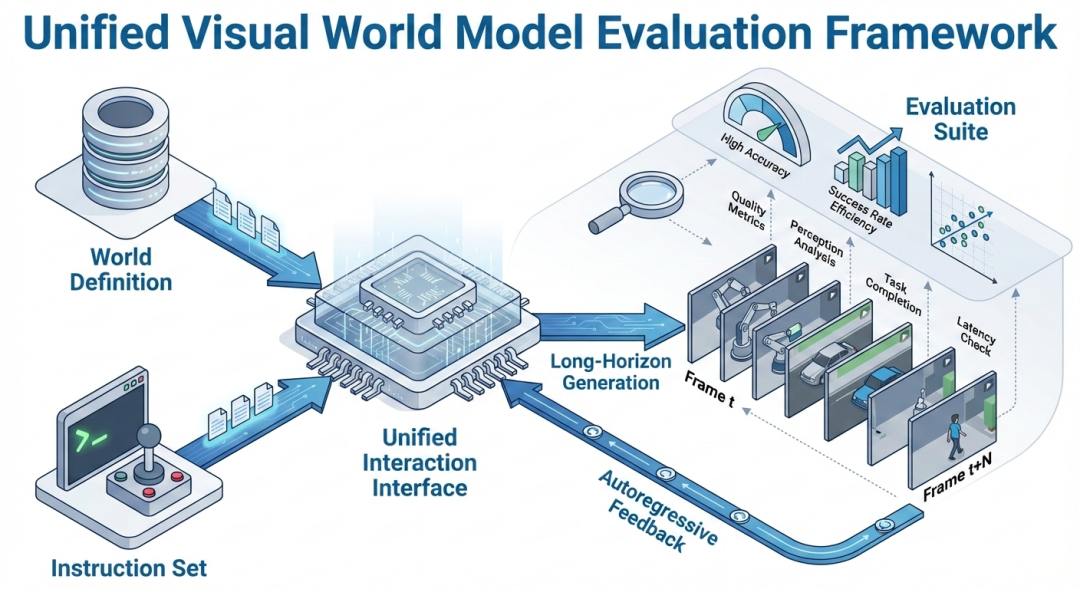
The Meituan LongCat team has introduced and open-sourced WBench, a pioneering systematic multi-round evaluation benchmark specifically designed for interactive video world models. Described as a diagnostic "CT scanner" for AI, WBench is engineered to pinpoint the exact limitations and bottlenecks encountered by current world models as they transition from passive video generation to active, user-driven interaction. By evaluating complex scenarios—ranging from lunar walks to cybernetic urban environments—WBench provides a structured framework to measure how effectively these models can handle multi-stage interactive tasks. This open-source initiative aims to provide the industry with a necessary tool to identify where models "get stuck" in the process of simulating responsive environments, ultimately driving the evolution of more sophisticated and interactive artificial intelligence systems.
Key Takeaways
- Pioneering Framework: WBench is the first systematic, multi-round evaluation benchmark dedicated to interactive video world models.
- Diagnostic Precision: The tool acts as a "CT scanner," identifying specific technical bottlenecks in the transition from passive viewing to active interaction.
- Open-Source Contribution: Developed by the Meituan LongCat team, the benchmark is now open-sourced to facilitate industry-wide research and development.
- Comprehensive Scope: The benchmark evaluates diverse scenarios, including lunar exploration and futuristic cityscapes, to test the boundaries of world models.
In-Depth Analysis
The Transition from Passive Observation to Active Interaction
The emergence of world models has marked a significant shift in how artificial intelligence perceives and generates visual data. However, a primary challenge remains: moving beyond "passive viewing"—where a model simply generates a static or linear video sequence—to "active interaction," where the model must respond dynamically to user inputs or environmental changes. The Meituan LongCat team identifies this transition as a critical frontier in AI development. WBench is specifically designed to evaluate this interactive capability, providing a structured environment where models are tested across multiple rounds of interaction. This multi-round approach is essential because it simulates real-world complexity, where a single action often leads to a cascade of environmental reactions that the model must maintain and update consistently.
WBench as a Diagnostic "CT Scanner" for AI
One of the most compelling aspects of WBench is its role as a diagnostic tool. The LongCat team utilizes the metaphor of a "CT scanner" to describe WBench’s function. Just as medical imaging allows doctors to see internal structures and identify specific ailments, WBench allows AI researchers to look deep into the operational logic of a world model. It identifies exactly where a model "gets stuck"—whether it is a failure in maintaining spatial consistency over time, a breakdown in the logic of cause-and-effect during interaction, or an inability to render complex textures like those found in a "cyber city" or the unique physics of a "moonwalk." By providing this level of granular feedback, WBench enables developers to move beyond general performance metrics and focus on solving the specific structural weaknesses that hinder truly interactive world simulation.
Industry Impact
The introduction of WBench carries significant implications for the AI industry, particularly in the fields of robotics, autonomous systems, and immersive digital environments. By open-sourcing the benchmark, Meituan is providing a standardized yardstick that has been largely missing in the world model discourse. Standardized evaluation is a prerequisite for rapid innovation; without it, comparing the efficacy of different models remains subjective and fragmented.
Furthermore, WBench’s focus on multi-round interaction sets a new bar for what constitutes a "world model." It shifts the industry focus from mere visual fidelity to functional interactivity. As developers utilize WBench to identify and overcome the boundaries of their models, we can expect a surge in AI systems that are not just capable of generating realistic videos, but are also capable of serving as reliable simulators for training autonomous agents or creating highly responsive virtual worlds. This benchmark effectively maps the current "boundaries" of world models, providing a clear roadmap for future research and engineering efforts.
Frequently Asked Questions
Question: What makes WBench different from existing video evaluation benchmarks?
Unlike traditional benchmarks that often focus on the visual quality or the realism of a single generated video clip (passive viewing), WBench is the first to implement a systematic, multi-round evaluation process. This allows it to measure how a model handles ongoing interaction and maintains consistency across multiple steps, which is the core requirement for a true "world model."
Question: Who can benefit from using the WBench benchmark?
As an open-source tool, WBench is designed for AI researchers, developers, and technology teams working on world models, generative video, and interactive AI. It is particularly useful for those looking to diagnose specific failures in their models' interactive logic and for teams aiming to standardize their evaluation metrics against industry-wide benchmarks.
Question: What types of environments does WBench use for testing?
According to the Meituan LongCat team, WBench tests models across a wide variety of scenarios. These include highly specialized environments like lunar landscapes (testing physics and unique lighting) and complex, dense environments like cybernetic cities (testing high-detail rendering and complex interactive logic).

