
Meituan LongCat Team Unveils WBench: The First Systematic Multi-Round Benchmark for Interactive Video World Models
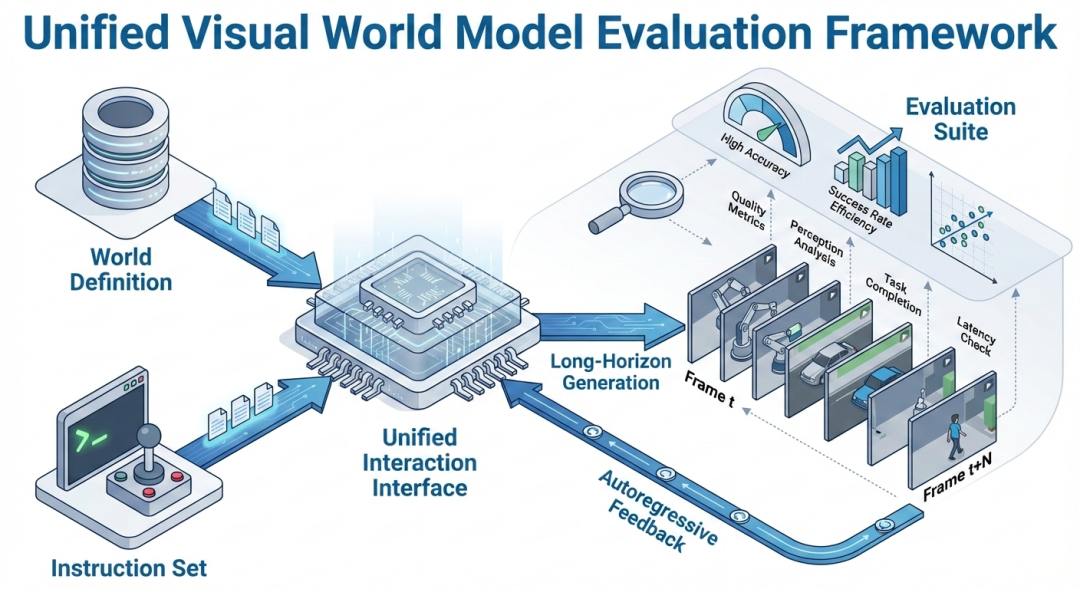
Meituan's LongCat team has introduced and open-sourced WBench, a pioneering systematic multi-round evaluation benchmark designed specifically for interactive video world models. Positioned as a diagnostic 'CT scanner' for the AI industry, WBench is engineered to identify the precise technical bottlenecks encountered as world models transition from passive video generation to active, interactive environments. By providing a structured framework for multi-round assessment, the benchmark offers researchers a tool to pinpoint where current models fail during complex interactions. This release marks a significant step in standardizing the evaluation of dynamic AI systems, moving beyond traditional 'passive viewing' metrics to more rigorous, interaction-based performance analysis.
Key Takeaways
- Introduction of WBench: Meituan’s LongCat team has officially released and open-sourced WBench, the first systematic benchmark for interactive video world models.
- Diagnostic Capabilities: The tool functions as a "CT scanner," providing precise localization of performance gaps in AI models.
- Focus on Interaction: WBench specifically targets the transition from "passive viewing" (generative video) to "active interaction" (responsive world models).
- Multi-Round Evaluation: Unlike single-step assessments, WBench utilizes a multi-round framework to test the consistency and logic of AI interactions over time.
- Open-Source Contribution: By making WBench open-source, Meituan provides the global AI community with a standardized tool to measure the boundaries of world model capabilities.
In-Depth Analysis
Defining the Boundaries of World Models
The emergence of world models represents a significant shift in artificial intelligence, moving from simple pattern recognition to the simulation of physical and conceptual environments. However, as the Meituan LongCat team identifies, there is a distinct boundary between a model that can generate a video (passive viewing) and one that can respond logically to user inputs within that video (active interaction). WBench is designed to explore this boundary, specifically focusing on how models handle the complexities of a "Cyber City" or a "Moonwalk" scenario where the environment must react to changes.
The challenge in current AI development is not just creating visually coherent frames, but ensuring that those frames adhere to a consistent set of rules during an interactive session. WBench addresses this by providing a systematic way to measure how well a model maintains its internal logic across multiple rounds of interaction. This is crucial for applications ranging from autonomous driving simulations to immersive virtual environments, where a single failure in interaction logic can break the utility of the model.
The "CT Scanner" Approach to AI Evaluation
Meituan describes WBench as a "CT scanner" for world models, a metaphor that highlights the benchmark's ability to look beneath the surface of AI outputs. Traditional benchmarks often focus on output quality—such as resolution or aesthetic appeal—which only provides a superficial view of a model's capabilities. In contrast, WBench aims to diagnose the internal structural failures of a model's world logic.
By employing a multi-round evaluation process, WBench can identify exactly where a model "gets stuck." For instance, a model might perform well in the first round of interaction but lose environmental consistency by the third or fourth round. This diagnostic precision allows developers to understand whether a failure is due to a lack of spatial awareness, temporal inconsistency, or a breakdown in causal reasoning. This level of detail is essential for the iterative improvement of complex AI systems that are expected to function in dynamic, unpredictable settings.
From Passive Viewing to Active Interaction
The transition from passive to active AI is one of the most difficult hurdles in the current research landscape. Passive models are essentially "observers" that predict the next pixel or frame based on historical data. Active models, however, must act as "participants" that can process external stimuli and adjust their internal state accordingly.
WBench provides the first systematic framework to evaluate this specific transition. By testing models in scenarios that require active participation, the benchmark reveals the limitations of current architectures that may rely too heavily on statistical correlation rather than a true understanding of world physics and logic. The open-sourcing of this tool ensures that the industry can move toward a unified standard for what constitutes a successful "interactive" world model, fostering faster innovation and more robust AI deployments.
Industry Impact
The introduction of WBench by Meituan's LongCat team is likely to have a profound impact on the AI research and development landscape. By providing the first systematic multi-round benchmark, Meituan is filling a critical gap in the evaluation infrastructure for world models. As the industry moves toward more sophisticated interactive AI, having a standardized "CT scanner" allows for more transparent comparisons between different models and architectures.
Furthermore, the open-source nature of WBench democratizes access to high-level diagnostic tools. Smaller research teams and independent developers can now evaluate their models against the same rigorous standards as major tech companies. This could lead to a more rapid identification of common failure modes in world models, accelerating the development of AI that can safely and effectively interact with the real world or complex virtual simulations.
Frequently Asked Questions
Question: What makes WBench different from existing video evaluation benchmarks?
Unlike traditional benchmarks that focus on the quality of a single generated video (passive viewing), WBench is the first to offer a systematic, multi-round evaluation specifically for interactive world models. It tests how a model responds to changes and maintains consistency over multiple steps of interaction.
Question: Why does the LongCat team refer to WBench as a "CT scanner"?
The term "CT scanner" is used because WBench is designed to perform a deep, diagnostic analysis of a model's performance. It doesn't just show that a model failed; it helps pinpoint exactly where and why the model struggled during the transition from passive generation to active interaction.
Question: Who can use WBench and how is it accessed?
WBench has been open-sourced by the Meituan LongCat team, making it available to the global AI research community. It is intended for developers and researchers working on world models, interactive AI, and advanced video generation systems who need a systematic way to measure the boundaries of their models' capabilities.

