
Meituan BI Architecture Evolution: Leveraging Metric Platforms and Enhanced Computing for Data Consistency
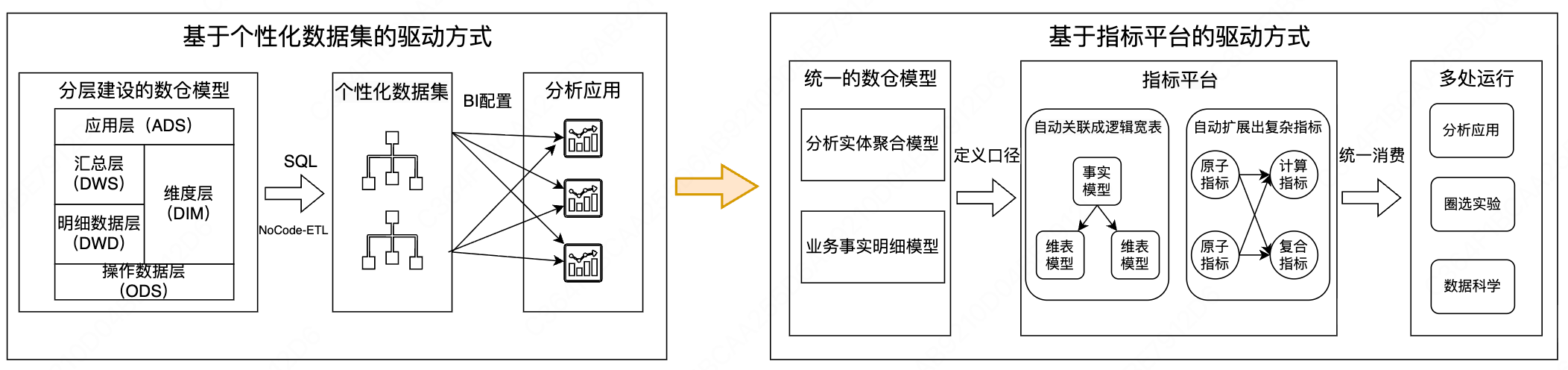
Meituan's Data Platform team has unveiled a new generation of Business Intelligence (BI) architecture centered on a unified Metric Platform. By developing two core capabilities—Automatic Semantics and Enhanced Computing—the team addresses critical challenges inherent in traditional BI systems. These challenges include inconsistent data definitions, often described as 'data caliber confusion,' and suboptimal query performance resulting from the proliferation of personalized datasets. This strategic shift aims to streamline data analysis workflows, ensuring that metrics remain consistent across the organization while maintaining high-performance data retrieval and processing capabilities.
Key Takeaways
- Metric-Centric Architecture: Meituan has transitioned to a new BI framework where the Metric Platform serves as the central core.
- Core Capabilities: The architecture is built upon two primary pillars: Automatic Semantics and Enhanced Computing.
- Solving Data Inconsistency: The new system specifically targets 'data caliber confusion,' a common issue where different users or departments define the same metrics differently.
- Performance Optimization: Enhanced Computing capabilities are implemented to resolve the poor query performance typically associated with fragmented, personalized datasets.
- Architectural Shift: The move represents a departure from traditional BI models driven by individual datasets toward a more standardized, platform-driven approach.
In-Depth Analysis
The Transition to a Metric-Centric BI Framework
Meituan's Data Platform has undergone a significant transformation by placing a Metric Platform at the heart of its BI architecture. In traditional Business Intelligence environments, data analysis is often fragmented across various personalized datasets. This decentralized approach frequently leads to a lack of standardization. By centering the architecture on a Metric Platform, Meituan aims to create a 'single source of truth' for all business metrics. This structural change ensures that instead of managing disparate datasets, the organization focuses on a unified layer where metrics are defined, managed, and served consistently to various downstream applications.
Resolving Semantic Inconsistency through Automatic Semantics
One of the primary pain points addressed by Meituan's new architecture is the 'confusion of data caliber.' In large-scale organizations, different teams often calculate the same business indicators using slightly different logic, leading to conflicting reports and decision-making friction. Meituan's development of 'Automatic Semantics' is designed to solve this problem. By automating the semantic layer, the platform can enforce standardized definitions and logic for every metric. This capability ensures that the semantic meaning of data remains constant, regardless of who is performing the query or which personalized dataset they might be utilizing. It effectively bridges the gap between raw data and business logic, providing a reliable foundation for automated data interpretation.
Optimizing Query Performance with Enhanced Computing
Beyond data consistency, Meituan has focused heavily on the technical efficiency of its BI operations. Traditional BI platforms often struggle with performance bottlenecks when dealing with complex, personalized datasets that require significant computational resources to process. To mitigate this, Meituan has integrated 'Enhanced Computing' into its analysis engine. This capability is specifically tailored to handle the high-concurrency and low-latency requirements of modern business analysis. By optimizing the underlying computation processes, the platform can deliver rapid query results even when dealing with the vast and complex data structures typical of Meituan's diverse business lines. This ensures that the transition to a more structured metric platform does not come at the cost of speed or user experience.
Industry Impact
Meituan's exploration into metric-centric BI architecture reflects a broader trend in the data industry toward 'Headless BI' or 'Metric Layers.' By decoupling the metric definition from the visualization and storage layers, Meituan is setting a benchmark for how large-scale enterprises can maintain data integrity. The focus on Automatic Semantics and Enhanced Computing highlights the industry's move toward more intelligent, self-optimizing data platforms. This approach not only reduces the manual overhead for data engineers but also empowers business users with more accurate and faster insights. As organizations continue to grapple with 'data silos' and 'metric drift,' Meituan's practice provides a viable blueprint for building scalable and consistent data ecosystems.
Frequently Asked Questions
Question: What are the two core capabilities of Meituan's new BI architecture?
Meituan's new BI architecture is built on two core capabilities: Automatic Semantics and Enhanced Computing. Automatic Semantics focuses on maintaining consistent data definitions (caliber), while Enhanced Computing is dedicated to improving query performance and computational efficiency.
Question: How does the Metric Platform address 'data caliber confusion'?
The Metric Platform serves as a centralized hub for all data definitions. By using Automatic Semantics, it ensures that business logic is standardized across the organization. This prevents different teams from producing conflicting results for the same metric, which is a common issue in traditional, dataset-driven BI systems.
Question: Why did Meituan move away from traditional personalized dataset-driven BI?
Traditional BI driven by personalized datasets often led to inconsistent data definitions and poor query performance. Meituan's new architecture seeks to solve these issues by providing a unified metric layer that optimizes both the accuracy of the data (through semantics) and the speed of retrieval (through enhanced computing).


