The Evolution of ThinkPad: From IBM's Iconic Bento Box to Lenovo's 2026 AI-Powered Workstations
The ThinkPad brand marks over three decades of continuous production, maintaining a unique visual and engineering continuity from its 1992 IBM origins to its current status under Lenovo. Despite the 2005 ownership transition, which skeptics feared might dilute the brand, ThinkPad has thrived, reaching 60 million units sold by 2010. In 2026, the series has entered the 'AI Workstation Era,' exemplified by the P14s Gen 6. This modern iteration supports local 70-billion-parameter Large Language Model (LLM) workloads, featuring 96 GB of DDR5 memory and Copilot+ NPUs, all while retaining the classic design elements like dedicated TrackPoint buttons that have defined the brand for 34 years.
Key Takeaways
- Uninterrupted Legacy: ThinkPad has been in continuous production since October 1992, spanning 34 years under IBM and Lenovo.
- Seamless Transition: The 2005 acquisition by Lenovo preserved IBM’s core engineering and design language, leading to 60 million units sold by 2010.
- AI Workstation Evolution: The 2024-2026 era marks a shift toward local AI processing, with hardware capable of running 70-billion-parameter LLMs.
- Design Consistency: The brand maintains a distinct visual identity from the original 1992 700C to the 2026 P14s Gen 6.
In-Depth Analysis
The Historical Continuity of the ThinkPad Brand
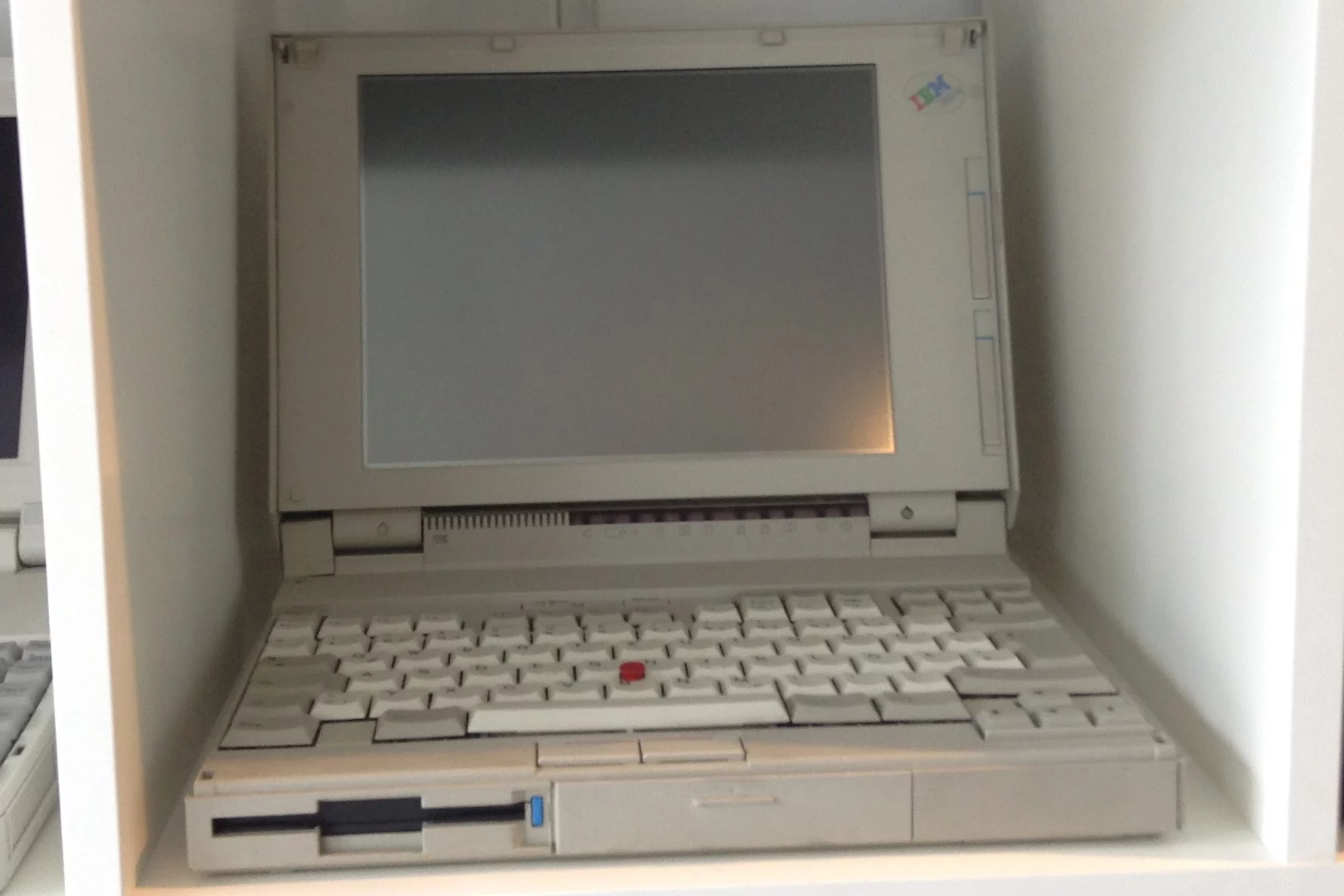
Since its inception in October 1992, the ThinkPad has remained one of the longest-running commercial laptop families in the technology market. Originally inspired by the Japanese bento box design under IBM, the brand has demonstrated an unusual level of visual and functional continuity. This journey is categorized into several distinct eras, beginning with the IBM Classic era (1992-2000), which introduced iconic models like the 700C and the 701c.
As the brand moved into the Late IBM era (2000-2005), it saw the rise of the T-series (T20, T40) and the X-series (X20, X41 Tablet), establishing the foundation for professional mobile computing. The transition to Lenovo in 2005 was a pivotal moment that many industry skeptics believed would rupture the brand's identity. However, the engineering and design teams remained largely intact, allowing the Lenovo Transition era (2005-2010) to flourish with models like the X300 and W500, eventually surpassing the 60-million-unit sales milestone by 2010.
The Maturity and Modernization of a Design Icon
Following the transition, the Lenovo Maturity era (2010-2018) and the Modern Era (2018-2024) saw the introduction of the X1 Carbon series and the P-series workstations. These periods were defined by refining the classic formula while adapting to thinner form factors, such as the X1 Nano and the T14 series. Throughout these changes, the core design language—characterized by its durable business chassis and the signature TrackPoint—remained a constant, serving as a reliable tool for long-term users, some of whom have utilized the brand as a "daily driver" for over 25 years.
The AI Workstation Era (2024-2026)
The current landscape, defined as the AI Workstation Era, represents a significant technological leap. The 2026 P14s Gen 6 AMD exemplifies this shift. No longer just a tool for productivity software, the modern ThinkPad is designed to handle local 70-billion-parameter Large Language Model (LLM) workloads. This is made possible by the integration of 96 GB of DDR5 SODIMMs and Copilot+ NPUs (Neural Processing Units). This era proves that the ThinkPad formula remains relevant by housing cutting-edge AI capabilities within the traditional, rugged business chassis that features dedicated TrackPoint buttons.
Industry Impact
The longevity of the ThinkPad brand serves as a case study in maintaining brand equity through corporate transitions. By preserving the "Bento Box" design philosophy while aggressively adopting new internal technologies like NPUs and high-capacity DDR5 memory, Lenovo has secured ThinkPad's position in the high-end workstation market. The ability to run massive LLMs locally on a 14-inch laptop signals a shift in the industry where professional hardware must now balance traditional ergonomics with the heavy computational demands of generative AI. This evolution ensures that the ThinkPad remains a staple for power users who require both historical reliability and future-ready AI performance.
Frequently Asked Questions
Question: When did Lenovo take over the ThinkPad brand from IBM?
Lenovo officially acquired the ThinkPad brand from IBM in 2005. Despite initial skepticism, the engineering and design standards were maintained, leading to significant growth in the following years.
Question: What are the specifications of the 2026 ThinkPad P14s Gen 6?
The 2026 P14s Gen 6 AMD is a 14-inch workstation featuring 96 GB of DDR5 SODIMMs and a Copilot+ NPU. It is specifically designed to run local 70-billion-parameter LLM workloads while maintaining classic features like dedicated TrackPoint buttons.
Question: How long has the ThinkPad been in production?
The ThinkPad has been shipped continuously since October 1992, making it one of the longest-running laptop families in the world, with a history spanning over 34 years as of 2026.