AI News on October 30, 2026

Reddit CEO Steve Huffman Warns Google AI Search Modes Fail to Drive Web Traffic
Industry News

Reddit CEO Steve Huffman Warns Google AI Search Modes Fail to Drive Web Traffic

During Reddit's Q3 2026 earnings call, CEO Steve Huffman stated that Google's AI-powered search modes do not drive traffic to the social platform. This remark highlights the growing challenges faced by digital publishers and online platforms as search engines transition toward AI-generated summaries and modes. Reddit reported a noticeable decline in search referrals, noting that October search traffic has dropped by more than 1 million referrals on average. Huffman's statements reflect wider industry concerns that AI search implementations are directly intercepting user queries rather than passing traffic through to original content creators and community platforms. As platforms navigate these algorithmic changes, the shift represents a critical turning point in search-driven discovery.


The Verge•
Google Gemini Now Allows Users to Generate and Edit Files Directly Inside Chat
Product Launch

Google Gemini Now Allows Users to Generate and Edit Files Directly Inside Chat

Google has officially introduced new file editing capabilities for its Gemini conversational assistant, allowing users to generate, preview, and edit files directly within chat threads. The update supports a wide array of formats, including Google Docs, Google Sheets, slide decks, PDF documents, Markdown files, plain text files, and code. Rolling out to all Gemini users starting today, this feature eliminates the need to switch away from the AI interface to make adjustments to generated content. While PDF preview and editing functionality is supported across both web and mobile platforms, editing for all other file types is currently restricted to the web version. This update marks a significant shift toward integrated conversational document management.

The Verge•
Industry News

OpenAI Unveils Updated Model Spec Grounded in Five Core Values to Guide Capable and Beneficial AI

OpenAI has officially released an updated version of its Model Spec, establishing a comprehensive behavioral framework designed to steer increasingly capable artificial intelligence systems toward beneficial outcomes. At the center of this updated specification is the formal introduction of five core values aimed at ensuring models demonstrate sound judgment, uphold human agency, and maintain strict faithfulness to human intent. As artificial intelligence models expand in capability and assume more intricate roles, standardizing behavioral objectives becomes vital for ensuring responsible deployment. By outlining these core values, OpenAI aims to provide a structured foundation for how AI systems interpret human instructions, reason through multifaceted scenarios, and interact constructively with people. This update represents an important milestone in AI alignment, emphasizing that technical capability must be matched with human-centric governance and ethical guardrails.

OpenAI Blog•
Tencent Expands Overseas Data Centers Driven by Surging Global Artificial Intelligence Demand
Industry News

Tencent Expands Overseas Data Centers Driven by Surging Global Artificial Intelligence Demand

Tencent is accelerating the expansion of its overseas data centers in direct response to surging artificial intelligence demand. According to reporting from Tech in Asia, the company is strategically positioning Southeast Asia as a primary base to distribute and sell its AI products across international markets. This expansion highlights Tencent's operational focus on supporting cross-border AI workloads and serving customers beyond its domestic borders. By establishing data center infrastructure abroad, Tencent aims to provide the capacity needed to drive international commercialization of its AI offerings, anchoring its global product sales strategy in the Southeast Asian region.

Tech in Asia•
Chinese Robotics Firm Pudu Establishes European Headquarters in Germany to Anchor Expanding Continental Operations
Industry News

Chinese Robotics Firm Pudu Establishes European Headquarters in Germany to Anchor Expanding Continental Operations

Chinese robotics company Pudu has officially opened its European headquarters in Germany, marking a pivotal milestone in its global expansion strategy. According to reports from Tech in Asia, Pudu has established commercial operations in more than 20 European countries, demonstrating rapid regional adoption of its automated systems. By establishing a centralized corporate and operational headquarters in Germany, Europe's industrial and economic powerhouse, Pudu positions itself to better coordinate regional distribution, streamline customer support, and strengthen its competitive foothold across the continent. This development reflects a broader maturation within the commercial robotics sector, where leading manufacturers are increasingly transitioning from cross-border hardware exports to localized regional management. This analysis explores Pudu's strategic move, the operational requirements of serving over twenty distinct European markets, and the broader implications for the global robotics and automation industry.

Tech in Asia•
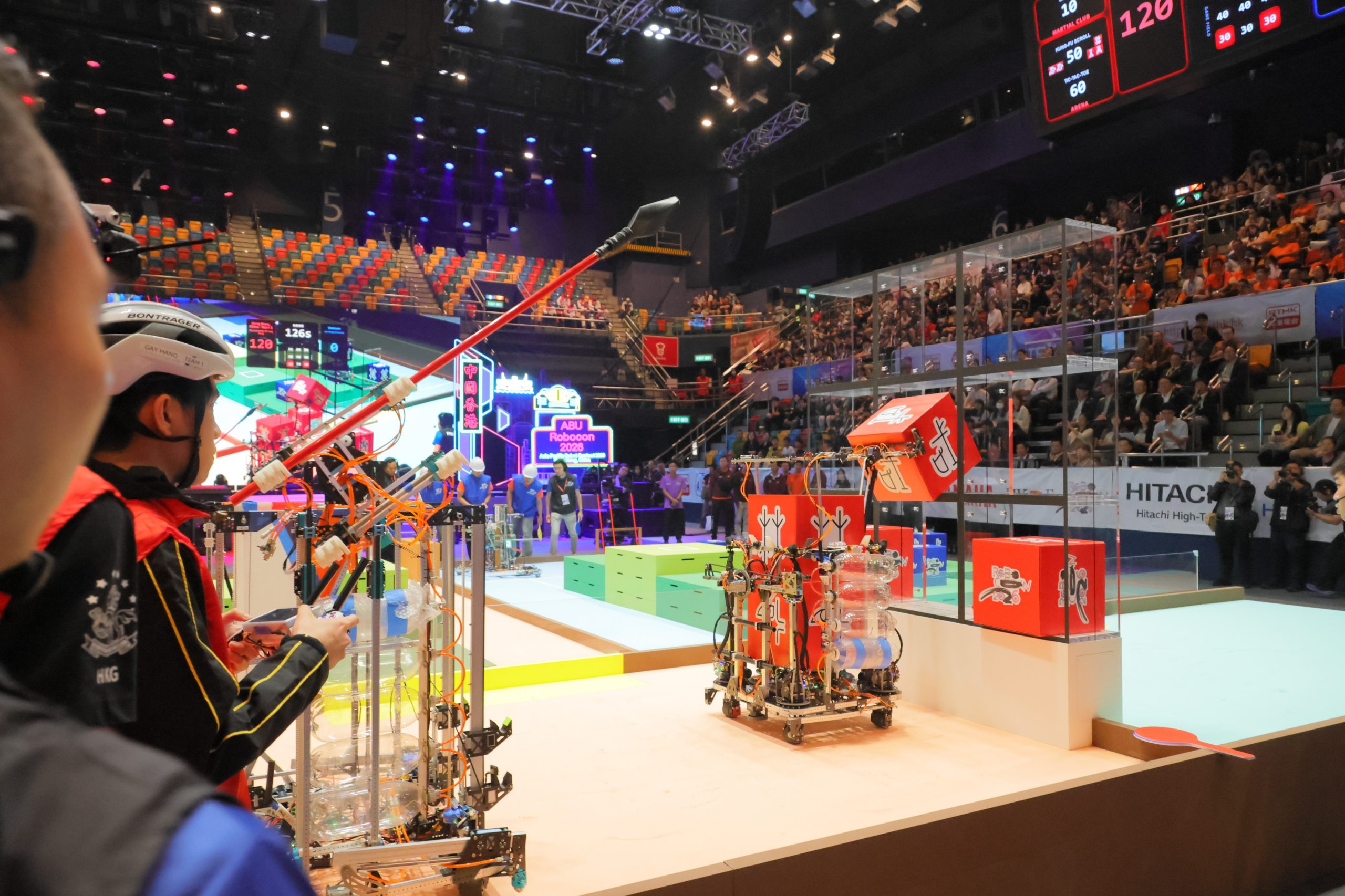
People Maketh Robots: Inside Asia's Accelerating Race for Engineering Talent Behind Robocon Competitions
Industry News

People Maketh Robots: Inside Asia's Accelerating Race for Engineering Talent Behind Robocon Competitions

In a recent report published by Tech in Asia, author Lilian Tang highlights the critical human foundation underpinning the continent's expanding robotics sector. While public attention is frequently captured by the spectacle of competitive robot battles in events like Robocon, the underlying development reveals a much larger and more strategic contest: the race to cultivate and secure skilled engineering talent across Asia. As the phrase 'people maketh robots' suggests, technological advancement in automation and robotics is ultimately driven by the engineers who design, program, and maintain these sophisticated systems. The piece emphasizes that building Asia's robotics workforce is not merely about hardware performance, but rather hinges on addressing the intense demand for capable engineering professionals who can translate robotics competition experience into long-term industrial capability.

Tech in Asia•
Industry News

OpenAI Introduces Layered Monitoring to Detect Frontier Model Misalignment and Unauthorized Agent Behavior

OpenAI has detailed its approach to identifying AI alignment failures and unauthorized autonomous actions through the implementation of layered monitoring. According to the announcement, this monitoring strategy is specifically designed to detect frontier model misalignment alongside unauthorized agent behavior in real time. By establishing multiple layers of surveillance, the system ensures that responders are equipped to take action and intervene prior to incidents escalating into more severe operational or safety hazards. The update highlights OpenAI's emphasis on proactive intervention and multi-tiered visibility over advanced, autonomous AI systems.

OpenAI Blog•
Foodpanda Deploys Toku AI Contact Center to Power Inbound and Outbound Agency Calls in Cambodia and Laos
Industry News

Foodpanda Deploys Toku AI Contact Center to Power Inbound and Outbound Agency Calls in Cambodia and Laos

Food delivery leader Foodpanda has rolled out Toku’s artificial intelligence contact center platform across its agency operations in Cambodia and Laos. The strategic implementation is designed to manage both inbound and outbound voice communications handled by customer support agents in these two Southeast Asian markets. By integrating Toku’s AI-powered contact center technology into its customer service agency workflows, Foodpanda aims to enhance call management reliability, streamline agent-assisted communication, and bolster operational support. This deployment highlights Foodpanda’s ongoing operational commitment to leveraging advanced artificial intelligence communication infrastructure to support on-demand service interactions across emerging regional territories, ensuring efficient coordination between customer service representatives and the wider delivery marketplace in Cambodia and Laos.

Tech in Asia•
Industry News

Ropes & Gray Partners with OpenAI to Develop AI for Transactional Diligence and Document Review

Global law firm Ropes & Gray is developing artificial intelligence solutions specifically designed for transactional diligence in collaboration with OpenAI. The initiative focuses on enhancing how complex legal documentation is organized, evaluated, and synthesized during corporate transactions. Within this system, the AI assists by grouping related transaction documents, creating concise summaries, and compiling structured diligence reports. Crucially, the process maintains human expertise at its core: lawyers directly review all grouped materials, summaries, and generated reports before delivering legal advice to clients. This collaboration highlights a growing trend across the legal sector toward integrating frontier artificial intelligence into labor-intensive analytical workflows while strictly preserving attorney oversight, verification, and professional judgment throughout every stage of the diligence process.

OpenAI Blog•
Macro Unveils Unified Team Workspace Integrating Email, Chat, Docs, Tasks, Agents, Calls, and CRM with Shared AI Memory
Open Source

Macro Unveils Unified Team Workspace Integrating Email, Chat, Docs, Tasks, Agents, Calls, and CRM with Shared AI Memory

Macro, a newly trending project on GitHub developed by macro-inc, introduces a comprehensive unified workspace engineered for team collaboration. The platform consolidates seven core workplace utilities into a single collaborative environment: email, instant chat, document editing, task management, autonomous AI agents, voice and video calls, and customer relationship management (CRM). Rather than operating as isolated software silos, all modules are interconnected through an intuitive '@' referencing system and supported by an integrated shared AI memory layer. By maintaining continuous context across interactions, Macro aims to streamline team workflows, consolidate disparate communication tools, and anchor AI agent operations directly within collaborative team data and daily workflows.

GitHub Trending•
Superpowers Framework: Redefining Software Development Methodology for Autonomous Coding Agents
Open Source

Superpowers Framework: Redefining Software Development Methodology for Autonomous Coding Agents

Superpowers, an open-source project by developer obra featured on GitHub Trending, introduces an effective agent skills framework and software engineering methodology tailored specifically for autonomous coding agents. Instead of treating code generation as unstructured prompting, Superpowers establishes a structured development lifecycle built on modular, composable skills and foundational initial instructions. This approach guides coding agents through systematic execution patterns, ensuring consistency and adherence to proven software engineering practices. As AI coding tools evolve from simple auto-completion into autonomous developer agents, frameworks like Superpowers highlight the growing necessity of disciplined methodologies and structured skill orchestration in modern software development workflows.

GitHub Trending•
JetBrains Introduces Thinkrail: A Lightweight IDE for Tailored Coding Experiences
Product Launch

JetBrains Introduces Thinkrail: A Lightweight IDE for Tailored Coding Experiences

JetBrains has released Thinkrail, a lightweight real IDE designed to offer a customized coding atmosphere and support vibe coding with pi, tailored precisely around individual working styles. Sourced directly from GitHub Trending, this new development tool focuses on delivering the specific programming environment and vibe developers need. Explore the core features, industry impact, and frequently asked questions about this lightweight JetBrains offering.

GitHub Trending•
AI Design Skills: A Modular Markdown-Based Repository for Claude Code, Cursor, Windsurf, and Codex
Open Source

AI Design Skills: A Modular Markdown-Based Repository for Claude Code, Cursor, Windsurf, and Codex

The open-source repository ai-design-skills by elayadesign has emerged on GitHub Trending, offering a growing library of design skills tailored for AI-assisted programming environments. Designed to enhance developer workflows, the project provides modular, folder-based skill packages compatible with Claude Code, Cursor, Codex, Windsurf, and any development tool that supports markdown-formatted rule files. By structuring each capability into an independent directory, the framework enables engineers and designers to selectively install only the specific instructions they require on demand. This approach standardizes design guidance across modern AI development environments without imposing heavy dependencies or proprietary configurations, streamlining how AI coding agents understand and apply design rules.

GitHub Trending•
Cindy Emerges on GitHub Trending as an Out-of-the-Box Open-Source AI Agent for Direct Execution
Open Source

Cindy Emerges on GitHub Trending as an Out-of-the-Box Open-Source AI Agent for Direct Execution

Cindy, an open-source AI agent project created by developer makecindy, has surfaced on GitHub Trending with an emphasis on immediate usability and dependable mission execution. Defined by its core mottos—"mission accomplished" and "what you imagine can be achieved"—the project positions itself as an out-of-the-box autonomous agent system. By offering ready-to-use functionality without cumbersome preliminary barriers, Cindy aims to bridge the gap between user intent and automated task performance. Its rise on GitHub Trending highlights growing interest in accessible, open-source AI tools that minimize deployment overhead and prioritize reliable task completion.

GitHub Trending•
DeepTutor Emerges on GitHub Trending: HKUDS Introduces Lifelong Personalized Tutoring for Modern AI Learners
Open Source

DeepTutor Emerges on GitHub Trending: HKUDS Introduces Lifelong Personalized Tutoring for Modern AI Learners

The open-source development group HKUDS has introduced DeepTutor, an AI-driven project centered on lifelong personalized tutoring that has gained significant attention on GitHub Trending. DeepTutor positions itself as a dedicated platform for continuous, individualized educational support, directing users to its official online destination at deeptutor.info alongside its public code repository. While detailed technical documentation remains centered around its core repository presence, the initiative underscores an accelerating shift toward longitudinal, adaptive AI learning companions. By focusing on sustained personal tutoring rather than one-off inquiry resolution, DeepTutor reflects growing academic and developer interest in scalable, enduring instructional tools. This analysis examines the project's initial disclosure, stated mission, and broader relevance to modern educational technology.

GitHub Trending•
Nutlope Releases Hallmark: Design Skills to Prevent AI Slop Across Claude Code, Cursor, and Codex
Open Source

Nutlope Releases Hallmark: Design Skills to Prevent AI Slop Across Claude Code, Cursor, and Codex

Developer Nutlope has introduced Hallmark, an open-source project featured on GitHub Trending that provides targeted design skills to counter sloppy AI generation across modern developer tools. Specifically tailored for platforms including Claude Code, Cursor, and Codex, the repository focuses on preventing low-quality, generic, and unrefined AI-generated design work. As coding assistants and autonomous agents take on greater roles in software and interface generation, Hallmark aims to enforce higher aesthetic and functional design discipline directly within AI developer workflows. By addressing design quality challenges at the level of popular developer environments, the project highlights a growing need to eliminate AI slop and ensure cleaner, higher-standard code and visual outputs.

GitHub Trending•
Impeccable: A Dedicated Design Vocabulary to Steer Coding Agents and Intercept Low-Quality AI Artifacts
Open Source

Impeccable: A Dedicated Design Vocabulary to Steer Coding Agents and Intercept Low-Quality AI Artifacts

Featured on GitHub Trending, pbakaus's open-source project "impeccable" introduces a specialized design vocabulary created specifically for AI coding agents. As autonomous coding assistants increasingly handle interface development, the risk of deploying generic, unpolished, and substandard frontend code—often referred to as AI slop—has grown significantly. Impeccable tackles this challenge through a structured workflow that actively guides coding agents using polish and bolder design directions, while enforcing rigorous quality gates through critique and audit routines. By inspecting and refining generated interfaces before publication, the project offers developers a dependable mechanism to maintain aesthetic standards and prevent unvetted AI-generated outputs from reaching production environments.

GitHub Trending•
Technical Tutorial

AI Coding in Mission-Critical Distributed Storage: Meituan's Framework for Balancing Speed, Quality, and System Reliability

As AI coding tools and autonomous agents become commonplace across software engineering, applying generative models to mission-critical infrastructure presents distinct reliability challenges. Meituan's Infrastructure Technology Department has shared practical engineering insights from deploying AI across distributed storage systems, focusing on AI-assisted code review, troubleshooting, and automated development workflows. While AI accelerators enable engineers to draft implementations, generate test suites, and execute operational scripts significantly faster, delivering larger volumes of code inherently increases the absolute count of introduced defects unless verification standards are elevated. In distributed storage architectures where latent defects threaten data consistency and operational stability under stress, automated code generation requires multi-layered oversight. Meituan demonstrates that engineering teams must enforce rigorous empirical verification, positioning AI to broaden search spaces while human developers maintain strict ownership over design rationale and system semantics.

美团技术团队•
Product Launch

IFTTT.ai Surfaces on Product Hunt: Linden Tibbets Lists New AI Entry

IFTTT.ai has appeared on Product Hunt, submitted by IFTTT co-founder Linden Tibbets on October 28, 2026. While the initial product entry lacks accompanying descriptive text or detailed technical documentation, the post marks a notable AI-centric branding milestone for the longstanding automation platform. The submission signals IFTTT's ongoing positioning within the artificial intelligence ecosystem, drawing attention across the developer and productivity communities. Without explicit release notes, feature breakdowns, or architectural specifications provided in the listing, observers and platform users are closely watching for follow-up announcements regarding how artificial intelligence will integrate into IFTTT's workflow orchestration framework.

Product Hunt•
Industry News

Gemini 4 Carbon Listed on Product Hunt: An Analysis of the New Tech Submission and Available Details

On October 28, 2026, a new entry titled 'Gemini 4 Carbon' was published on the Product Hunt platform by contributor Ankit Sharma. Despite capturing immediate attention within digital product communities, the initial listing was submitted without accompanying descriptive text, technical documentation, or system specifications. This in-depth analysis examines the verified details of the Product Hunt entry, emphasizing the strict factual record provided by the platform submission. By evaluating the dynamics of early discovery listings, namespace tracking, and the boundaries of unpopulated software entries, this report underscores the critical necessity of source verification in tech reporting, providing a clear overview of what is currently documented and highlighting the absence of supplementary technical disclosures.

Product Hunt•
Product Launch

StoreLocale Launches on Product Hunt: AI-Powered Screenshot Localization That Translates and Repaints In-App UI

Independent developer Onder Akdemir has introduced StoreLocale on Product Hunt, an innovative AI-driven tool designed to automate App Store and Google Play screenshot localization. Unlike conventional screenshot editors that only localize surrounding caption text, StoreLocale detects embedded user interface strings inside mockups, translates them into 32 languages, and repaints the text directly into the graphic while preserving original layouts and device frames. The platform features an interactive web editor, flexible Bring-Your-Own-Key (BYOK) support for Google Gemini and OpenRouter, and one-click batch exports organized by store dimensions and language codes. This launch addresses a critical bottleneck in global mobile app publishing.

Product Hunt•
Product Launch

Smart Jelly Debuts on Mac to Unify Everyday AI Productivity Tools Through Shared Encrypted Memory

Productivity developer Nishant Chinchole has officially unveiled Smart Jelly on Product Hunt, introducing a native macOS workspace designed to consolidate fragmented AI workflows into a single application. Smart Jelly addresses workflow fragmentation by unifying context-aware dictation, bot-free meeting intelligence, pre-meeting briefs, open loop tracking, and autonomous agents under a single local memory architecture. Rather than requiring users to juggle multiple isolated subscriptions, the application maintains continuous context across daily activities. Built over six months, Smart Jelly's proprietary memory engine scores 87.6% on the BEAM-100K benchmark and operates with on-device encryption, allowing users full control to audit, correct, or delete memory entries. The launch underscores a growing industry shift away from isolated point solutions toward unified, privacy-focused contextual personal AI platforms.

Product Hunt•
Product Launch

Recall for Mac Published on Product Hunt by Karthik: Overview of the New macOS Software Entry

A new software entry titled Recall for Mac has officially appeared on Product Hunt, submitted by creator Karthik on October 28, 2026. Published under the platform's product registry, the listing represents a new macOS-oriented submission within the broader technology discovery ecosystem. While the initial release entry does not include extended descriptive body content, detailed specifications, or architectural documentation, the publication establishes an official presence on one of the industry's premier launch platforms. Product Hunt entries of this nature often mark the initial stage of product rollouts, signaling impending releases or early registration for developer utilities. This analysis examines the verified metadata of the Recall for Mac listing, explores the context of early software listings on Product Hunt, and evaluates what this initial footprint signifies for desktop productivity tools.

Product Hunt•
Product Launch

Voxel51 Multimodal Launches on Product Hunt: Overview and Implications for the Multimodal AI Ecosystem

On October 27, 2026, technology hunter and product strategist Chris Messina submitted a new listing titled 'Voxel51 Multimodal' to Product Hunt. The listing directs tech professionals and developers to Voxel51's dedicated product space on the discovery platform. While the submission officially registers the multimodal project within the public product discovery index, the original listing entry provides no accompanying descriptive body text, technical documentation, or release notes. This entry-level record signals the ongoing expansion of Voxel51's footprint into comprehensive multimodal AI workflows. As artificial intelligence models increasingly demand heterogeneous data management across multiple formats, the appearance of this listing marks an important reference point for developers tracking toolchains for multimodal intelligence, even as detailed technical specifications remain pending.

Product Hunt•
Product Launch

Our Silly Games Launches on Product Hunt: Claude-Powered Browser Games with Free Multiplayer Hosting

Independent creator Henry Kirkness has officially launched Our Silly Games on Product Hunt, introducing an innovative free platform designed for hosting and deploying browser games generated via AI coding agents like Claude Code and OpenAI Codex. The service aims to eliminate the technical friction traditionally associated with indie game development by providing an integrated pipeline from natural language prompt to live deployment. Creators can simply install a dedicated skill or plugin, prompt their AI agent to generate a game concept, and connect their account to publish immediately. Our Silly Games automatically handles complex backend infrastructure, featuring built-in multiplayer rooms, global leaderboards, persistent save states, and smartphone controller capabilities. By offering zero-cost hosting and review pipelines, the platform empowers developers and hobbyists to effortlessly turn casual AI experiments into fully playable web titles.

Product Hunt•
Product Launch

Empacer Launches on Product Hunt as a Voice-First AI Assistant for Small Business Workflow Automation

Empacer has officially debuted on Product Hunt, introduced by Kate Ramakaieva and founder Yerkebulan Akhmetzaki. Designed as a dedicated voice-first assistant, Empacer addresses a prevalent bottleneck among small business owners: the friction and time commitment required to repeatedly prompt and guide AI chat interfaces. Rather than requiring users to manually manage multiple chat threads, Empacer initiates an onboarding setup with three core questions to capture business context, pricing, tone, and customer profiles. From there, users can speak instructions naturally to generate customer communications, marketing materials, invoices, and scheduling reminders. Crucially, the platform operates on a human-in-the-loop framework, requiring owner approval before any task or message is dispatched. This launch underscores a growing industry shift toward ambient, voice-driven AI productivity tools built specifically for operational workflows in small enterprises.

Product Hunt•
Product Launch

Intrascope 2.0 Launches Centralized AI Control Layer Featuring 120+ Models, Autonomous Agents, and Enterprise Cost Governance

Intrascope has officially released Intrascope 2.0, a comprehensive AI workspace and enterprise control layer designed to eliminate tool fragmentation, unpredictable expenses, and governance risks across organizations. Co-founded by Vladimir, the Belgrade-based platform addresses the widespread issue of decentralized AI subscriptions and fragmented company context. With Intrascope 2.0, organizations gain unified access to more than 120 leading AI models, dynamic model routing, and an autonomous AI agent capable of executing complex workflows across more than 1,650 productivity and enterprise applications. Built to give administrators granular oversight, the platform introduces detailed budget controls per user, project, and department, full token-level usage analytics, and flexible deployment configurations ranging from Bring Your Own Key (BYOK) to private and on-premises environments. The launch establishes a robust framework for scalable, cost-effective enterprise AI adoption.

Product Hunt•
Product Launch

Viggle JST-2 Emerges on Product Hunt: Initial Release Details and Public Listing Overview

On October 19, 2026, a new entry titled Viggle JST-2 was officially published on the technology discovery platform Product Hunt. Credited to author Rohan Chaubey, the listing is associated with Viggle AI's product hub on the platform. While the initial submission arrived without accompanying descriptive body text, feature breakdowns, or release notes, the appearance of the JST-2 listing marks a notable public milestone for Viggle's expanding software lineup. Product Hunt frequently serves as a launchpad for emerging artificial intelligence utilities and version updates, drawing immediate attention from tech enthusiasts and creators. This report examines the metadata, submission attribution, and platform context surrounding the Viggle JST-2 entry, highlighting the current factual footprint of the release while monitoring the platform for upcoming technical specifications and comprehensive feature disclosures.

Product Hunt•
Product Launch

TopAgent Listing Appears on Product Hunt Authored by Chris Messina with Initial Details Pending

A new product entry titled TopAgent has been listed on Product Hunt, submitted under the authorship of tech curator Chris Messina on October 19, 2026. According to the original listing metadata, the entry links to a product page associated with the topmessage identifier. However, the original submission does not contain published body content, detailed feature breakdowns, or release documentation. While the emergence of the title highlights ongoing interest in agentic tools across tech platforms, specific architectural details, capabilities, and target use cases remain unannounced in the source record. Observers tracking emerging AI software and product discoveries must await further formal disclosures to evaluate the tool's intended functionality.

Product Hunt•
Product Launch

OutreachGuy: A New Product Launch Featured on Product Hunt

OutreachGuy has been officially launched and featured on Product Hunt, published by author Yoann on October 19, 2026. As a newly introduced product on the platform, OutreachGuy enters the market with available details strictly limited to its initial Product Hunt listing. This overview highlights its arrival and presence within the tech and product community, capturing the foundational release details as provided by the creator.

Product Hunt•