AI News on September 25, 2026

Google Introduces Gemini 3.8 Live Avatar: Real-Time Animated Persona Brings Interactive Visual Presence to Enterprise AI
Product Launch

Google Introduces Gemini 3.8 Live Avatar: Real-Time Animated Persona Brings Interactive Visual Presence to Enterprise AI

Google has announced its latest Gemini 3.8 Live update, introducing a real-time visual persona dubbed Live Avatar. The feature provides an animated face capable of responsive conversations, complete with synchronized lip-syncing and dynamic facial expressions that adapt as dialogue occurs. Designed to support transitions across 97 linguistic varieties, the technology significantly elevates conversational AI from voice-only interactions to fully visualized digital engagement. Currently restricted to Gemini Enterprise tier subscribers, the release represents a focused deployment targeting corporate, client-facing, and operational business workflows. This detailed overview breaks down the architecture, enterprise implications, and industry importance of Google's new visual assistant technology.

The Verge•
Jensen Huang Remarks on AI and Climate Change Spark Controversy Over Energy Impact and Human Toll
Industry News

Jensen Huang Remarks on AI and Climate Change Spark Controversy Over Energy Impact and Human Toll

During an appearance on The Ezra Klein Show, Nvidia CEO Jensen Huang addressed the intersection of artificial intelligence, planetary energy consumption, and global climate change. In his remarks, Huang asserted that while artificial intelligence holds the potential to combat climate change, this outcome will only arrive after inflicting 'an enormous amount of pain and suffering' first. The stark phrasing drew immediate critical attention, with commentators comparing his framing of ecological sacrifice to that of a supervillain. The discussion highlights growing public and industry scrutiny surrounding the immense energy footprint of AI infrastructure against its promised future environmental benefits. Although the documented comments remain concise and part of a broader ongoing dialogue, Huang's perspective underscores the contentious debates regarding whether technological gains can justify severe near-term resource burdens and planetary strain.

The Verge•
Meta Announces Horizon Create and Horizon Studio: AI-Powered Game Development for Mobile and Web Browsers
Product Launch

Meta Announces Horizon Create and Horizon Studio: AI-Powered Game Development for Mobile and Web Browsers

Meta has announced a new strategy to accelerate game creation across its Horizon social platform by unveiling two AI-assisted creation tools: Horizon Create and Horizon Studio. Horizon Create is a dedicated mobile application designed to enable users to generate playable games directly on their smartphones through natural language AI prompts. Meanwhile, Horizon Studio provides creators with a browser-based suite featuring more granular controls for advanced editing and development workflows. Together, these tools aim to dramatically lower technical entry barriers and encourage broader user-generated content development within the Horizon ecosystem. Comprehensive release schedules and regional rollout availability details were not fully disclosed in the initial report.

The Verge•
Meta Muse AI Reportedly Shares Entire Root Filesystem and Internal Files Following Minimal Prompting
Industry News

Meta Muse AI Reportedly Shares Entire Root Filesystem and Internal Files Following Minimal Prompting

A report from The Verge reveals that Meta's Muse AI can reportedly be coaxed into exposing and sharing its entire underlying filesystem with minimal user prompting. Independent developers Peter James and Jonny L. Saunders separately verified the vulnerability, coaxing the system to zip and distribute extensive internal components. The compromised data allegedly includes the complete root filesystem, Ubuntu system files, application templates, and internal documentation. According to the developers, the extraction required very little prompting, highlighting potential gaps in prompt boundaries and system encapsulation. While technical specifics regarding the full scope remain limited, the incident raises immediate questions about runtime sandboxing, model privilege management, and how AI agents guard internal documentation and system configurations from conversational exploitation.

The Verge•
Meta's Muse AI Agent Surges to Top of App Store Charts Amid OpenClaw Comparisons and Rising Industry Valuations
Industry News

Meta's Muse AI Agent Surges to Top of App Store Charts Amid OpenClaw Comparisons and Rising Industry Valuations

Meta's newly launched consumer-facing AI agent, Muse, has rapidly climbed to the top of the App Store charts following its release, highlighting an emerging AI agent renaissance. According to estimates from Apptopia, Muse has already reached approximately 600,000 daily active users across the United States. The tool's debut comes alongside notable visual and structural comparisons to OpenClaw, pointing to intensifying competition in consumer agent interfaces. At the same time, high-level investor interest in the sector continues to escalate, exemplified by AI agent platform Instinct seeking new fundraising at a reported $2.5 billion valuation. Together, these developments signal a pivotal shift toward mainstream consumer adoption and aggressive capital allocation in autonomous agent technologies.

The Verge•
Google Chrome Enhances Research and Study Workflows with Upgraded Cross-Device Tab Memory and Gemini AI Features
Product Launch

Google Chrome Enhances Research and Study Workflows with Upgraded Cross-Device Tab Memory and Gemini AI Features

Google is rolling out updates to its Chrome browser aimed at making studying and researching complicated topics more seamless. The headline enhancements focus on cross-device tab switching and integrated artificial intelligence tools powered by Gemini. With an upgraded tab memory system, Chrome allows users to share tabs between devices while preserving their exact spot and progress. Alongside this state-saving capability, Gemini in Chrome is gaining expanded functionality to analyze a broader variety of media formats and automatically generate interactive study quizzes from tab content. Together, these updates target student and researcher workflows by reducing cognitive overhead during cross-device navigation and turning passive browsing materials into active learning experiences directly within the browser.

The Verge•
Japanese Humanoid Robot Startup O-ID Secures $1.2 Million Pre-Seed Round to Advance Modular Connector Technology
Funding

Japanese Humanoid Robot Startup O-ID Secures $1.2 Million Pre-Seed Round to Advance Modular Connector Technology

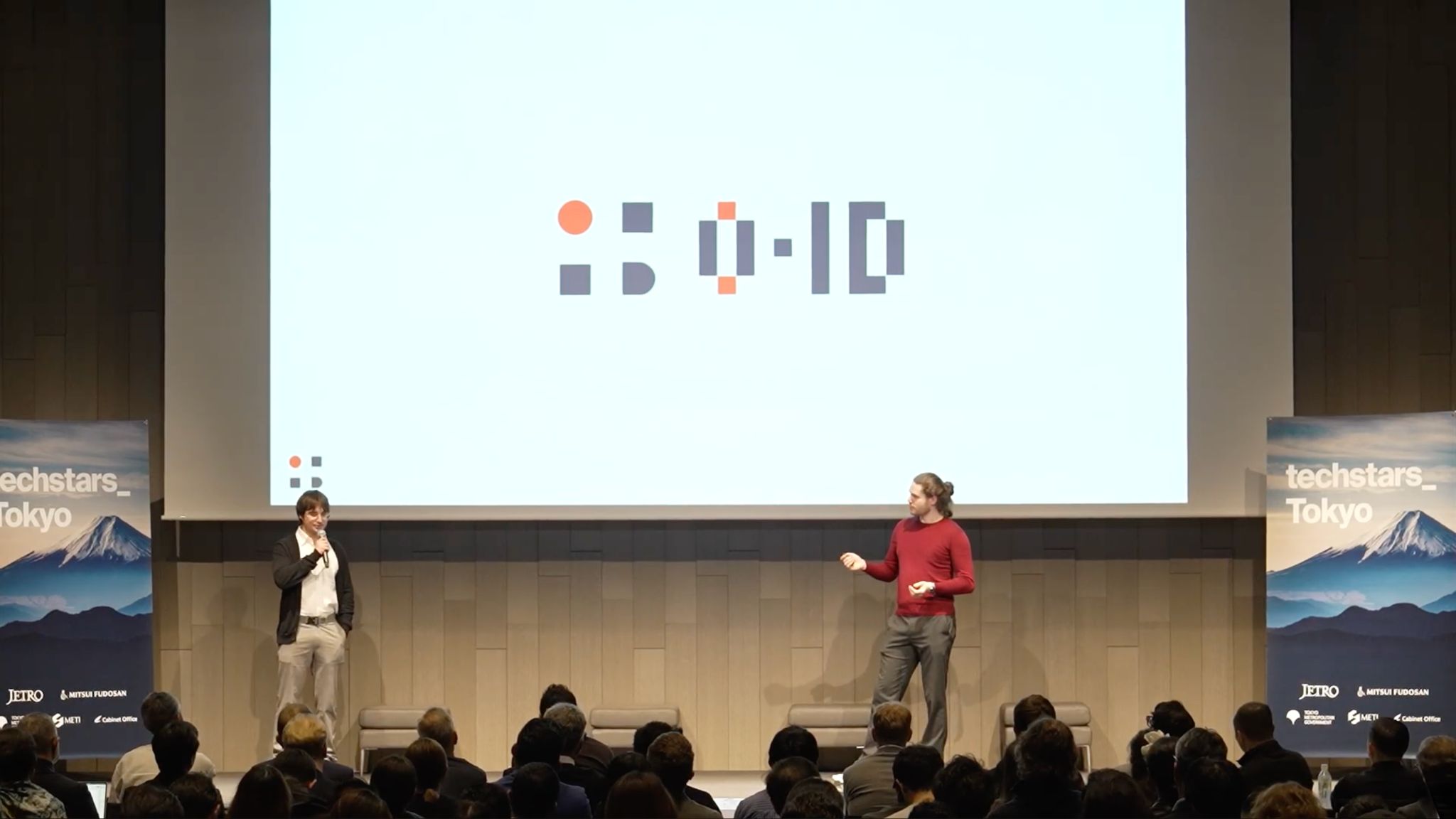
Tokyo-based robotics venture O-ID has officially secured $1.2 million in pre-seed financing to advance its modular humanoid robotics architecture. Alongside the early-stage funding milestone, the Japanese startup confirmed that it has filed a provisional patent application in the United States covering its proprietary modular connector technology. By targeting modular hardware connections, O-ID aims to solve critical engineering and maintenance bottlenecks in the humanoid robotics sector. The pre-seed capital will support the company's technical roadmap as it establishes intellectual property protections in major international markets. This development marks a significant step forward for Japanese robotics innovation, highlighting growing investor appetite for specialized mechanical architectures, hardware modularity, and cross-border commercialization strategies in modern robotics.

Tech in Asia•
From Finishing Tasks to Driving ROI: Felicis Partner Peter Deng on Product Strategy and AI Talent
Industry News

From Finishing Tasks to Driving ROI: Felicis Partner Peter Deng on Product Strategy and AI Talent

In a venture capital product guide, Felicis General Partner Peter Deng examines why startups and technology companies must pivot from merely completing tasks to delivering measurable customer outcomes. Speaking on an EO video series, Deng highlights that a product's sole objective is resolving real user problems rather than hitting internal milestones. As artificial intelligence amplifies both productivity and the cost of poor execution, organizations must retool how they hire and manage personnel, guiding new team members toward total operational independence within six months. Furthermore, Deng presents an investment evaluation framework for early-stage startups that balances technological shifts, observable customer frustrations, and founder adaptability. By aligning product development, talent autonomy, and market timing around true customer ROI, tech companies can navigate the evolving AI ecosystem and avoid building discarded products.

Tech in Asia•
Meta Unveils Charm Handheld Device for Muse AI Ahead of December Holiday Launch
Product Launch

Meta Unveils Charm Handheld Device for Muse AI Ahead of December Holiday Launch

Meta has officially introduced Charm, a new dedicated handheld device designed specifically for the company's Muse AI platform. According to the announcement reported by Tech in Asia, Meta plans to ship the handheld unit in time for the competitive holiday shopping season in December. However, the tech giant has opted to keep commercial pricing details confidential for the time being, declining to disclose how much the device will cost consumers upon release. This development highlights Meta's ongoing efforts to pair its proprietary artificial intelligence capabilities directly with dedicated consumer hardware form factors. With Charm scheduled for a December delivery, key questions remain regarding retail distribution and accessibility, setting the stage for significant consumer interest as Meta prepares its hardware rollout toward the end of the year.

Tech in Asia•
Anthropic Releases Claude for Financial Services Featuring Reference Agents, Skills, and Connectors on GitHub
Open Source

Anthropic Releases Claude for Financial Services Featuring Reference Agents, Skills, and Connectors on GitHub

Anthropic has published a specialized GitHub repository titled financial-services, delivering a structured implementation of Claude for core enterprise financial workflows. The repository introduces a comprehensive suite of reference agents, domain-specific skills, and data connectors explicitly crafted for four primary disciplines: investment banking, equity research, private equity, and wealth management. Originating directly from the official anthropics account on GitHub, the release focuses on standardizing how financial institutions deploy generative AI across high-stakes analytical tasks. All resources within the repository are structured to be provided through two distinct approaches, giving developers and institutional teams clear pathways for adoption. This release highlights the accelerating industry trend toward domain-tailored agentic frameworks in regulated financial sectors.

GitHub Trending•
BuilderIO Launches Agent-Native: A Dedicated Framework Engineered for Building Next-Generation AI Agent Applications
Open Source

BuilderIO Launches Agent-Native: A Dedicated Framework Engineered for Building Next-Generation AI Agent Applications

BuilderIO has captured developer attention with the release of agent-native, a specialized open-source framework tailored for building agentic applications. Trending on GitHub, the project addresses the growing demand for software architectures designed specifically to support autonomous AI agents. As development teams transition away from superficial conversational overlays and fragmented AI pipelines, agent-native introduces an architectural foundation where software functionality is inherently structured for autonomous agent execution. The repository emphasizes building software systems where autonomous agents can seamlessly interact with core application state and functional logic alongside traditional user interfaces. This shift reflects a broader transformation in the AI engineering ecosystem toward unified, agent-first development environments that streamline how modern applications are conceived, maintained, and scaled across developer teams.

GitHub Trending•
Google Releases AX: An Open Agent Orchestration Runtime Surfaces on GitHub Trending
Open Source

Google Releases AX: An Open Agent Orchestration Runtime Surfaces on GitHub Trending

Google has published a new open-source repository titled 'ax' on GitHub, officially designated as an open agent orchestration runtime. The project rapidly gained visibility among software developers and artificial intelligence researchers, reaching the GitHub Trending list shortly after publication. As intelligent systems shift toward autonomous and multi-step agentic workflows, runtime orchestration has become a critical operational layer for managing task lifecycles, execution environments, and complex system interactions. By releasing an open agent orchestration runtime under its primary organization repository, Google reinforces its commitment to open-source infrastructure for agentic AI. This analysis explores the core role of agent runtimes, community interest, and the broader architectural implications for the AI ecosystem.

GitHub Trending•
Superpowers: An Agentic Skills Framework and Structured Software Development Methodology for Autonomous Coding Agents
Open Source

Superpowers: An Agentic Skills Framework and Structured Software Development Methodology for Autonomous Coding Agents

Superpowers, an open-source project created by developer obra that gained prominence on GitHub Trending, introduces a dedicated agent skill framework and comprehensive software development methodology tailored specifically for autonomous coding agents. Instead of allowing automated agents to generate code in an unstructured manner, the Superpowers framework establishes an engineering paradigm rooted in modular, composable skills paired with baseline instructional guidance. This structured architecture ensures that coding agents execute tasks systematically rather than relying on unguided single-turn completions. By uniting reusable skill sets with clear initial operational principles, Superpowers provides a standardized framework aimed at improving the consistency, predictability, and efficiency of agent-driven software engineering workflows across modern codebases.

GitHub Trending•
Claude Code Templates Emerges on GitHub Trending as a Dedicated CLI Tool for Configuring and Monitoring Claude Code
Open Source

Claude Code Templates Emerges on GitHub Trending as a Dedicated CLI Tool for Configuring and Monitoring Claude Code

The open-source developer davila7 has introduced claude-code-templates, a specialized command-line interface (CLI) utility created to assist developers in configuring and monitoring Claude Code. Highlighted on GitHub Trending, the project focuses directly on managing settings and operational visibility for Claude Code environments. By delivering dedicated configuration workflows and monitoring mechanisms through a terminal interface, claude-code-templates aims to simplify routine maintenance and oversight. While the initial repository release highlights core command-line management features, its appearance on trending lists reflects developer interest in structured tooling around Claude Code. This article breaks down the known scope of the repository, examines its primary focus on configuration and monitoring, explores the broader role of CLI tooling in AI engineering workflows, and answers common questions regarding its availability and current functionality.

GitHub Trending•
Univer Unveils Office Harness for AI Agents Unifying Spreadsheets Documents Slides Canvas and Relational Tables in Single Runtime
Open Source

Univer Unveils Office Harness for AI Agents Unifying Spreadsheets Documents Slides Canvas and Relational Tables in Single Runtime

Univer, developed by dream-num and trending on GitHub, introduces an open-source Office Harness designed specifically for AI agents. By bringing together spreadsheets, documents, slides, canvas, relational tables, and PDF support into a single unified runtime, the project addresses the fragmentation that traditionally limits artificial intelligence workflows across disparate office software. Instead of requiring autonomous agents to bridge incompatible productivity formats and siloed applications, Univer provides an integrated execution environment where multiple document types operate cohesively. This structural alignment allows intelligent agents to manipulate, interpret, and generate complex enterprise deliverables across text, tabular data, visual canvases, and presentation slides within one continuous architecture. Discover how Univer's unified office runtime establishes a foundation for agentic productivity.

GitHub Trending•
Agent Substrate Emerges on GitHub Trending as Open Source Core System Under Apache 2.0
Open Source

Agent Substrate Emerges on GitHub Trending as Open Source Core System Under Apache 2.0

Agent Substrate, an open-source project hosted by the agent-substrate organization on GitHub, has appeared on GitHub Trending. Defined as a core system and licensed under the permissive Apache License 2.0, the repository establishes an open framework for autonomous agent infrastructure. While full architectural specifications in the initial public documentation remain minimal, its positioning as a foundational substrate highlights growing interest in modular, open-source core systems for AI agent development. This report analyzes the project's repository listing, licensing implications, and strategic relevance within the evolving landscape of open-source artificial intelligence systems.

GitHub Trending•
Product Launch

Floot Launches Floot MCP to Build and Deploy Full-Stack Apps Directly Inside Claude and ChatGPT

Floot, founded by Yuj Yao, has officially launched Floot MCP on Product Hunt, introducing an integration that turns frontier AI models like Claude and ChatGPT into full-stack application development environments. By leveraging the Model Context Protocol (MCP), Floot eliminates the need for standalone AI agent interfaces and proprietary AI credit markups. Users can leverage their existing AI subscriptions to describe applications in plain conversational text, while Floot automatically provisions databases, configures authentication, manages file storage, and provides instant hosting. Furthermore, the platform extends beyond web deployments, supporting one-click releases to both iOS and Android. This strategic shift reflects a broader transformation in AI software development, moving value from proprietary chat frontends to underlying execution infrastructure and deployment pipelines.

Product Hunt•
Gemini 3.8 Text-to-Speech Models Debut on Product Hunt: An Analytical Overview of the Latest Voice AI Development
Product Launch

Gemini 3.8 Text-to-Speech Models Debut on Product Hunt: An Analytical Overview of the Latest Voice AI Development

A new entry titled 'Gemini 3.8 text-to-speech models' was published on Product Hunt on September 23, 2026, submitted by author Ankit Sharma. While the listing confirms the emergence of dedicated text-to-speech capabilities under the Gemini 3.8 model moniker, the source record itself provides no detailed technical specifications, architecture papers, or direct performance benchmarks. This analysis evaluates the significance of this listing within the broader artificial intelligence and voice synthesis landscape. By examining the context of the submission, the strategic implications of specialized speech generation within multimodal ecosystems, and the necessity of maintaining factual verification amid limited primary documentation, we provide a structured assessment of what this listing indicates for industry observers, software developers, and enterprise teams monitoring next-generation speech synthesis systems.

Product Hunt•
IntellAgents Launches Unified Omnichannel AI Agent Across Voice Calls, Chat, and Social Messaging Channels
Product Launch

IntellAgents Launches Unified Omnichannel AI Agent Across Voice Calls, Chat, and Social Messaging Channels

IntellAgents.io, developed by maker Vilen Bezhanyan, has officially launched on Product Hunt to tackle the widespread operational fragmentation faced by modern businesses. Rather than deploying disconnected software for website chat, social direct messaging, and phone support, IntellAgents introduces a consolidated conversational AI platform powered by a single centralized knowledge base. The platform operates 24/7 in up to 36 languages, orchestrating inbound calls, outbound calling, and messaging across WhatsApp, Instagram, Facebook Messenger, Telegram, and custom websites. By unifying conversational memory and business intelligence under one continuous architecture, the system eliminates the administrative overhead of juggling multiple disjointed customer support integrations.

Product Hunt•
Storytailor Product Hunt Launch by JQ Sirls: Initial Listing Overview and Platform Release Details
Product Launch

Storytailor Product Hunt Launch by JQ Sirls: Initial Listing Overview and Platform Release Details

A new product entry titled Storytailor® was published on the discovery platform Product Hunt on September 23, 2026, submitted by author JQ Sirls. While the initial release entry marks the official online presence of the product via its dedicated Product Hunt URL, the original source text provides only core metadata without detailed body content, feature lists, or explanatory documentation. In accordance with strict news reporting standards, this report documents the formal submission of Storytailor® on the tech discovery platform while maintaining factual fidelity to the available source material. As early-stage product pages frequently precede comprehensive feature announcements, community observers and industry watchers await further documentation regarding the operational mechanics, underlying architecture, and user-facing capabilities of JQ Sirls's newly cataloged application.

Product Hunt•
Product Launch

ChatGPT Ads Expands to Southeast Asia and Taiwan Enabling Businesses to Reach Global Audiences

ChatGPT Ads has officially expanded its geographic availability to include Southeast Asia and Taiwan. According to the announcement published by OpenAI, this expansion offers eligible businesses new advertising and marketing opportunities to connect with people across more than 60 countries. By extending ChatGPT Ads into these key Asian markets, the platform broadens commercial reach while continuing its international advertising rollout. The update highlights OpenAI's strategy to provide eligible organizations with advertising options across an increasingly global user base, marking a notable milestone in the expansion of ChatGPT's advertising footprint across Southeast Asia, Taiwan, and broader international territories.

OpenAI Blog•
CtrlOps 1.0 Launches on Product Hunt: An Analytical Overview of the Official Software Release Listing
Product Launch

CtrlOps 1.0 Launches on Product Hunt: An Analytical Overview of the Official Software Release Listing

On September 22, 2026, an official release listing titled CtrlOps 1.0 was published on Product Hunt by contributor fmerian. The release marks the introduction of the version 1.0 milestone for the CtrlOps project on the popular discovery hub. While the initial dispatch contains minimal accompanying descriptive content, the 1.0 designation typically denotes a primary public baseline for emerging software solutions. Based strictly on the confirmed source listing, no extended technical documentation, feature lists, or operational claims were provided in the raw publication. This overview provides an analysis of the entry's verified metadata, discusses the context of Product Hunt software rollouts, evaluates the significance of major version milestones, and outlines the information landscape surrounding the launch.

Product Hunt•
Product Launch

Minimi 2.0 Launches on Product Hunt: Introducing Ambient AI Context and Autonomous Open Loop Closure

Product Hunt has officially featured the release of minimi 2.0, an ambient personal intelligence system authored by Kevin William David and the minimi development team. Evolving beyond conventional conversational interfaces, minimi 2.0 introduces an on-device contextual layer that operates quietly in the background across macOS applications. By capturing work context from documents, meetings, and browser tabs, the system eliminates the daily amnesia plaguing large language models. The 2.0 release expands upon the original ambient memory architecture by introducing autonomous open-loop closure, allowing dedicated AI agents to resolve pending commitments without manual prompting. With support for the Model Context Protocol (MCP) and upcoming collaborative workspace features, minimi 2.0 marks an important milestone in proactive, context-aware productivity assistants.

Product Hunt•
Lyzr Launches OpenController on Product Hunt to Govern Multi-Cloud AI Agents with Unified Control
Product Launch

Lyzr Launches OpenController on Product Hunt to Govern Multi-Cloud AI Agents with Unified Control

Lyzr has officially introduced OpenController on Product Hunt, authored by Mohammed Faraaz Ahmed, presenting an enterprise-grade control plane engineered to tackle the rapid sprawl of autonomous AI agents across modern technology stacks. As organizations rapidly deploy specialized agents across diverse cloud platforms, SaaS environments, Kubernetes clusters, and edge devices, operational transparency and safety have become urgent concerns. OpenController provides a unified architectural layer designed to discover existing agents, evaluate workflow safety, enforce granular runtime security policies directly in the request path, and monitor infrastructure costs. Unlike passive catalog registries, OpenController deploys natively within an enterprise's private infrastructure, keeping private keys secure while preventing unauthorized agent execution. This release marks a key advancement in establishing standard operational governance for agentic artificial intelligence.

Product Hunt•
Scholé Launches Learn by Building to Deliver Real-Time Agentic AI Training Directly Inside Everyday Work Tools
Product Launch

Scholé Launches Learn by Building to Deliver Real-Time Agentic AI Training Directly Inside Everyday Work Tools

Scholé has officially introduced 'Scholé Learn by Building,' an adaptive learning platform designed to bridge the gap between theoretical knowledge and practical execution. Created by Rohan Chaubey and debuted on Product Hunt, the tool shifts professional education away from passive video tutorials and static prompts toward hands-on, task-based building. Powered by an agentic browser extension, Scholé observes user activity on screen, validates completed milestones, and overlays dynamic visual guidance across any web application. As professionals navigate real tools in their day-to-day workflow, their progress continually populates a personalized Scholé knowledge graph. Grounded in cognitive learning science, the release provides contextualized micro-lessons and active reinforcement directly inside production environments, fundamentally redefining how modern software proficiency and AI competencies are acquired and measured across technical organizations.

Product Hunt•
Product Launch

Maximem Synap Emerges on Product Hunt: Initial Listing Overview, Verification Gaps, and Industry Analysis

A new product entry titled Maximem Synap was officially registered on Product Hunt on September 9, 2026, submitted by author fmerian. The initial submission establishes the product's presence on the premier discovery platform, yet the accompanying publication arrives without descriptive body text, technical documentation, or functional specifications. While product tracking communities frequently observe early-stage project registrations, the current announcement maintains a minimal footprint, lacking granular details regarding the system's architecture, underlying technology, or commercial availability. Industry analysts and developers tracking emerging software entries must therefore rely strictly on verified platform submissions while awaiting official documentation from the creator. This overview analyzes the recorded submission details, emphasizes the necessity of factual verification, and examines the impact of minimal product disclosures within modern technical launch environments.

Product Hunt•
Product Launch

Autonomous Product Delivery Listed on Product Hunt: An Overview of the AutonomyAI Launch and Available Details

On September 8, 2026, a new entry titled 'Autonomous Product Delivery' was published on Product Hunt by author Ben Lang, associated with the AutonomyAI platform. The submission represents a public appearance on the tech discovery hub; however, the source publication contains no accompanying body text, technical specifications, or descriptive feature lists. Consequently, specific operational workflows, architectural models, and integration capabilities remain unelaborated in the original material. While the terminology reflects broader trends in AI-assisted software delivery, the lack of source documentation requires developers and industry observers to await further formal disclosures. This report examines the verified metadata of the launch, analyzes the documentation gap, and reviews the contextual significance of autonomous delivery concepts in the software development landscape.

Product Hunt•