
AI News on June 27, 2026

Meituan Open Sources Innovative AIGC Poster Generation System Featuring a Comprehensive Technical Closed Loop
Open Source

Meituan Open Sources Innovative AIGC Poster Generation System Featuring a Comprehensive Technical Closed Loop

Meituan's Intelligent Creation Team has officially announced the development and open-sourcing of a sophisticated AIGC technical system dedicated to poster generation. This framework is built upon a unique "Generation-Editing-Evaluation" technical closed loop, designed to bridge the gap between automated creation and high-quality output. Currently, the technology has been successfully implemented within Meituan's core business ecosystems, specifically Meituan Waimai (food delivery) and various Brand IP scenarios. By open-sourcing the entire system, Meituan aims to contribute to the broader AI community, providing a structured approach to visual content creation that balances creative automation with rigorous quality control and editing capabilities. This move highlights the growing trend of major tech platforms sharing internal AIGC tools to foster industry-wide innovation.

美团技术团队
Meituan LongCat Team Unveils WBench: The First Systematic Multi-Round Benchmark for Interactive Video World Models
Research Breakthrough

Meituan LongCat Team Unveils WBench: The First Systematic Multi-Round Benchmark for Interactive Video World Models

The Meituan LongCat team has officially introduced and open-sourced WBench, a pioneering evaluation benchmark designed specifically for interactive video world models. As the first systematic multi-round assessment tool of its kind, WBench serves as a diagnostic 'CT scanner' for the AI industry. It is engineered to precisely identify the technical bottlenecks that occur when world models attempt to transition from 'passive viewing'—simply generating or observing video—to 'active interaction,' where the model must respond to dynamic inputs over multiple stages. By testing these models across diverse environments, ranging from lunar walks to cybernetic cities, WBench provides the necessary framework to define the current boundaries of world model capabilities and highlights where the technology currently struggles in maintaining consistency during complex, interactive sequences.

美团技术团队
Meituan's ACL 2026 Research Breakthroughs: From Large Model Evaluation to Complex Reasoning Optimization
Research Breakthrough

Meituan's ACL 2026 Research Breakthroughs: From Large Model Evaluation to Complex Reasoning Optimization

Meituan's technical team has achieved significant recognition at ACL 2026, with six papers accepted into this prestigious computational linguistics conference. The research spans a broad spectrum of cutting-edge AI fields, including large model evaluation, complex process reasoning, and the optimization of competition-level mathematical thinking. Furthermore, the papers explore advancements in reinforcement learning and the emerging field of generative recommendation. This collection of work underscores Meituan's strategic focus on refining generative paradigms and enhancing the practical capabilities of AI models in solving intricate problems and providing personalized user experiences. By addressing both theoretical benchmarks and practical application challenges, Meituan is positioning itself at the forefront of the next generation of natural language processing and artificial intelligence development.

美团技术团队
Meituan Open-Sources LongCat-Video-Avatar 1.5: Advancing Digital Human Video Models to Commercial-Grade Applications
Open Source

Meituan Open-Sources LongCat-Video-Avatar 1.5: Advancing Digital Human Video Models to Commercial-Grade Applications

Meituan's technical team has officially open-sourced LongCat-Video-Avatar 1.5, a significant evolution in digital human video modeling. This update marks a transition from research-oriented State-of-the-Art (SOTA) performance to a robust, commercial-grade application. The model introduces comprehensive improvements across five critical dimensions: lip-sync precision, physical plausibility, stability in long-duration videos, multi-person interaction capabilities, and inference efficiency. Designed to perform reliably in complex commercial environments, LongCat-Video-Avatar 1.5 shifts digital human generation from controlled experimental settings to diverse, real-world scenarios. By enabling high-quality, natural video output for personalized use cases, Meituan aims to bridge the gap between theoretical excellence and practical, large-scale deployment in the AI industry.

美团技术团队
Meituan LongCat Releases General 365: A Challenging New Benchmark for AI Reasoning Evaluation
Industry News

Meituan LongCat Releases General 365: A Challenging New Benchmark for AI Reasoning Evaluation

Meituan's LongCat team has officially open-sourced General 365, a new evaluation benchmark designed to measure the reasoning capabilities of large language models (LLMs). In a comprehensive test involving 26 mainstream models, the results revealed a significant gap in current AI reasoning performance. Even the top-performing model, Gemini 3 Pro, achieved an accuracy of only 62.8%, while the vast majority of tested models failed to reach the 60% passing mark. This release aims to establish a more rigorous standard for the industry, highlighting the current limitations of even the most advanced AI systems in complex reasoning tasks. By providing a transparent and difficult metric, Meituan seeks to drive the development of more logically capable artificial intelligence.

美团技术团队
Managing AI Coding with Agent Evaluation Thinking: Meituan's Practice in Refactoring 310,000 Lines of Code
Industry News

Managing AI Coding with Agent Evaluation Thinking: Meituan's Practice in Refactoring 310,000 Lines of Code

As AI-generated code now accounts for over 90% of development in certain environments, the primary challenge has shifted from generation speed to the effective management and constraint of AI capabilities. Meituan's technical team recently shared their experience refactoring 310,000 lines of code using a strategy centered on "Agent evaluation thinking." By implementing technical debt assessment, standardized rules, a specialized Refactoring SOP, and a Pre-PR (Pull Request) mechanism, they have successfully transformed large-scale refactoring from a high-cost, periodic project into a continuous, daily operational task. This approach ensures that AI-driven development does not amplify systemic chaos but instead adheres to unified technical standards, maintaining long-term code quality and system stability in an AI-dominated coding era.

美团技术团队
Meituan Technical Team Releases LARYBench: A New Benchmark for Universal Latent Action Representation in Embodied AI
Industry News

Meituan Technical Team Releases LARYBench: A New Benchmark for Universal Latent Action Representation in Embodied AI

The Meituan Technical Team has officially introduced LARYBench (Latent Action Representation Yielding Benchmark), a systematic evaluation framework designed to guide the learning of universal latent action representations from large-scale visual data. This benchmark marks a significant milestone in embodied AI by providing a standardized way to measure how models learn actions from visual inputs. Experimental results from the benchmark reveal that general vision models significantly outperform specialized embodied action expert models in both action generalization and control precision. Furthermore, the research demonstrates that embodied action representations can naturally emerge from large-scale human video data, suggesting that broad visual training is a viable path toward achieving more sophisticated and adaptable robotic control systems.

美团技术团队
Meituan LongCat Team Unveils LongCat-AudioDiT: Advancing Zero-Shot TTS Voice Cloning via Waveform Latent Space
Research Breakthrough

Meituan LongCat Team Unveils LongCat-AudioDiT: Advancing Zero-Shot TTS Voice Cloning via Waveform Latent Space

The Meituan LongCat team has officially released LongCat-AudioDiT, a specialized model designed to push the boundaries of zero-shot Text-to-Speech (TTS) voice cloning. By fundamentally redesigning the audio generation pipeline, the model abandons traditional intermediate representations like Mel-spectrograms. Instead, it utilizes a diffusion-based approach operating directly within the waveform latent space. This strategic shift is intended to eliminate cascade errors that typically arise during multi-stage data conversion processes. By allowing the AI to learn the inherent patterns of sound directly from the source, LongCat-AudioDiT aims to overcome existing technical bottlenecks in voice synthesis, providing a more streamlined and high-fidelity solution for cloning voices without the need for extensive training on specific target speakers.

美团技术团队
LongCat-Flash-Prover: Meituan Open-Sources AI Model for Rigorous Mathematical Theorem Proving and Formalization
Open Source

LongCat-Flash-Prover: Meituan Open-Sources AI Model for Rigorous Mathematical Theorem Proving and Formalization

The Meituan technical team has officially open-sourced LongCat-Flash-Prover, a specialized AI model designed to bridge the gap between simple mathematical calculation and rigorous theorem proving. Unlike traditional AI models that focus on reaching a correct final numerical value, LongCat-Flash-Prover is engineered to maintain an extremely strict logical chain required for formal mathematical verification. The model addresses the critical issue of natural language ambiguity, which can often cause a proof to fail. By transitioning AI from "guessing answers" to "rigorous proving," this release provides a significant tool for the industry to tackle complex reasoning challenges. The project emphasizes the importance of formalization in ensuring that AI-generated mathematical proofs are both accurate and logically sound.

美团技术团队
Meituan Open Sources LongCat-Next: A Native Multimodal Model Integrating Vision and Voice for Physical World AI
Open Source

Meituan Open Sources LongCat-Next: A Native Multimodal Model Integrating Vision and Voice for Physical World AI

Meituan's technical team has officially announced the release and open-sourcing of LongCat-Next, a groundbreaking native multimodal model. Designed to treat vision and voice as fundamental "native languages," LongCat-Next represents a strategic shift toward AI that can seamlessly perceive and interact with the physical world. Alongside the model, Meituan has released its discrete tokenizer to the global developer community. This initiative aims to provide the necessary tools for creators to build AI systems capable of understanding and acting within real-world environments. By open-sourcing these core components, Meituan seeks to foster a collaborative ecosystem focused on the next generation of embodied AI and multimodal integration, moving beyond traditional text-centric models to a more holistic sensory approach.

美团技术团队
Garry Tan Releases gstack: A Comprehensive Claude Code Configuration Featuring 23 Specialized AI Development Tools
Open Source

Garry Tan Releases gstack: A Comprehensive Claude Code Configuration Featuring 23 Specialized AI Development Tools

Garry Tan has introduced "gstack," an original configuration for Claude Code designed to streamline the software development lifecycle through specialized AI personas. This repository provides a suite of 23 tools, each embedded with specific insights to simulate various professional roles within a modern tech organization. By configuring Claude Code to act as a CEO, Designer, Engineering Manager, Release Manager, Documentation Engineer, and Quality Assurance (QA) specialist, gstack aims to automate and enhance complex workflows. The project reflects a significant shift in how high-level executives and developers interact with codebases, as highlighted by Tan's observation regarding the changing nature of manual coding in the era of advanced AI agents. This release provides a structured framework for leveraging Claude Code across multiple departments of a software project.

GitHub Trending
Google Labs Introduces DESIGN.md: A New Format Specification for Coding Agents to Understand Design Systems
Open Source

Google Labs Introduces DESIGN.md: A New Format Specification for Coding Agents to Understand Design Systems

Google Labs has released DESIGN.md, a specialized format specification designed to bridge the gap between visual design and coding agents. This initiative aims to provide AI agents with a persistent and structured understanding of design systems, specifically focusing on visual recognition. By standardizing how design elements are described, DESIGN.md enables coding agents to interpret and implement visual designs more accurately. This development marks a significant step in enhancing the capabilities of AI-driven development tools, ensuring they can maintain design consistency across various platforms and applications. The project, hosted by Google Labs, emphasizes the need for machine-readable design documentation in the era of autonomous coding assistants.

GitHub Trending
OpenMontage: The World's First Open-Source Agentic Video Production System for AI Coding Assistants
Open Source

OpenMontage: The World's First Open-Source Agentic Video Production System for AI Coding Assistants

OpenMontage has officially launched as the world's first open-source agentic video production system, marking a significant milestone in the intersection of AI development and multimedia creation. Developed by calesthio and gaining rapid traction on GitHub Trending, the system is designed to transform standard AI coding assistants into comprehensive video production studios. The platform's architecture is remarkably robust, featuring 12 specialized pipelines, 52 integrated tools, and a library of over 500 agent skills. This extensive framework allows for a highly automated and modular approach to video generation, empowering developers to leverage their existing AI coding environments for complex video production tasks. By providing a massive ecosystem of skills and tools, OpenMontage sets a new standard for open-source agentic workflows in the creative industry.

GitHub Trending
AI Website Cloner Template: Leveraging AI Coding Agents for One-Command Site Replication
Open Source

AI Website Cloner Template: Leveraging AI Coding Agents for One-Command Site Replication

A new open-source project titled 'ai-website-cloner-template' by developer JCodesMore has gained traction on GitHub Trending. The repository introduces a streamlined method for website replication by utilizing AI coding agents. According to the project documentation, users can clone any existing website using a single command, significantly reducing the manual effort typically required for front-end scaffolding and UI design. This tool represents a growing trend in the AI industry where autonomous agents are tasked with complex coding operations, moving beyond simple code completion to full-scale project generation and replication. The project highlights the increasing accessibility of sophisticated web development techniques through the integration of artificial intelligence.

GitHub Trending
AI Berkshire: A New Value Investment Research Framework Powered by Claude Code and Multi-Agent Analysis
Open Source

AI Berkshire: A New Value Investment Research Framework Powered by Claude Code and Multi-Agent Analysis

AI Berkshire is an innovative open-source research framework designed to bring value investing into the AI era. Developed by xbtlin and hosted on GitHub, the project leverages the capabilities of Claude Code to implement a structured investment methodology. It synthesizes the core philosophies of four legendary investors—Warren Buffett, Charlie Munger, Duan Yongping, and Li Lu—into a digital workflow. By utilizing multi-agent parallel research and adversarial analysis, AI Berkshire aims to automate complex financial evaluations while maintaining the rigorous standards of traditional value investing. This framework represents a significant step in combining large language model (LLM) reasoning with time-tested financial principles to identify long-term market value.

GitHub Trending
Industry News

US Government Grants Anthropic Permission to Release Mythos Model to Selected Trusted Partners

In a significant development for the artificial intelligence sector, the United States government has officially authorized Anthropic to release its latest AI model, known as 'Mythos,' to a restricted group of 'trusted partners.' This decision, reported on June 26, 2026, underscores a growing trend of federal oversight in the deployment of high-capability AI systems. By limiting the initial rollout to specific entities, the move aims to balance the rapid pace of technological innovation with rigorous safety and security protocols. While the specific technical specifications of Mythos have not been publicly detailed, the requirement for government clearance suggests that the model possesses advanced capabilities that fall under current regulatory scrutiny. This event marks a pivotal moment in the relationship between AI developers and national regulators, establishing a framework for the controlled release of sensitive technology.

Hacker News
OpenAI Limits GPT-5.6 Rollout Following Government Request While Warning Against Making Regulatory Restrictions the Industry Standard
Industry News

OpenAI Limits GPT-5.6 Rollout Following Government Request While Warning Against Making Regulatory Restrictions the Industry Standard

OpenAI has officially restricted the rollout of its latest model, GPT-5.6, following a specific request from government authorities. While complying with the mandate, the organization expressed significant concerns regarding the precedent this sets for the artificial intelligence industry. OpenAI stated that such government access processes should not become the "long-term default," arguing that these barriers prevent essential groups—including developers, enterprises, and cyber defenders—from accessing the most advanced tools. The company emphasizes that global partners and security professionals require these technologies to effectively address modern challenges, highlighting a growing tension between rapid technological innovation and government-led oversight in the AI sector.

TechCrunch AI
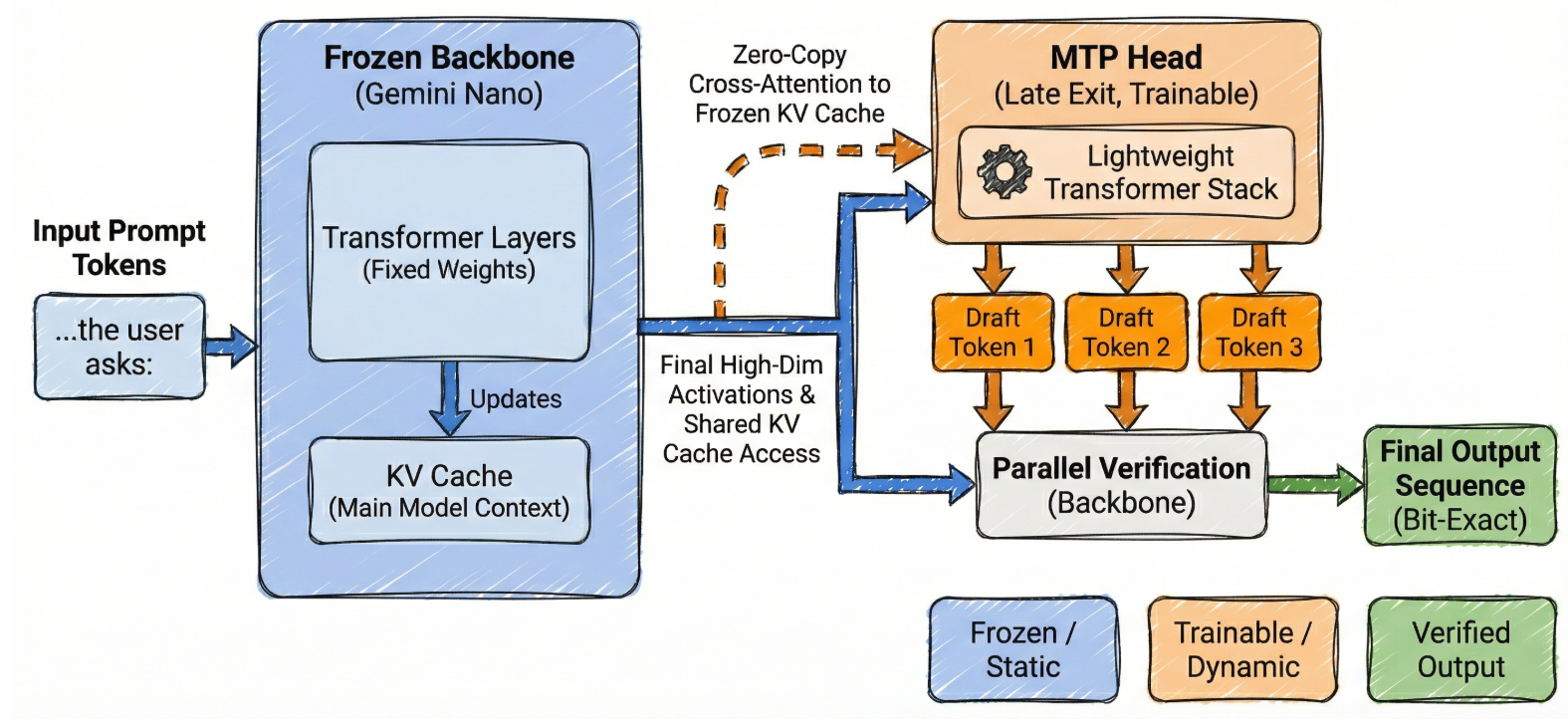
Accelerating Gemini Nano Models on Pixel Devices via Frozen Multi-Token Prediction Techniques
Research Breakthrough

Accelerating Gemini Nano Models on Pixel Devices via Frozen Multi-Token Prediction Techniques

Google Research has announced a technical breakthrough in the efficiency of on-device AI, specifically focusing on the acceleration of Gemini Nano models on Pixel hardware. By leveraging a method known as 'frozen Multi-Token Prediction' (MTP), researchers have optimized how these compact large language models process information. This development, categorized under Machine Intelligence, represents a significant step forward in making high-performance AI more accessible and responsive on mobile devices. The approach focuses on increasing inference speed without compromising the model's core architecture, ensuring that Pixel users can benefit from faster, more efficient AI-driven features directly on their hardware.

Google Research Blog
Industry News

U.S. Government to Vet Users for OpenAI’s Latest GPT-5.6 Model Release

OpenAI has announced a significant shift in its distribution strategy for the latest artificial intelligence model, GPT-5.6. According to reports, the U.S. government will now play a decisive role in vetting and approving which individuals or organizations are granted access to the technology. This move marks a transition from corporate-led access control to state-level oversight, reflecting heightened concerns over the national security implications and the powerful capabilities of frontier AI systems. The decision to involve federal authorities in the user-selection process for GPT-5.6 underscores the growing classification of advanced AI as a dual-use technology with significant strategic value. This development is expected to have far-reaching consequences for how high-capacity AI models are deployed and regulated globally.

Hacker News
BirdBuddy Pro Solar Video Bird Feeder Emerges as a Surprise Hit During Prime Day Sales Event
Industry News

BirdBuddy Pro Solar Video Bird Feeder Emerges as a Surprise Hit During Prime Day Sales Event

The BirdBuddy Pro with Solar Panels has become an unexpected standout during the Prime Day shopping event, capturing significant interest from consumers looking for outdoor upgrades. Despite a standard retail price of $299—a figure described as difficult for many to justify—the device has seen a surge in popularity as a 'wholesome' addition to the modern yard. Functioning essentially as a specialized video doorbell for wildlife, the BirdBuddy Pro integrates camera technology with solar power to provide a unique window into nature. This trend highlights a shift in consumer interest toward niche smart home devices that prioritize hobbyist engagement and nature observation, particularly when promotional events make high-end price points more accessible to the general public.

The Verge
OpenAI Previews GPT-5.6 Sol: A Deep Dive into the Next-Generation Model Announcement
Product Launch

OpenAI Previews GPT-5.6 Sol: A Deep Dive into the Next-Generation Model Announcement

OpenAI has officially released a preview for its latest AI advancement, GPT-5.6 Sol, positioned as a next-generation model. The announcement, published on June 26, 2026, via the OpenAI index and shared through Hacker News, introduces a new iteration in the Generative Pre-trained Transformer series. The preview is characterized by a unique data-centric presentation, featuring extensive sequences of numerical strings and binary-like patterns. While traditional feature lists were not the focus of this initial preview, the designation of '5.6 Sol' suggests a significant leap in versioning and model architecture. This release marks a pivotal moment in the 2026 AI landscape, signaling OpenAI's continued trajectory toward more sophisticated, next-generation computational systems.

Hacker News
OpenAI Unveils GPT-5.6 Model Suite Featuring Sol and Terra Amid US Regulatory Oversight
Industry News

OpenAI Unveils GPT-5.6 Model Suite Featuring Sol and Terra Amid US Regulatory Oversight

OpenAI has officially introduced a limited preview of its latest AI model suite, GPT-5.6, following reports of a staggered release strategy requested by the Trump administration. The new lineup includes the flagship model "Sol," a medium-tier model named "Terra" designed for high-volume tasks, and a third model called "Luna." This release marks a significant moment in the intersection of AI development and government regulation, as the company navigates political pressures while maintaining its technological momentum. The unveiling comes less than 24 hours after news regarding the administration's influence on the release schedule surfaced, highlighting the complex relationship between leading AI labs and federal oversight. By offering specialized models like Terra for high-volume work, OpenAI appears to be diversifying its portfolio to meet both regulatory requirements and market demands for scalable AI solutions.

The Verge