AI News on May 13, 2026

Datawhale Launches Easy-Vibe: A Modern Step-by-Step Programming Tutorial for the Vibe Coding Era
Technical Tutorial

Datawhale Launches Easy-Vibe: A Modern Step-by-Step Programming Tutorial for the Vibe Coding Era

Datawhale has introduced "easy-vibe," a pioneering modern programming tutorial tailored specifically for beginners in 2026. Positioned as a guide for the "vibe coding" era, the project aims to help users master programming through a structured, step-by-step approach. As a trending repository on GitHub, easy-vibe focuses on lowering the barrier to entry for modern software development, aligning with the evolving landscape of how code is written and understood. The initiative represents a significant shift toward more accessible, intuition-based learning paths for aspiring developers, moving away from traditional, syntax-heavy instruction toward a more modern, conceptual framework that empowers new learners to navigate the complexities of contemporary software creation.
GitHub Trending
9router: An Open-Source Solution for Unlimited Free AI Programming with Multi-Provider Integration and Token Optimization
Open Source

9router: An Open-Source Solution for Unlimited Free AI Programming with Multi-Provider Integration and Token Optimization

9router, a new open-source project hosted on GitHub by developer decolua, offers a comprehensive solution for developers seeking unlimited free AI programming capabilities. The tool acts as a bridge, connecting popular AI coding assistants—including Claude Code, Codex, Cursor, Cline, Copilot, and Antigravity—to a network of over 40 providers offering free access to Claude, GPT, and Gemini models. By implementing automatic fallback mechanisms and utilizing RTK technology to achieve a 40% reduction in token consumption, 9router ensures that users can maintain continuous workflows without hitting usage limits. This project represents a significant shift in the accessibility of high-performance Large Language Models (LLMs) for the global developer community, focusing on cost-efficiency and reliability through intelligent routing and data optimization.

GitHub Trending
Millionco Launches react-doctor: A Specialized Tool to Identify and Fix Suboptimal React Code Generated by AI Agents
Open Source

Millionco Launches react-doctor: A Specialized Tool to Identify and Fix Suboptimal React Code Generated by AI Agents

As AI-driven development becomes a standard in the software industry, the quality of machine-generated code has come under intense scrutiny. Millionco has addressed this challenge with the release of 'react-doctor,' a diagnostic tool specifically designed to catch non-standard or 'bad' React code produced by AI agents. The tool serves as a critical quality control layer, ensuring that the speed of AI generation does not compromise the maintainability or performance of React applications. By identifying irregular patterns that AI models often overlook, react-doctor provides developers with a necessary safety net for modern, automated workflows. This project has quickly gained traction on GitHub, highlighting a significant demand for specialized validation tools in the era of AI-assisted engineering.

GitHub Trending
Bytedance Releases UI-TARS-desktop: An Open-Source Multimodal AI Agent Technology Stack for Desktop Infrastructure
Open Source

Bytedance Releases UI-TARS-desktop: An Open-Source Multimodal AI Agent Technology Stack for Desktop Infrastructure

Bytedance has introduced UI-TARS-desktop, a new open-source multimodal AI agent technology stack that has recently gained traction on GitHub Trending. The project is designed to serve as a critical bridge between frontier AI models and the infrastructure required to support intelligent agents. By focusing on multimodal capabilities, UI-TARS-desktop aims to provide a framework for developing agents that can operate within desktop environments. This release highlights Bytedance's commitment to open-source AI development and addresses the industry's need for standardized tools to connect advanced models with practical, agentic applications. The project emphasizes the integration of cutting-edge AI with the foundational systems necessary for real-world deployment.

GitHub Trending
AiToEarn: Empowering One Person Companies with an AI-Driven Content Marketing Agent for Revenue Generation
Product Launch

AiToEarn: Empowering One Person Companies with an AI-Driven Content Marketing Agent for Revenue Generation

AiToEarn is a specialized AI tool designed to help individuals generate income by automating content marketing. Positioned as an "AI Content Marketing Agent," it specifically targets the "One Person Company" (OPC) demographic. The project, which recently trended on GitHub, emphasizes the "AI to Earn" philosophy, suggesting a shift toward solo entrepreneurship powered by intelligent automation. By focusing on content marketing, AiToEarn aims to provide solo founders with the capabilities of a full marketing team, enabling them to scale their operations and monetize their efforts more effectively in the digital economy. The project encourages users to leverage artificial intelligence as a primary driver for financial gain, simplifying the complexities of modern digital marketing for the individual creator.

GitHub Trending
OpenHuman: A New Private and Powerful Personal AI Superintelligence Project Emerges on GitHub
Open Source

OpenHuman: A New Private and Powerful Personal AI Superintelligence Project Emerges on GitHub

OpenHuman, a project developed by tinyhumansai, has recently surfaced on GitHub Trending, positioning itself as a 'personal AI superintelligence.' The project is built upon three core principles: privacy, simplicity, and high-performance power. Designed to provide users with a robust AI assistant that prioritizes data security, OpenHuman aims to simplify the deployment of advanced AI for individual use. While the project is in its early stages, its focus on localized or private superintelligence reflects a growing demand within the developer community for AI tools that do not compromise user privacy. This article explores the initial details of the OpenHuman repository and its potential implications for the personal AI landscape.

GitHub Trending
PlayCanvas Releases SuperSplat: A Specialized 3D Gaussian Splatting Editor on GitHub
Open Source

PlayCanvas Releases SuperSplat: A Specialized 3D Gaussian Splatting Editor on GitHub

PlayCanvas has officially released SuperSplat, an innovative open-source editor dedicated to 3D Gaussian Splatting. Emerging as a trending project on GitHub, SuperSplat provides a specialized environment for manipulating and refining 3D Gaussian Splat data. Developed by the team at PlayCanvas, this tool addresses the growing need for accessible editing suites in the rapidly evolving field of neural radiance fields and point-cloud-based reconstructions. By offering a dedicated interface for 'splat' editing, SuperSplat aims to streamline the workflow for developers and 3D artists working with high-fidelity 3D captures. The project's availability on GitHub marks a significant contribution to the open-source graphics community, providing a foundation for further innovation in web-based and real-time 3D visualization.

GitHub Trending
Peak XV Partners Leads $50 Million Funding Round for AI Voice Startup Vapi Following 1 Billion Call Milestone
Funding

Peak XV Partners Leads $50 Million Funding Round for AI Voice Startup Vapi Following 1 Billion Call Milestone

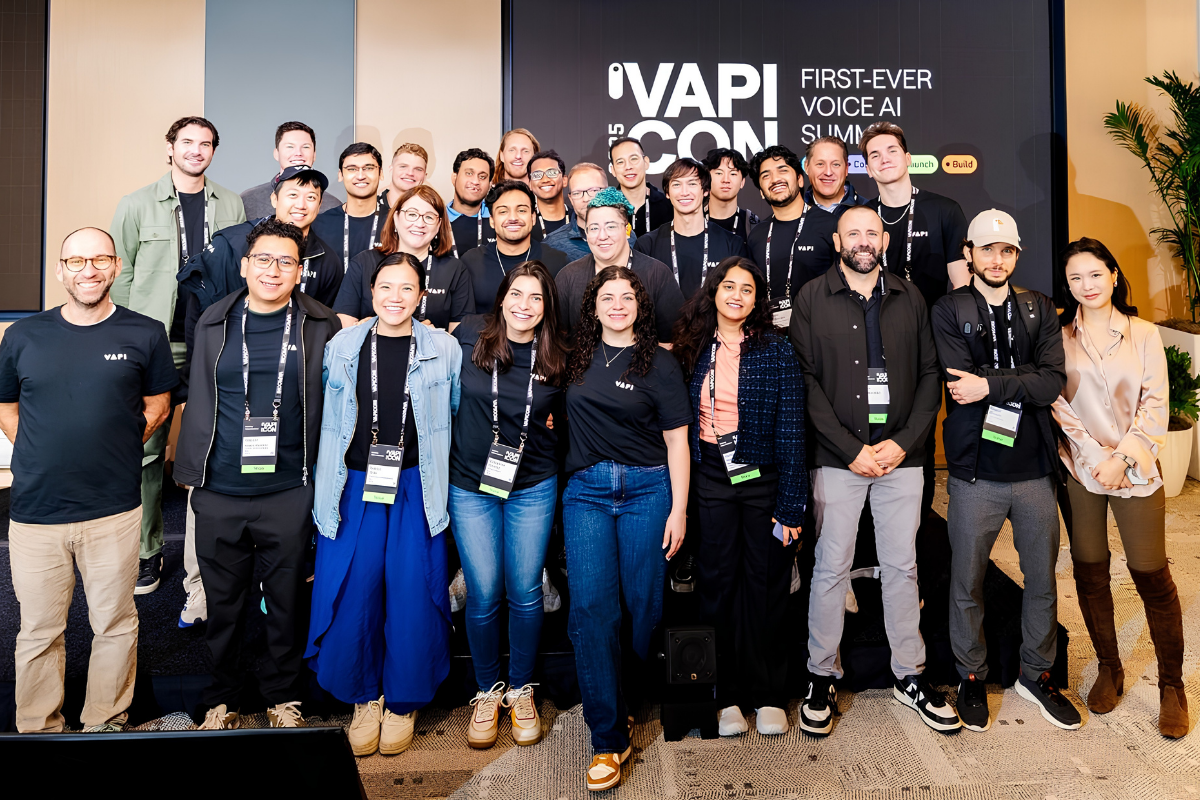
AI voice startup Vapi has successfully secured $50 million in a funding round led by Peak XV Partners. This significant capital injection follows the company's achievement of handling over 1 billion calls, showcasing the massive scale and reliability of its voice technology. Vapi's growing influence in the enterprise sector is further evidenced by its high-profile customer base, which includes financial software giant Intuit and insurance leader New York Life. The investment marks a pivotal moment for Vapi as it solidifies its position in the competitive AI voice market, leveraging its proven track record of high-volume call processing and enterprise-grade service delivery to attract major institutional backing.

Tech in Asia
Sam Altman Takes the Stand: Navigating Accusations and the 'Lying Snake' Narrative in OpenAI Trial
Industry News

Sam Altman Takes the Stand: Navigating Accusations and the 'Lying Snake' Narrative in OpenAI Trial

After two weeks of intense testimony from various witnesses who characterized him as a 'lying snake,' OpenAI CEO Sam Altman finally took the stand to provide his own testimony. The legal proceedings, which involve high-stakes allegations regarding the management and nature of OpenAI, reached a critical juncture when Altman's lawyer, William Savitt, addressed the accusation that Altman had 'stolen a charity.' Altman's defense centered on the 'ton of hard work' invested in the creation of the organization. This testimony marks a significant shift in the trial, as the jury hears directly from the individual at the center of the controversy following a period of sustained character attacks from opposing witnesses.

The Verge
Meta AI Integration on Threads: New Tagging Feature Launched Amid Restrictions on Blocking AI Accounts
Product Launch

Meta AI Integration on Threads: New Tagging Feature Launched Amid Restrictions on Blocking AI Accounts

Meta has officially announced the testing of a new feature for its Threads platform that integrates Meta AI directly into user conversations. This update allows users to tag a dedicated Meta AI account to receive answers to questions or gain additional context regarding ongoing discussions. While the feature aims to enhance the utility of the microblogging platform by providing real-time information, it has gained significant attention due to the reported inability of users to block the Meta AI account. This move, which mirrors similar functionalities observed on the X platform, highlights Meta's strategy to embed artificial intelligence as a permanent and interactive element within its social media ecosystem.

The Verge
Meta Enhances Instagram Parental Controls with New Interest Tracking and Notifications for Teen Accounts
Product Launch

Meta Enhances Instagram Parental Controls with New Interest Tracking and Notifications for Teen Accounts

Meta has announced a significant update to its Instagram Teen Accounts, aimed at providing parents with greater visibility into their children's digital habits. Starting Tuesday, parents will be able to view the general topics their teens are engaging with on the platform, such as fashion or sports. Furthermore, Meta plans to introduce a notification system that alerts parents whenever a teen adds a new interest to their account. These features represent an expansion of Meta's parental supervision tools, focusing on the algorithmic content categories that shape the teen user experience. By providing insight into the specific interests that drive the Instagram algorithm for younger users, Meta aims to facilitate more informed oversight for guardians managing teen accounts.

The Verge
Industry News

CERT Releases Six Serious CVEs for Dnsmasq Vulnerabilities Amid Surge in AI-Based Security Research

Simon Kelley has announced that CERT is releasing six CVEs addressing serious, long-standing security vulnerabilities within dnsmasq. These vulnerabilities affect nearly all non-ancient versions of the software, prompting the immediate release of version 2.92rel2 and various development tree patches. The discovery of these flaws is linked to a recent revolution in AI-based security research, which has resulted in a massive influx of bug reports and duplicates. Kelley highlighted the challenges of triaging these reports and managing vendor pre-disclosures. Notably, the announcement suggests that traditional long-term embargoes are becoming less effective, as AI tools allow both security researchers and malicious actors to identify vulnerabilities with similar ease. Users and vendors are urged to update to the latest patched versions to mitigate potential risks.

Hacker News
Sam Altman Testifies on Elon Musk's Alleged Plan to Transfer OpenAI Control to His Children
Industry News

Sam Altman Testifies on Elon Musk's Alleged Plan to Transfer OpenAI Control to His Children

In a significant legal testimony, OpenAI CEO Sam Altman revealed that Elon Musk once considered transferring control of the organization to his children. Altman expressed concerns regarding Musk's focus on dominating the initial for-profit structure of OpenAI, noting that such a move contradicted the organization's core mission of preventing advanced AI from being controlled by a single individual. Drawing from his professional experience at the startup accelerator Y Combinator, Altman highlighted the historical difficulty of reclaiming control from founders once it is established. This testimony sheds light on the early power dynamics and philosophical rifts between the two tech leaders regarding the governance and long-term oversight of artificial intelligence.

TechCrunch AI
Needle: Distilling Gemini 3.1 into a 26M Parameter Simple Attention Network for High-Speed Edge Device Tool Calling
Open Source

Needle: Distilling Gemini 3.1 into a 26M Parameter Simple Attention Network for High-Speed Edge Device Tool Calling

Cactus Compute has unveiled Needle, a remarkably compact 26-million parameter model designed to bring Gemini 3.1's tool-calling capabilities to edge devices. Built on a "Simple Attention Network" architecture, Needle achieves extreme performance metrics, including 6000 tokens/sec prefill and 1200 decode speeds on Cactus infrastructure. Despite its tiny footprint, it outperforms significantly larger models like FunctionGemma-270m and Qwen-0.6B in single-shot function calling tasks. The project is fully open-source, providing weights and dataset generation tools. Needle is specifically optimized for consumer hardware such as smartwatches and glasses, offering a local finetuning UI that allows developers to customize the model for specific tools on standard PCs or Macs without requiring massive compute resources.

Hacker News
Google Announces Googlebook: The AI-First Laptop Designed for Gemini Intelligence Coming Fall 2026
Product Launch

Google Announces Googlebook: The AI-First Laptop Designed for Gemini Intelligence Coming Fall 2026

Google has officially teased the 'Googlebook,' a next-generation laptop line specifically engineered to leverage Gemini Intelligence. Scheduled for a Fall 2026 release, the Googlebook represents a shift in computing philosophy, moving away from traditional hardware benchmarks toward a paradigm where 'intelligence is the new spec.' The device promises deep integration with the Android ecosystem, specifically requiring Android 17 or above for its most advanced features. Key highlights include the 'Magic Pointer' for instant AI interaction, natural language widget creation, and seamless cross-device app casting. This announcement marks a significant step in Google's strategy to unify its AI software capabilities with dedicated, high-performance hardware designed for the modern AI era.

Hacker News
Anthropic Issues Official Warning Against Unauthorized Secondary Market Stock Transfers
Industry News

Anthropic Issues Official Warning Against Unauthorized Secondary Market Stock Transfers

Anthropic has released a formal warning to potential investors regarding the unauthorized trading of its shares on secondary market platforms. According to a statement found on the company's support page, Anthropic explicitly declares that any sale, transfer, or interest in its stock facilitated by these third-party firms is considered void. Furthermore, the company emphasized that such transactions will not be recognized within its official books and records. This directive serves as a critical notice to the investment community, highlighting the company's refusal to validate equity movements occurring outside of its sanctioned channels. The move underscores a strict approach to corporate governance and cap table management, effectively nullifying any claims to ownership derived from these secondary platforms.

TechCrunch AI
Sam Altman Testifies on Elon Musk's 'Chainsaw' Management and Cultural Damage at OpenAI
Industry News

Sam Altman Testifies on Elon Musk's 'Chainsaw' Management and Cultural Damage at OpenAI

OpenAI CEO Sam Altman has provided testimony alleging that Elon Musk caused significant damage to the startup's internal culture. During legal proceedings related to Musk's lawsuit against OpenAI, Altman detailed how Musk pressured leadership—specifically Greg Brockman and Ilya Sutskever—to implement a harsh ranking system for the company's researchers. According to Altman, Musk's directive was to rank staff by their accomplishments and then 'take a chainsaw through a bunch' to reduce the workforce. These revelations highlight the intense internal friction and the aggressive management tactics Musk allegedly employed during his tenure with the organization, offering a rare glimpse into the early power dynamics and cultural challenges faced by the AI pioneer.

The Verge
Google and SpaceX in Discussions to Launch Orbital Data Centers for Future AI Compute Infrastructure
Industry News

Google and SpaceX in Discussions to Launch Orbital Data Centers for Future AI Compute Infrastructure

Google and SpaceX are reportedly engaged in preliminary discussions to develop and deploy data centers in orbit. This ambitious collaboration aims to position outer space as a primary environment for AI compute tasks, signaling a potential shift in how global technology leaders approach high-performance processing infrastructure. While the initiative pitches space as the future home for artificial intelligence operations, it faces significant economic hurdles. According to the report, the costs associated with orbital data center deployment currently remain far higher than those of traditional ground-based facilities. The talks highlight a strategic interest in leveraging space for advanced computing despite the substantial financial and logistical challenges involved in moving data processing away from Earth's surface.

TechCrunch AI
Google Unveils AI-First Googlebooks and Agentic Gemini Features Ahead of I/O 2026 Event
Industry News

Google Unveils AI-First Googlebooks and Agentic Gemini Features Ahead of I/O 2026 Event

Google has officially introduced a suite of AI-driven innovations during its latest Android Show, signaling a major strategic shift toward an integrated AI-first ecosystem. The announcements include the debut of 'Googlebooks'—a new line of AI-first laptops—alongside the introduction of more agentic Gemini features designed to enhance autonomous task handling. Furthermore, Google revealed the integration of Gemini into the Chrome browser, the launch of 'vibe-coded' Android widgets, and a refreshed interface for Android Auto. These updates, arriving just before the annual Google I/O conference, demonstrate the company's commitment to embedding advanced generative AI across hardware, web browsing, mobile personalization, and automotive platforms. The move positions Google to lead the next generation of intelligent computing by prioritizing agentic capabilities and seamless AI integration across its entire product portfolio.

TechCrunch AI
Google Integrates Gemini-Powered Dictation into Gboard for Samsung Galaxy and Pixel Devices
Product Launch

Google Integrates Gemini-Powered Dictation into Gboard for Samsung Galaxy and Pixel Devices

Google has officially announced the integration of Gemini-powered dictation features into its Gboard keyboard application, marking a significant advancement in mobile transcription technology. Initially launching exclusively for Samsung Galaxy and Google Pixel smartphones, this update leverages Google's sophisticated Gemini AI models to provide enhanced voice-to-text capabilities directly within the native keyboard interface. The move is expected to disrupt the mobile productivity landscape, as it places high-level AI transcription tools in the hands of millions of users by default. Industry analysts suggest that this integration could pose a significant challenge to independent dictation startups that have previously filled the gap for high-accuracy transcription services. By prioritizing its own hardware and that of its primary partner, Samsung, Google is reinforcing the value proposition of its ecosystem through advanced AI features.

TechCrunch AI
Google Unveils Android 17: Top New Features Including AI Dictation, Vibe-Coded Widgets, and Enhanced Screentime Tools
Product Launch

Google Unveils Android 17: Top New Features Including AI Dictation, Vibe-Coded Widgets, and Enhanced Screentime Tools

Google has officially revealed the major updates coming to Android 17, highlighting a strategic blend of artificial intelligence and practical user interface improvements. Key highlights include AI-powered enhancements such as improved dictation and "vibe-coded" widgets designed to personalize the user experience. Beyond AI, the update introduces a significant emoji overhaul and a new screentime tool aimed at helping users minimize distractions from specific apps. This release represents Google's ongoing effort to integrate advanced technology while refining core platform functionalities for better digital well-being and visual expression. The announcement, made during the latest platform showcase, sets the stage for the next generation of mobile interaction by balancing cutting-edge automation with tools that promote focus and customization.

The Verge
Google I/O 2026: Android Auto Updates Feature Universal Screen Sizing, YouTube Streaming, and Gemini AI Integration
Industry News

Google I/O 2026: Android Auto Updates Feature Universal Screen Sizing, YouTube Streaming, and Gemini AI Integration

At the Google I/O 2026 event, Google announced a transformative update for Android Auto, focusing on universal compatibility and enhanced intelligence. The headline feature is a new "one size fits all" approach to screen sizing, designed to support unconventionally shaped vehicle displays seamlessly. In addition to display improvements, the update introduces native YouTube video streaming, expanded widget support, and the integration of Gemini AI features to improve driver interaction. Google also shared updates for vehicles utilizing Google built-in native software. These advancements aim to create a more flexible and feature-rich environment for drivers, addressing long-standing issues of display fragmentation while bringing more of Google's ecosystem directly into the cockpit.

The Verge
Google Integrates Agentic AI and Vibe-Coded Widgets into Android via Gemini Intelligence Features
Product Launch

Google Integrates Agentic AI and Vibe-Coded Widgets into Android via Gemini Intelligence Features

Google has announced a significant update to the Android ecosystem with the introduction of agentic AI and "vibe-coded" widgets, powered by the Gemini Intelligence suite. This update marks a shift toward more autonomous mobile assistance, moving beyond simple reactive commands to proactive task management. Key features highlighted in the announcement include enhanced Gboard-based dictation and automated form-filling capabilities, both designed to streamline user workflows and reduce manual input. By embedding these AI-driven tools directly into the operating system's core components, Google aims to redefine the mobile user experience. The integration of agentic AI suggests a future where the OS can act as a more capable intermediary, while the new widget designs indicate a fresh approach to Android's visual and functional interface.

TechCrunch AI
Google Introduces 'Create My Widget' Feature for Personalized Home Screen Dashboards via Natural Language
Product Launch

Google Introduces 'Create My Widget' Feature for Personalized Home Screen Dashboards via Natural Language

Google has announced a transformative new feature titled 'Create My Widget,' which leverages natural language processing to allow users to build bespoke home screen tools. By simply describing a desired function—such as a dashboard for weekly high-protein meal prep recipes—users can generate custom, resizable widgets tailored to their specific needs. This move toward 'vibe-coding' represents a significant shift in mobile interface design, moving away from static, developer-defined widgets toward dynamic, user-generated content. The feature enables a high degree of personalization, allowing the home screen to function as a collection of specialized AI-driven dashboards that can be resized and positioned according to user preference, fundamentally changing how individuals interact with their device's primary interface.

TechCrunch AI
Google Gemini Updates Focus on Enhanced Android Phone Control and App Integration
Product Launch

Google Gemini Updates Focus on Enhanced Android Phone Control and App Integration

Google has announced a series of significant updates for its Gemini AI during a pre-I/O Android showcase, focusing on deeper integration within the mobile operating system. These updates are designed to empower Gemini to assist users in controlling their devices more effectively, effectively performing tasks on the user's behalf. Key areas of expansion include Gemini's integration into the Chrome browser on Android, its inclusion in autofill suggestions, and a more pervasive presence across various mobile applications. While these features aim to streamline the user experience and automate routine interactions, Google emphasizes that these integrations remain optional, allowing users to decide how much control they wish to grant the AI within their personal app ecosystem.

The Verge
Meta AI Integration on Threads: Delivering Real-Time Context and Recommendations Similar to Grok Functionality
Industry News

Meta AI Integration on Threads: Delivering Real-Time Context and Recommendations Similar to Grok Functionality

Threads has initiated testing for a new Meta AI integration designed to provide users with real-time context regarding breaking news and trending topics. This feature, which draws direct functional comparisons to Elon Musk’s Grok AI on the X platform, aims to enhance the social media experience by offering instantaneous insights and personalized recommendations directly within user conversations. By embedding advanced AI capabilities into the flow of dialogue, Threads seeks to streamline how information is consumed and discussed, ensuring users have immediate access to the background of evolving global events. This move represents a strategic effort by Meta to integrate live, actionable data into its conversational ecosystem, potentially transforming user engagement during high-traffic news cycles.

TechCrunch AI