AI News on May 12, 2026

CloakBrowser: The Stealth Chromium Fork Achieving 100% Bot Detection Bypass via Source-Level Fingerprint Patching
Open Source

CloakBrowser: The Stealth Chromium Fork Achieving 100% Bot Detection Bypass via Source-Level Fingerprint Patching

CloakBrowser, a specialized project developed by CloakHQ, has emerged as a powerful stealth version of the Chromium browser designed to circumvent modern bot detection mechanisms. By implementing source-level fingerprint patching, the browser successfully passes 30 out of 30 industry-standard detection tests, ensuring a high degree of anonymity and human-like behavior. Engineered as a direct drop-in replacement for the Playwright automation framework, CloakBrowser allows developers and researchers to integrate advanced evasion capabilities into their existing workflows without significant code modifications. This open-source tool represents a significant advancement in web automation, providing a robust solution for tasks that require bypassing sophisticated anti-bot security measures while maintaining the performance and compatibility of the Chromium engine.
GitHub Trending
Bytedance Releases UI-TARS-desktop: A New Open-Source Multimodal AI Agent Technology Stack for Desktop Infrastructure
Open Source

Bytedance Releases UI-TARS-desktop: A New Open-Source Multimodal AI Agent Technology Stack for Desktop Infrastructure

Bytedance has officially introduced UI-TARS-desktop, an open-source multimodal AI agent technology stack designed to bridge the gap between frontier AI models and agent infrastructure. Appearing on GitHub Trending, this project focuses on providing a comprehensive framework for developing intelligent agents capable of interacting with desktop environments. By leveraging multimodal capabilities, UI-TARS-desktop aims to streamline the connection between advanced artificial intelligence models and the underlying infrastructure required for agentic operations. This release represents a significant contribution to the open-source community, offering developers a structured approach to building sophisticated AI agents that can navigate and perform tasks within user interfaces. The project emphasizes the integration of cutting-edge AI with functional, real-world desktop applications.

GitHub Trending
Enhancing AI Coding Agents with Production-Grade Engineering Skills: An Analysis of Addy Osmani's Agent-Skills Project
Open Source

Enhancing AI Coding Agents with Production-Grade Engineering Skills: An Analysis of Addy Osmani's Agent-Skills Project

The landscape of AI-driven development is shifting from simple code generation to sophisticated autonomous engineering. Addy Osmani has introduced 'agent-skills,' a repository dedicated to providing AI coding agents with production-grade engineering capabilities. By encoding essential workflows, quality gates, and industry best practices, the project aims to elevate the output of AI agents to meet professional software engineering standards. This initiative addresses a critical gap in the current AI ecosystem: the transition from experimental code snippets to robust, maintainable, and production-ready software systems. As AI agents become more integrated into the development lifecycle, the implementation of standardized engineering skills becomes paramount for ensuring reliability and quality in automated programming.

GitHub Trending
omlx: A High-Performance LLM Inference Server for Apple Silicon Featuring Continuous Batching and SSD Caching
Open Source

omlx: A High-Performance LLM Inference Server for Apple Silicon Featuring Continuous Batching and SSD Caching

omlx has emerged as a specialized Large Language Model (LLM) inference server tailored specifically for the Apple Silicon architecture. By integrating advanced performance optimizations such as continuous batching and SSD caching, the project aims to maximize the efficiency of local AI execution on macOS. A standout feature of omlx is its user-centric design, allowing users to manage the server directly from the macOS menu bar. This development represents a significant step in bringing high-throughput, memory-efficient AI capabilities to consumer-grade hardware, bridging the gap between professional-grade inference techniques and the accessibility of the Apple ecosystem.

GitHub Trending
PlayCanvas Launches SuperSplat: A Specialized Open-Source Editor for 3D Gaussian Splatting
Open Source

PlayCanvas Launches SuperSplat: A Specialized Open-Source Editor for 3D Gaussian Splatting

PlayCanvas has introduced SuperSplat, a dedicated 3D Gaussian Splat editor designed to streamline the manipulation of complex spatial datasets. Hosted on GitHub, SuperSplat addresses the growing need for specialized tools in the field of Gaussian Splatting, a technique that has revolutionized 3D reconstruction and real-time rendering. Developed by the PlayCanvas team, this editor provides a platform for users to manage and refine 3D Gaussian Splat data, which is essential for achieving high-fidelity visual results in web-based environments. The release of SuperSplat marks a significant milestone in making advanced 3D visualization techniques more accessible to the broader developer community, offering a structured approach to editing what was previously a challenging data format to modify.

GitHub Trending
Datawhale Launches 'Easy-Vibe': A Modern Step-by-Step Programming Course for the 2026 Vibe Coding Era
Industry News

Datawhale Launches 'Easy-Vibe': A Modern Step-by-Step Programming Course for the 2026 Vibe Coding Era

Datawhale has introduced "easy-vibe," a pioneering educational project on GitHub designed to guide beginners through the complexities of modern programming. Centered on the emerging concept of "vibe coding" for the year 2026, the repository offers a structured, step-by-step curriculum. As a trending project in the developer community, easy-vibe aims to redefine the introductory experience for new coders by focusing on contemporary practices and intuitive mastery. The project is positioned as the first of its kind to offer a progressive path toward mastering the modern programming landscape, signaling a significant shift in how technical skills are acquired in an evolving digital environment.

GitHub Trending
AI-Trader: HKUDS Unveils a 100% Fully Automated Agent-Native Trading Framework
Open Source

AI-Trader: HKUDS Unveils a 100% Fully Automated Agent-Native Trading Framework

HKUDS (University of Hong Kong Data Science) has officially released AI-Trader, a groundbreaking open-source project designed for 100% fully automated, agent-native trading. Emerging as a trending repository on GitHub, AI-Trader represents a significant shift in the financial technology landscape by prioritizing an "agent-native" architecture. Unlike traditional algorithmic trading systems that rely on hard-coded rules, this project emphasizes the use of autonomous AI agents to navigate market complexities without manual intervention. Developed by the researchers at HKUDS, the project aims to redefine how artificial intelligence interacts with financial markets, providing a framework where the AI agent is the primary decision-maker. This release highlights the growing trend of integrating large-scale autonomous agents into high-stakes environments like global finance, marking a new era of automation.

GitHub Trending
Anthropic Launches Claude for Financial Services: Reference Agents and Tools for Investment Banking and Research
Product Launch

Anthropic Launches Claude for Financial Services: Reference Agents and Tools for Investment Banking and Research

Anthropic has introduced a specialized suite of tools titled 'Claude for Financial Services,' designed to streamline complex workflows within the financial sector. Released via GitHub, this initiative provides reference agents, specialized skills, and data connectors specifically tailored for investment banking, equity research, private equity, and wealth management. By offering these foundational components, Anthropic aims to assist financial institutions in integrating AI more effectively into their core operations. The repository serves as a practical framework for developers to build sophisticated, AI-driven financial solutions using Claude's capabilities, focusing on the most common and data-intensive tasks in the industry.

GitHub Trending
Hugging Face Unveils Strategic Building Blocks for Foundation Model Training and Inference on AWS Infrastructure
Industry News

Hugging Face Unveils Strategic Building Blocks for Foundation Model Training and Inference on AWS Infrastructure

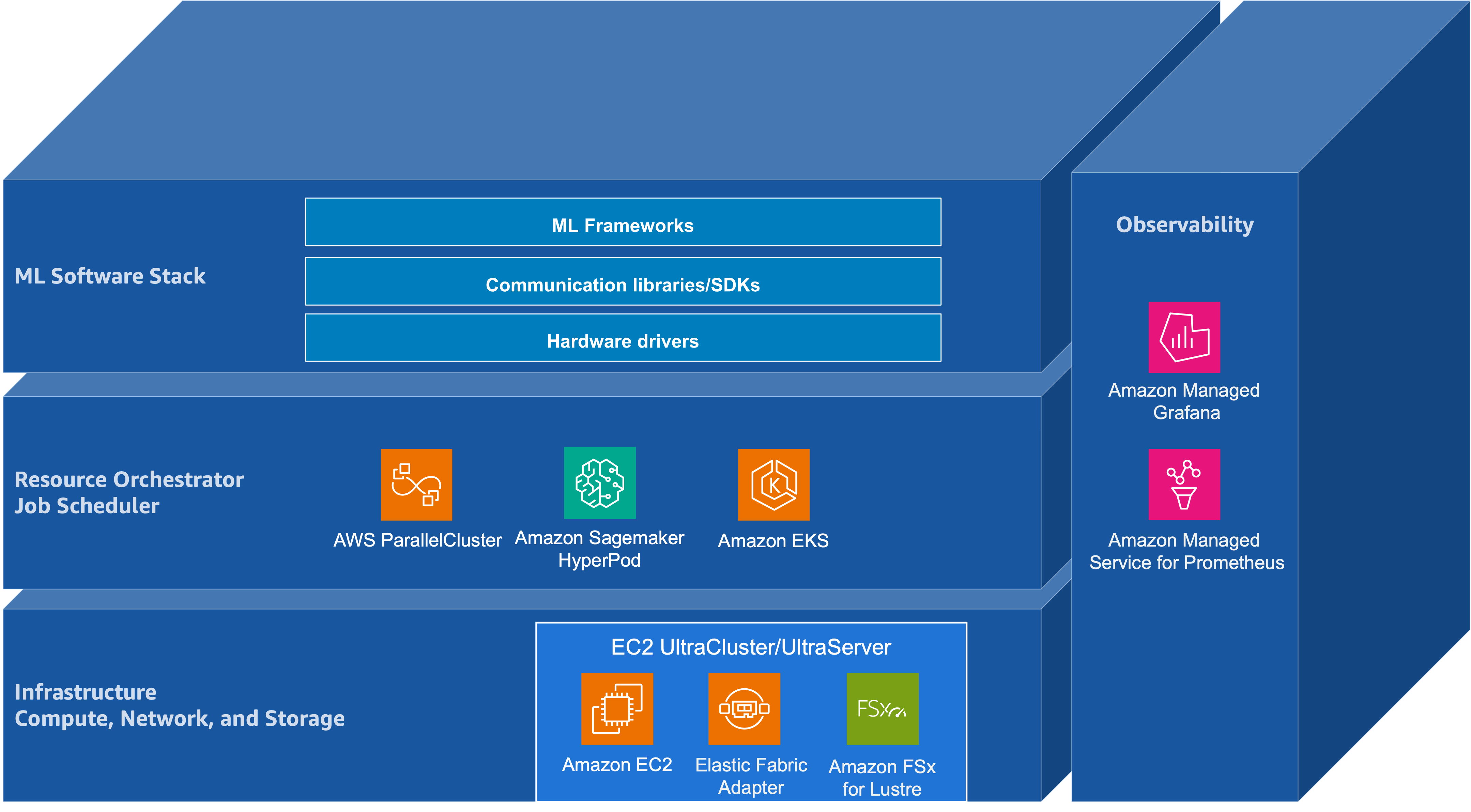
On May 11, 2026, Hugging Face announced a new initiative titled 'Building Blocks for Foundation Model Training and Inference on AWS.' This development focuses on providing a structured framework for developers and enterprises to manage the complex lifecycle of large-scale AI models within the Amazon Web Services (AWS) ecosystem. By focusing on both the training and inference phases, the announcement highlights a comprehensive approach to cloud-based AI development. While the initial report focuses on the foundational components, it signals a significant step in the ongoing collaboration between Hugging Face and AWS to simplify the deployment of foundation models for a broader range of users.

Hugging Face Blog
OpenAI Launches Daybreak: A New AI Initiative for Proactive Vulnerability Detection and Automated Patching
Industry News

OpenAI Launches Daybreak: A New AI Initiative for Proactive Vulnerability Detection and Automated Patching

OpenAI has officially introduced Daybreak, a specialized AI initiative designed to identify and remediate security vulnerabilities before they can be exploited by malicious actors. Building upon the Codex Security AI agent released in March, Daybreak develops comprehensive threat models tailored to an organization's specific codebase. By focusing on potential attack paths and validating likely vulnerabilities, the system aims to automate the detection of high-priority security risks. This move positions OpenAI as a direct competitor to existing security-focused AI models like Claude Mythos, emphasizing a proactive approach to cybersecurity through automated threat modeling and validation. The initiative represents a significant step in leveraging AI to secure software infrastructure against emerging digital threats.

The Verge
Mira Murati’s New Venture Thinking Machines Unveils Vision for Next-Generation AI Interaction Models
Industry News

Mira Murati’s New Venture Thinking Machines Unveils Vision for Next-Generation AI Interaction Models

Former OpenAI CTO Mira Murati has officially announced the core focus of her new AI startup, Thinking Machines. The company is pivoting away from traditional AI interfaces to develop what it calls "interaction models." These models are designed to facilitate a more natural form of collaboration between humans and artificial intelligence, mimicking the way people interact with one another. According to the announcement, Thinking Machines' technology will continuously process multimodal inputs, including audio and video, to create a seamless collaborative environment. This move marks a significant step for Murati following her departure from OpenAI, signaling a new frontier in how AI systems perceive and respond to human behavior in real-time.

The Verge
Nobel-Winning Economist Daron Acemoglu Challenges Silicon Valley AI Optimism: Key Economic Perspectives to Watch
Industry News

Nobel-Winning Economist Daron Acemoglu Challenges Silicon Valley AI Optimism: Key Economic Perspectives to Watch

Daron Acemoglu, a recipient of the 2024 Nobel Prize in economics, has emerged as a prominent skeptical voice regarding the current trajectory of artificial intelligence. According to reports from MIT Technology Review’s 'The Algorithm,' Acemoglu published research shortly before his Nobel win that has caused significant friction within Silicon Valley. His findings directly contradict the optimistic narratives promoted by major technology corporations, often referred to as 'Big Tech.' This analysis explores the tension between Acemoglu’s economic research and the industry's expectations, highlighting how his authoritative perspective as a Nobel laureate is forcing a re-evaluation of AI’s projected impact. The article examines the significance of this intellectual divide and what it suggests for the future of AI development and economic policy.

MIT Technology Review - AI
Microsoft Research Introduces SocialReasoning-Bench to Evaluate Whether AI Agents Act in Users’ Best Interests
Research Breakthrough

Microsoft Research Introduces SocialReasoning-Bench to Evaluate Whether AI Agents Act in Users’ Best Interests

Microsoft Research has announced the development of SocialReasoning-Bench, a new framework designed to measure the social reasoning capabilities of AI agents. Authored by a multi-disciplinary team including Tyler Payne and Asli Celikyilmaz, the benchmark addresses a critical gap in AI evaluation: determining if autonomous agents prioritize and act in the best interests of their human users. As AI transitions from simple task execution to complex agency, this research provides a standardized method to assess how well these systems navigate social nuances and ethical alignment. The initiative underscores Microsoft's commitment to developing trustworthy AI that moves beyond logical accuracy toward human-centric social intelligence.

Microsoft Research
Digg Relaunches as AI-Powered News Aggregator Focused on Influential Voices and High-Value Content
Industry News

Digg Relaunches as AI-Powered News Aggregator Focused on Influential Voices and High-Value Content

Digg, the long-standing name in social news, is pivoting toward a new identity as an AI-driven news aggregator. In a recent communication directed to its beta testers, the company outlined a strategic shift aimed at solving the modern challenge of information overload. The platform's new mission is centered on two primary objectives: tracking the most influential voices within specific topical spaces and surfacing news that is genuinely worth the audience's attention. By leveraging artificial intelligence to identify authority and relevance, Digg aims to move beyond traditional aggregation methods. This relaunch, currently in the beta testing phase, signals a move toward a more curated, high-signal experience designed to filter out digital noise and highlight impactful journalism.

TechCrunch AI
Google Identifies and Stops First AI-Developed Zero-Day Exploit Targeting Two-Factor Authentication
Industry News

Google Identifies and Stops First AI-Developed Zero-Day Exploit Targeting Two-Factor Authentication

In a landmark discovery for cybersecurity, Google's Threat Intelligence Group (GTIG) has identified and neutralized a zero-day exploit developed using artificial intelligence. This event marks the first time Google has officially reported stopping a threat of this nature. According to the GTIG report, prominent cybercrime threat actors were behind the development of the exploit, which was intended for a large-scale mass exploitation event. The primary objective of the attack was to bypass two-factor authentication (2FA) protocols, a critical layer of modern digital security. While the specific target remains unnamed, the prevention of this AI-crafted exploit highlights a significant shift in the capabilities of threat actors and the evolving landscape of automated cyber warfare.

The Verge