Pancake
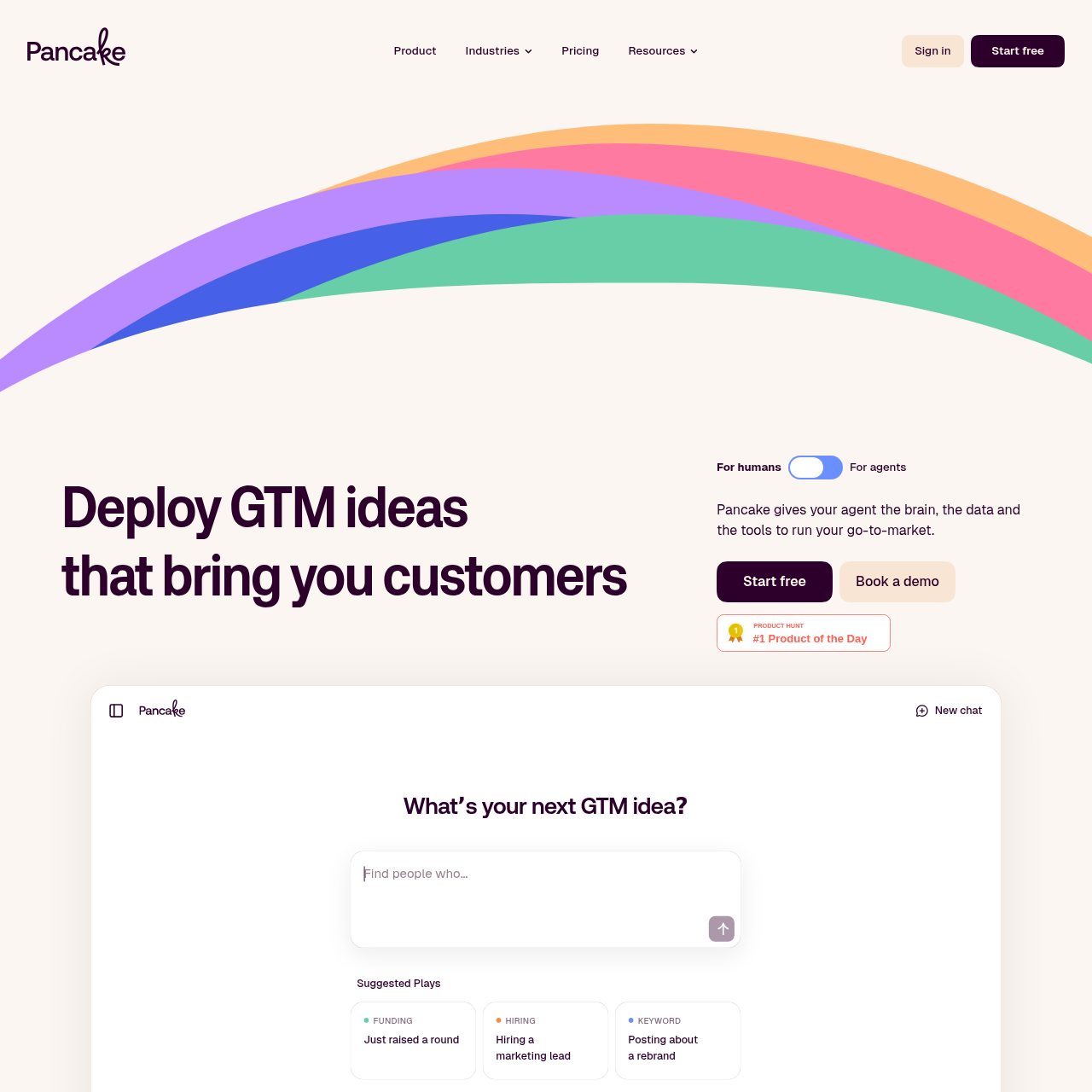
Pancake is an AI-powered go-to-market platform that builds targeting profiles from company websites, identifies qualified leads through market signals, and drafts personalized outreach requiring human approval.
What the product does and how it is positioned
Pancake automates outbound pipeline generation by turning a company website into a structured go-to-market knowledge base. After analyzing site content, the platform determines target buyers, offerings, and competitors, which inform outbound outreach strategies known as Plays. Users describe their target criteria using natural language prompts to initiate automated prospect searches across multiple third-party databases.
The system monitors external signals including funding events, job openings, and public posts to identify and qualify matching executives. Pancake composes personalized outreach drafts referencing these triggers, requiring user review and approval prior to sending. When prospects respond positively, the platform delivers calendar links to schedule meetings, while routing all other replies directly to the user.
Source-supported ways to use the product
Sales teams configure Plays to monitor funding announcements and leadership hiring, identifying relevant founders and department heads for timely outreach.
The official customer story reports that users operate go-to-market workflows directly within Codex or Claude using Pancake's Model Context Protocol integration to review leads and manage outreach.
Agencies set up automated searches to detect public signals about company rebranding initiatives, allowing them to initiate conversations with marketing leadership.
The documented workflow, where available
The user enters their company website, which Pancake analyzes to determine buyer personas, competitive context, and market offerings.
The user defines the target audience through natural language prompts, prompting Pancake to configure an automated search across external data providers.
The user approves matching leads and adjusts message drafts, after which Pancake delivers outreach, follows up, and sends calendar booking links upon positive replies.
Pancake operates as an outbound engine that identifies sales prospects by pairing internal positioning data with live external business signals. Once a company's website is provided, the platform establishes an internal profile of target customer segments and messaging guidelines. It then uses this context to query more than thirty external data providers, such as Dealroom, TheirStack, and Wappalyzer, scanning for events like recent capital raises, recruitment activity, or changes in technology stacks.
In addition to its standalone interface, Pancake exposes its core functionality through a Model Context Protocol server. This allows users working within conversational environments like Claude and Codex to execute go-to-market commands, inspect incoming prospect recommendations, and approve or reject leads directly from their existing chat interface via browser authentication.
Checks to run with your own material and workflow
What was checked and when
Answers based on the source-checked product record
Pancake analyzes the user's submitted website to identify who buys from the business, outline product offerings, research competitors, and define ideal customer profiles.
Pancake connects to conversational AI agents such as Claude and Codex through a Model Context Protocol server using a browser sign-in.
Pancake reads information on funding rounds, open job positions, and software tech stacks from over thirty data providers, including Dealroom, TheirStack, and Wappalyzer.
No, Pancake requires users to approve leads before contact is made, and users can review and edit each personalized draft message before it is dispatched.
When a prospect responds affirmatively, Pancake automatically sends the user's calendar booking link from their account, while all other replies are routed back to the user.