wan 3.0
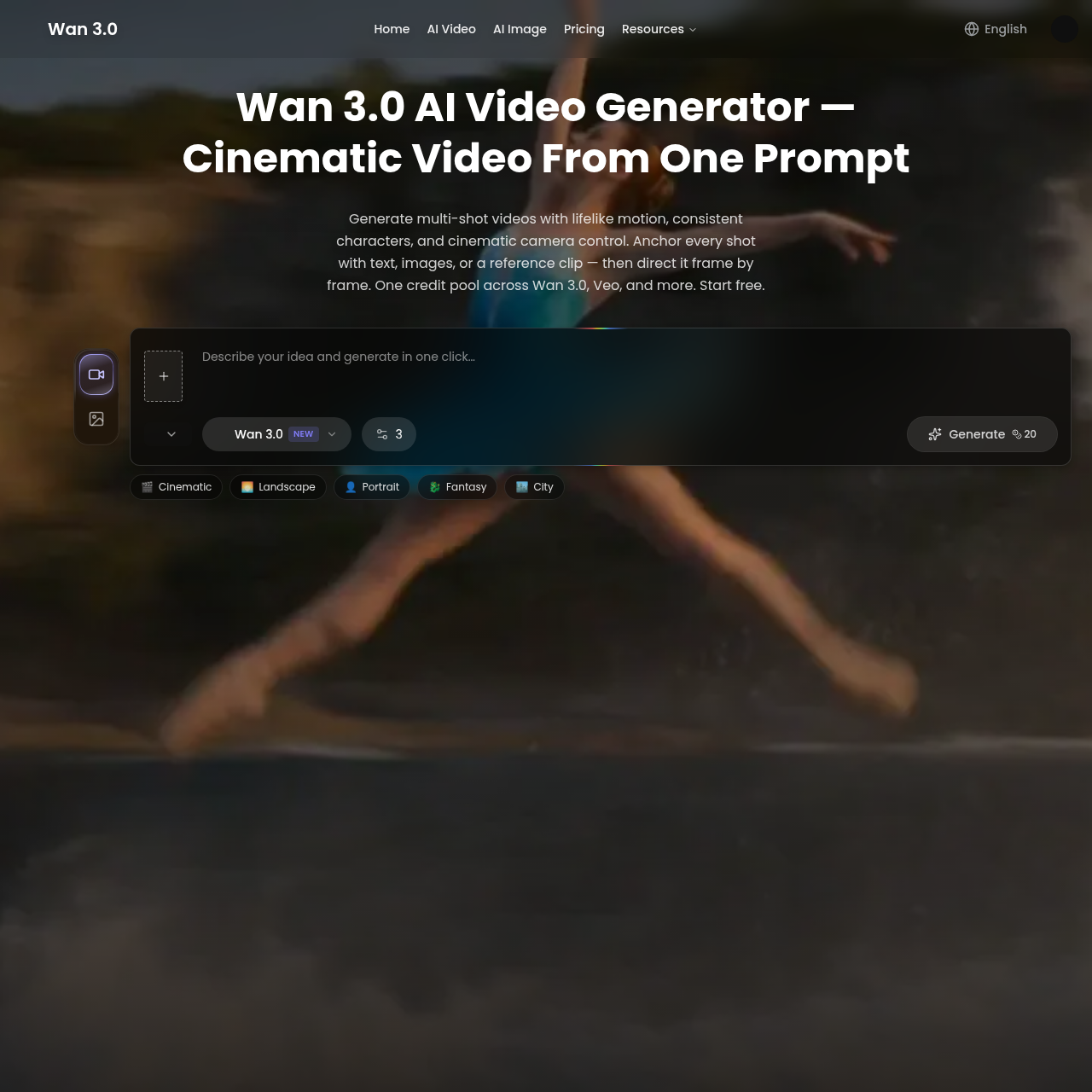
Wan 3.0 is an AI video generation platform that produces multi-shot cinematic clips from text, images, or reference videos while maintaining character and style consistency.
What the product does and how it is positioned
Wan 3.0 is an AI-driven video generation tool that creates cinematic sequences using text prompts, images, or reference clips.
The platform features multimodal referencing to maintain visual consistency for characters and products across multiple frames and clips.
Source-supported ways to use the product
Hannah Cole reports using the tool to generate motion variants from the same product reference to put more creative directions in front of the algorithm.
Priya Sharma reports using the tool to create motion concepts from product images to determine which angles are worth turning into paid ads.
The documented workflow, where available
Upload a photo, product shot, or reference clip to allow the system to read composition, depth, and motion.
Describe the desired camera movement, action, and mood to guide the shot-by-shot generation.
Render the cinematic clip, adjust the prompt if needed, and download the final video asset.
Wan 3.0 focuses on maintaining visual fidelity across video sequences by anchoring generation to specific user-provided references. This approach is designed so that character faces, product details, and overall brand styles remain consistent from the first frame to the last, even across multiple clips in a campaign.
Human-maintained commercial information
Pricing can change. Confirm the current plan and billing terms on the official site before purchasing.
Checks to run with your own material and workflow
What was checked and when
Answers based on the source-checked product record
Wan 3.0 is an AI tool that creates cinematic videos by processing text prompts, images, or reference clips to determine motion and composition.
The tool uses multimodal referencing to lock faces and style details, supporting they remain identical throughout a video or across a campaign.
Users can direct specific camera moves, pacing, and transitions by describing them in the prompt or using first and last frame anchors.
The platform can turn static images into cinematic shots by adding lifelike motion, camera movement, and physics based on user instructions.
According to the official documentation, credits used for failed renders are automatically refunded to the user's credit pool.