PostHog Desktop
PostHog Desktop is a multiplayer AI coding workspace that connects product data, team context, and a fleet of agents to automate development workflows and ship code.
PostHog Desktop is a multiplayer AI coding workspace that connects product data, team context, and a fleet of agents to automate development workflows and ship code.
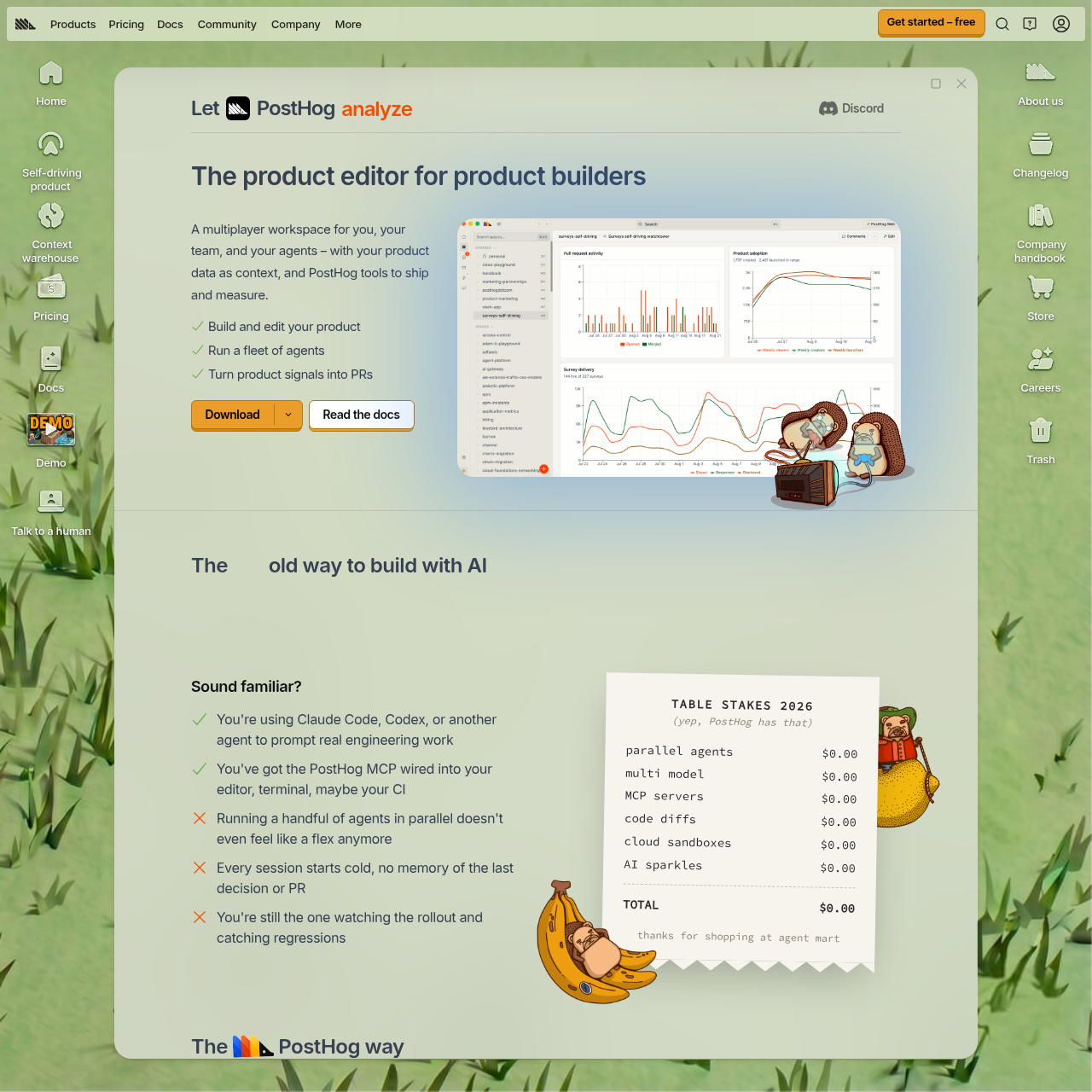
What the product does and how it is positioned
PostHog Desktop serves as a centralized workspace designed for product builders to orchestrate AI agents by integrating directly with production signals.
The platform supports collaborative development through shared channels and memory, enabling teams to manage complex projects with flexible model selection and tool integration.
Source-supported ways to use the product
Teams use Plan mode to define requirements, allowing agents to explore the codebase and propose implementation plans before writing code.
Agents utilize production signals such as logs, errors, and session recordings to assist in addressing product issues and improvements.
The documented workflow, where available
The agent analyzes data and codebase context to draft an implementation plan for user approval.
The agent executes the approved plan, utilizing selected models and skills to generate code diffs or pull requests.
PostHog Desktop provides agents with access to a persistent workspace that includes team-specific conventions and real-time product signals.
Checks to run with your own material and workflow
What was checked and when
Answers based on the source-checked product record
PostHog Desktop is a multiplayer workspace for product builders that allows teams and AI agents to collaborate using product data as context to ship and measure improvements.
The agent operates based on product signals such as in-app activity, logs, errors, and support tickets, allowing it to address issues or improvements within the product.
Yes, PostHog Desktop supports various models from providers like OpenAI and Anthropic, as well as open-weight models, allowing users to choose the best model for their specific tasks.
Channels are groups of tasks related to a specific topic or project that maintain their own working memory, supporting agents in retaining context throughout the development process.
Yes, the platform includes a Plan mode where agents explore data and propose implementation plans for user approval before any code is written.