Nemetschek Partners with ITE and Singapore Polytechnic for Five-Year AI Training Initiative
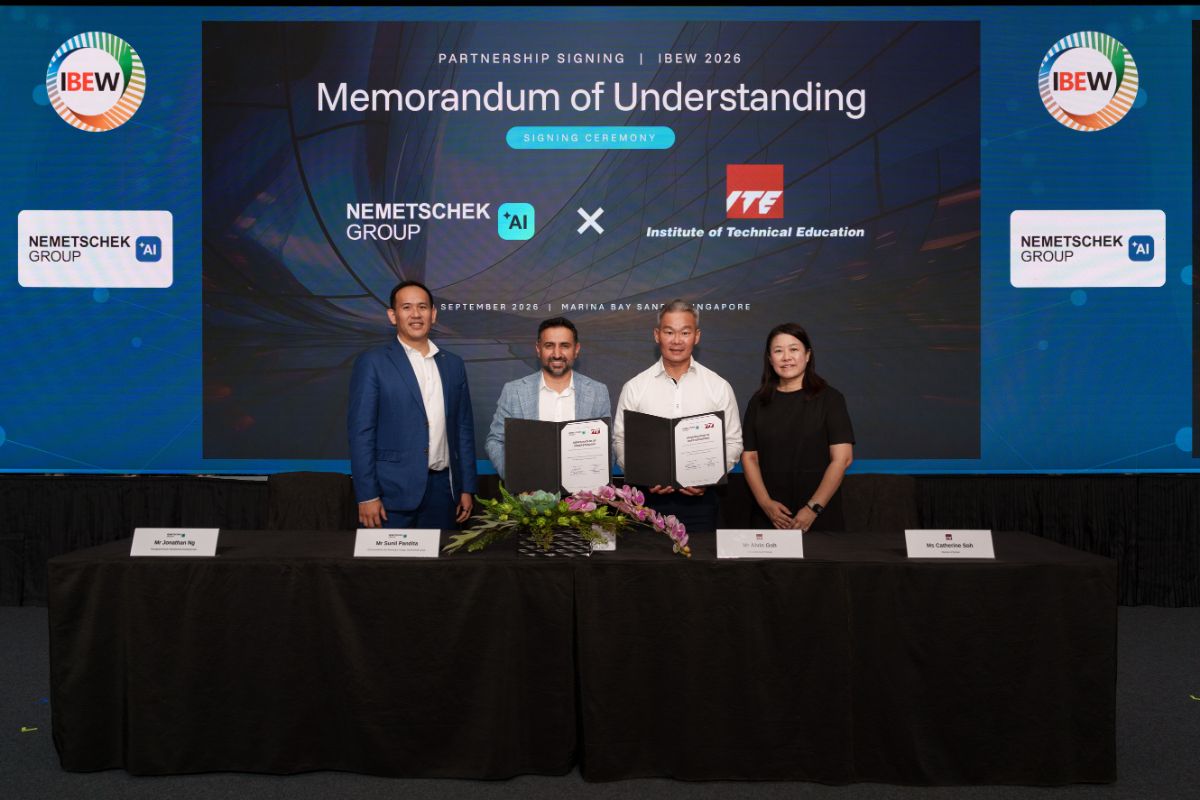
Nemetschek has announced a strategic partnership with the Institute of Technical Education (ITE) and Singapore Polytechnic (SP) to advance AI training in Singapore. The collaboration features a five-year agreement with ITE that extends across all three of its campus locations. This initiative is designed to integrate artificial intelligence education into the technical curriculum, ensuring students are prepared for the evolving demands of the global technology industry. By partnering with these key educational institutions, Nemetschek aims to foster a new generation of AI-literate professionals in the region, bridging the gap between academic learning and industry requirements in the rapidly growing field of artificial intelligence.
Key Takeaways
- Nemetschek has entered into a formal partnership with ITE and Singapore Polytechnic to provide specialized AI training.
- The agreement with the Institute of Technical Education (ITE) is a long-term commitment spanning five years.
- The scope of the partnership is comprehensive, covering all three of Singapore’s ITE colleges.
- The initiative focuses on equipping the future workforce with essential skills in artificial intelligence.
In-Depth Analysis
A Strategic Five-Year Roadmap for AI Education
The partnership between Nemetschek and the Institute of Technical Education (ITE) is characterized by its long-term vision, formalized through a five-year agreement. This duration is significant in the context of technology education, as it allows for a sustained and evolving curriculum that can keep pace with the rapid advancements in artificial intelligence. A five-year commitment suggests that the training will not be a one-off workshop but rather a deeply integrated part of the educational journey for students. This timeframe provides the stability necessary for faculty and students to master complex AI tools and methodologies, ensuring that the training remains relevant as the industry shifts. By establishing such a lengthy deal, Nemetschek and ITE are signaling a shared dedication to long-term workforce readiness in Singapore's tech sector.
Comprehensive Institutional Coverage Across ITE Colleges
One of the most notable aspects of the deal is its reach; the agreement covers all three of Singapore’s ITE colleges. This inclusive approach ensures that AI training is not localized to a single campus but is accessible to the entire ITE student body across the country. By standardizing AI education across all three colleges, the partnership promotes equity in technical training, ensuring that every student within the ITE system has the opportunity to gain high-demand AI skills. This broad implementation is crucial for scaling the impact of the initiative, as it creates a larger pool of qualified technicians and professionals who are proficient in AI applications. The collaboration with Singapore Polytechnic further extends this reach, suggesting a multi-tiered approach to technical and vocational AI training in the region.
Bridging the Industry-Academia Gap through AI
The collaboration between a global software provider like Nemetschek and leading Singaporean educational institutions like ITE and SP highlights the growing importance of industry-academia partnerships. In the field of artificial intelligence, where the gap between theoretical knowledge and practical application can be wide, such partnerships are essential. By bringing industry expertise directly into the classroom, Nemetschek is helping to ensure that the AI training provided is aligned with current market needs. This initiative focuses on practical skills that are immediately applicable in the workforce, thereby enhancing the employability of graduates. As AI continues to transform various industries, from construction to manufacturing, the ability of educational institutions to provide hands-on training with industry-standard tools becomes a critical factor in national economic competitiveness.
Industry Impact
The partnership between Nemetschek, ITE, and SP is poised to have a significant impact on Singapore's AI ecosystem. By focusing on the technical and polytechnic levels, the initiative addresses a critical segment of the workforce that is often responsible for the implementation and maintenance of AI systems. This move strengthens Singapore's position as a regional leader in AI adoption and education. Furthermore, it sets a precedent for how international technology firms can collaborate with local government-linked educational bodies to solve the talent shortage in the tech industry. The long-term nature of the deal also provides a blueprint for sustainable educational partnerships that can adapt to the fast-moving AI landscape, potentially influencing how other global tech companies approach workforce development in Southeast Asia.
Frequently Asked Questions
What is the duration of the AI training agreement between Nemetschek and ITE?
The agreement is a five-year deal, providing a long-term framework for AI education and training within the institutions.
Which educational institutions in Singapore are involved in this partnership?
The partnership involves Nemetschek, the Institute of Technical Education (ITE)—specifically covering all three of its colleges—and Singapore Polytechnic (SP).
What is the primary focus of the partnership between Nemetschek and these institutions?
The primary focus of the partnership is to provide AI training to students, ensuring they develop the necessary skills to work with artificial intelligence technologies in their future careers.