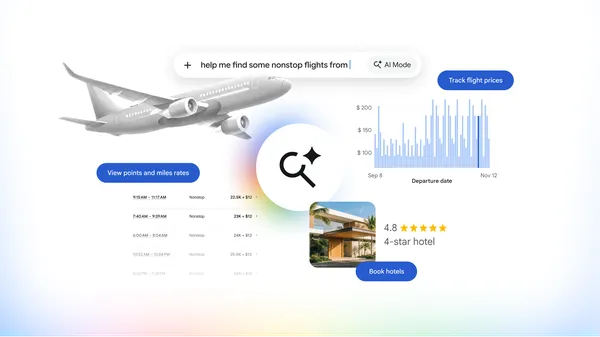
Google Search AI Mode Introduces Three New Ways to Plan and Book Travel Directly in Search
Google has announced a significant update to its Search platform, introducing "AI Mode" to streamline the travel planning and booking process. This new feature offers users three primary ways to manage their trips: booking hotels, tracking airfares, and viewing travel rewards such as miles. By centralizing these tools within the Search interface, Google provides a more integrated approach to travel management. The update focuses on simplifying the user journey from initial research to final booking, ensuring that travelers can monitor price changes and manage loyalty programs without navigating away from Search. This development marks a shift toward a more comprehensive, AI-driven travel assistant experience that combines logistics, financial tracking, and loyalty management in a single, accessible location.
Key Takeaways
- AI Mode Integration: Google Search now features a dedicated AI Mode designed specifically for travel planning and execution.
- Direct Booking Capabilities: Users can now book hotels directly through the Search interface, reducing the steps required to secure accommodations.
- Airfare Monitoring: The update includes tools to track airfares, allowing travelers to stay informed about price fluctuations.
- Loyalty Program Management: AI Mode enables users to view their accumulated miles and travel rewards within the Search environment.
In-Depth Analysis
The Evolution of AI Mode in Travel Planning
The introduction of AI Mode in Google Search represents a strategic shift in how users interact with travel information. Rather than acting solely as a gateway to external websites, Search is evolving into a functional hub where planning and booking occur simultaneously. By integrating AI Mode, Google is providing a structured environment where the complexities of travel—such as comparing hotel options and monitoring flight costs—are handled through a more intuitive interface. This mode is designed to synthesize travel data, making it easier for users to transition from the inspiration phase of a trip to the actual booking phase. The focus here is on efficiency, as the AI-driven interface aims to streamline the decision-making process by presenting relevant booking options and tracking tools in a unified view.
Streamlining Logistics: Hotels, Airfares, and Rewards
The three specific features highlighted in this update—booking hotels, tracking airfares, and viewing rewards—address the primary pain points of modern travel planning.
Firstly, the ability to book hotels directly within Search simplifies the conversion process. By keeping the user within the Google ecosystem, the platform minimizes the friction often associated with navigating multiple third-party booking sites. This integration suggests a more seamless data flow between search queries and reservation systems.
Secondly, the airfare tracking feature provides a critical utility for budget-conscious travelers. In a volatile market where flight prices change frequently, having a built-in tracking mechanism within AI Mode allows users to make data-driven decisions on when to purchase tickets. This proactive approach to travel search moves beyond static results toward a dynamic monitoring service.
Thirdly, the inclusion of miles and rewards viewing is a significant addition for loyalty program members. Managing frequent flyer miles and credit card rewards often requires logging into various separate accounts. By bringing this information into AI Mode, Google Search allows users to see their available "travel currency" alongside booking options, potentially influencing their choice of airlines or hotels based on their current rewards balance.
Industry Impact
The launch of these AI-driven travel features in Google Search has several implications for the broader travel and technology industries. By consolidating booking, tracking, and rewards management, Google is positioning itself as a comprehensive travel assistant rather than just a search engine. This move could potentially impact the traffic flow to traditional online travel agencies (OTAs) and meta-search engines, as users may find it more convenient to complete their entire travel workflow within Google's AI Mode.
Furthermore, the integration of loyalty data (miles and rewards) suggests a deeper level of personalization in search results. As AI continues to refine how travel information is presented, the industry may see a shift toward platforms that can offer a holistic view of a traveler's profile, including their preferences, budget, and loyalty status. This update reinforces the trend of AI being used to reduce the cognitive load on consumers, transforming search from a manual research task into an automated management experience.
Frequently Asked Questions
Question: What are the primary features of the new AI Mode in Google Search for travel?
AI Mode in Google Search allows users to book hotels, track airfares, and view their travel miles and rewards all within a single interface.
Question: How does the airfare tracking feature work in this update?
According to the announcement, the airfare tracking feature within AI Mode enables users to monitor flight prices directly in Search, helping them stay updated on changes to airfare costs for their planned trips.
Question: Can I manage my loyalty programs through Google Search now?
Yes, the new update allows users to view their miles and travel rewards through the AI Mode in Google Search, making it easier to track loyalty benefits while planning a trip.