Y Combinator Backs US AI Startup Kita in $4.5 Million Funding Round for Financial Document Processing
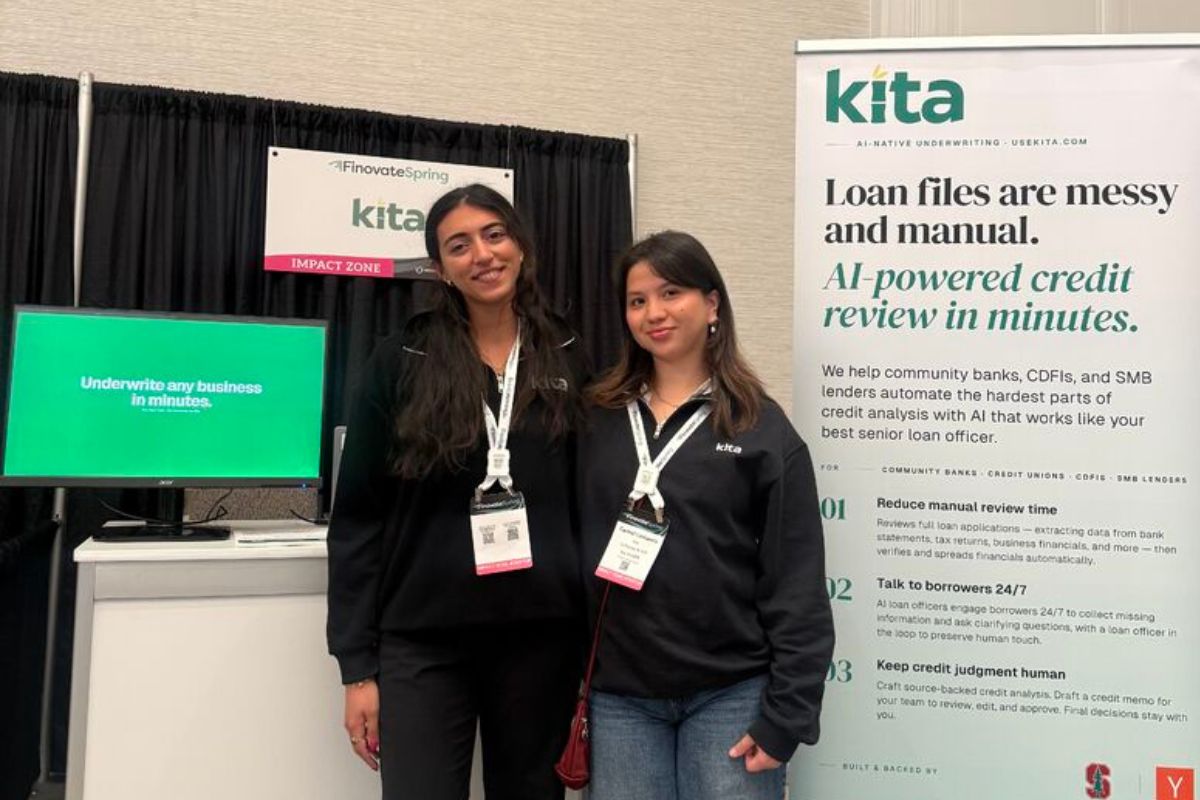
US-based AI startup Kita has successfully secured $4.5 million in a recent funding round, with the prominent accelerator Y Combinator among the participating investors. The startup's core value proposition centers on its specialized software designed to autonomously read and interpret a variety of critical financial documents. According to company statements, the technology is capable of processing bank statements, e-wallet records, payslips, and invoices. This investment underscores the growing industry focus on AI-driven automation within the financial sector, specifically targeting the extraction of data from complex, unstructured documents. The involvement of Y Combinator highlights the perceived potential of Kita's technology to streamline financial workflows and improve data accuracy for businesses and financial institutions relying on diverse record-keeping formats.
Key Takeaways
- Significant Funding Milestone: Kita has raised $4.5 million in a new funding round to advance its AI-driven financial software.
- Y Combinator Participation: The prestigious startup accelerator Y Combinator joined the round, signaling strong institutional interest in Kita's technology.
- Document Processing Capabilities: Kita's software is specifically designed to read and process bank statements, e-wallet records, payslips, and invoices.
- US-Based Innovation: As a US AI startup, Kita is positioning itself within the competitive landscape of financial automation and data extraction.
In-Depth Analysis
The $4.5 Million Capital Injection and Y Combinator's Role
The announcement of a $4.5 million funding round for Kita marks a pivotal moment for the US-based AI startup. Securing such a significant amount of capital in the current venture environment highlights the market's appetite for specialized artificial intelligence applications. The participation of Y Combinator is particularly noteworthy. As an accelerator known for backing high-growth technology companies, Y Combinator's involvement often serves as a catalyst for further interest and validation within the tech ecosystem. This funding is expected to support the development and scaling of Kita's software, which aims to solve the persistent challenge of manual data entry and document verification in the financial sector.
Technical Specialization: Financial Document Interpretation
At the heart of Kita's offering is a software suite capable of interpreting a wide array of financial records. The company has explicitly identified four primary document types that its technology can process: bank statements, e-wallet records, payslips, and invoices. Each of these document types presents unique challenges for traditional automated systems due to variations in formatting, terminology, and data structure. By leveraging AI to read these documents, Kita aims to provide a more seamless and accurate method for extracting financial data.
The ability to process bank statements and e-wallet records suggests a focus on transaction history and liquidity verification. Meanwhile, the inclusion of payslips indicates a capability for income verification, and the processing of invoices points toward applications in accounts payable and business-to-business transactions. This multi-faceted approach to document reading positions Kita as a versatile tool for any organization that handles high volumes of financial paperwork.
Strategic Focus on Diverse Financial Records
Kita's decision to support both traditional documents, like bank statements and invoices, and modern digital records, such as e-wallet histories, reflects a strategic understanding of the evolving financial landscape. As digital wallets become more prevalent globally, the ability to integrate this data alongside traditional banking records is increasingly important. By providing a unified software solution that can read across these different formats, Kita addresses a fragmentation problem often faced by financial analysts and automated systems. The startup's focus on payslips further expands its utility into the human resources and lending sectors, where income proof is a fundamental requirement for various processes.
Industry Impact
The emergence of Kita and its recent funding round signifies a broader shift in the AI industry toward hyper-specialized document processing. While general-purpose AI models have gained significant attention, the financial industry requires high levels of precision and the ability to handle sensitive, structured data. Kita’s focus on specific financial documents—bank statements, e-wallets, payslips, and invoices—demonstrates the value of niche AI applications that can integrate directly into existing financial workflows.
Furthermore, this development suggests that the automation of financial data extraction is moving beyond simple Optical Character Recognition (OCR) toward more intelligent, context-aware interpretation. As more startups like Kita enter the market with the backing of major investors like Y Combinator, the industry can expect a reduction in manual processing times and a decrease in human error across financial services. This trend is likely to accelerate the digital transformation of traditional banking and accounting practices, making financial data more accessible and actionable in real-time.
Frequently Asked Questions
What is Kita and what does its software do?
Kita is a US-based AI startup that develops software designed to read and interpret various financial documents. Its technology is specifically built to extract data from bank statements, e-wallet records, payslips, and invoices, helping to automate financial data processing.
How much funding did Kita recently raise?
Kita recently secured $4.5 million in a funding round. This round included participation from the well-known startup accelerator Y Combinator, highlighting the startup's potential in the AI and fintech space.
Why is the ability to read e-wallet records significant?
As digital payment methods grow in popularity, e-wallet records have become a crucial part of an individual's or business's financial profile. By including e-wallet records in its processing capabilities, Kita ensures that its software can handle modern digital transactions alongside traditional bank statements and invoices.