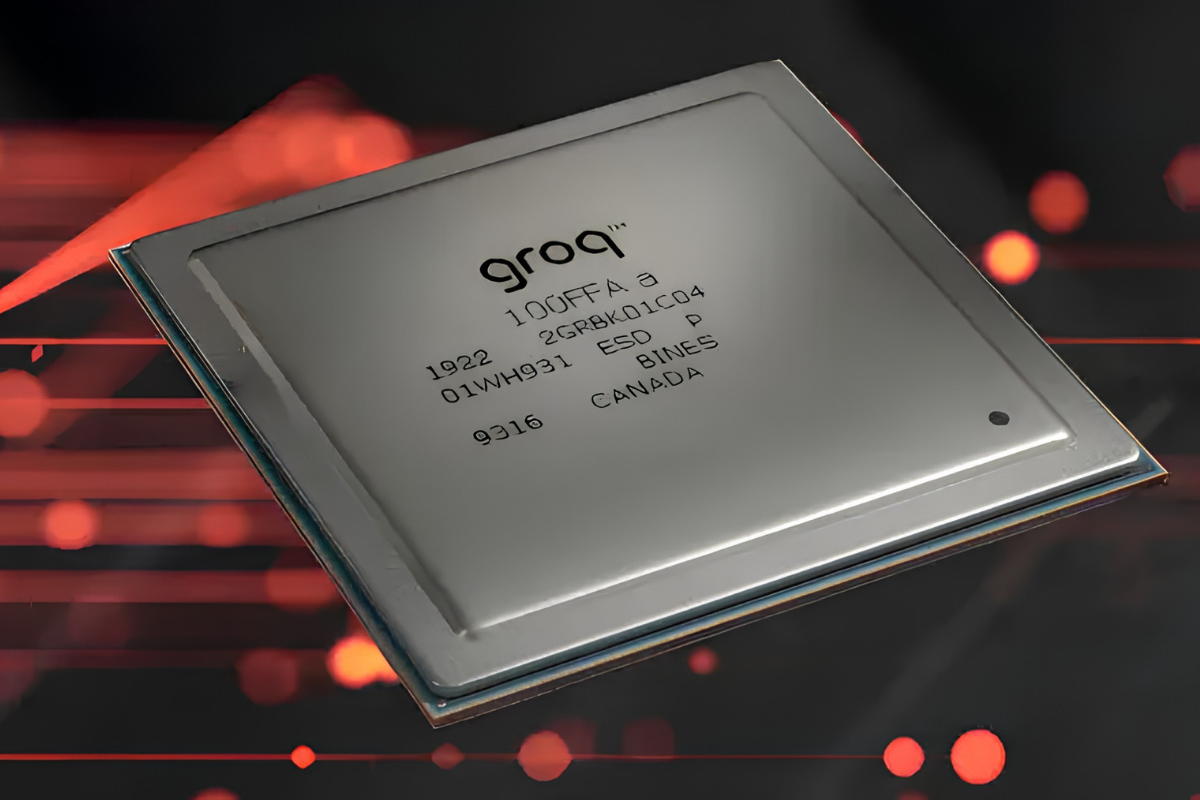
Nvidia Backs AI Chip Startup Groq at $3.5 Billion Valuation to Fuel Global Data Center Expansion
Nvidia has officially entered a strategic backing of Groq, a rising AI chip startup, in a deal that values the company at $3.5 billion. This significant investment highlights the intensifying competition and collaboration within the semiconductor industry. Groq's operational capacity is currently supported by a robust network of 13 data centers strategically located across four major global regions: North America, Europe, the Middle East, and Asia-Pacific. The move by Nvidia to support a fellow AI chip developer at such a high valuation underscores the critical demand for diversified AI infrastructure and specialized hardware. This analysis explores the implications of Groq's $3.5 billion valuation and its extensive global footprint in the context of Nvidia's market influence.
Key Takeaways
- Strategic Investment: Nvidia is backing AI chip startup Groq at a significant valuation of $3.5 billion.
- Global Infrastructure: Groq currently operates 13 data centers, providing a wide geographical reach for its AI hardware services.
- Regional Presence: The startup's infrastructure spans North America, Europe, the Middle East, and the Asia-Pacific region.
- Market Valuation: The $3.5 billion valuation positions Groq as a major player in the specialized AI semiconductor market.
In-Depth Analysis
The Significance of the $3.5 Billion Valuation
The news that Nvidia is backing Groq at a $3.5 billion valuation marks a pivotal moment for the AI chip industry. A valuation of this magnitude for a startup indicates a high level of market confidence in Groq's technology and its potential to capture a significant share of the AI hardware market. In the current economic climate, where AI infrastructure is the backbone of technological advancement, a $3.5 billion price tag suggests that Groq is no longer just an emerging player but a substantial entity with the scale to influence industry standards.
Nvidia’s involvement as a backer is particularly noteworthy. As the dominant force in the GPU and AI accelerator market, Nvidia’s decision to support Groq could be interpreted as a strategic move to foster a broader ecosystem of AI hardware. This investment validates Groq's approach to AI processing and suggests that the industry sees room for multiple specialized architectures to coexist alongside traditional GPU-heavy environments. The capital infusion at this valuation likely provides Groq with the resources necessary to further scale its operations and compete on a global stage.
Global Infrastructure and Data Center Distribution
One of the most striking aspects of Groq's current operational status is its extensive infrastructure. Operating 13 data centers is a massive undertaking for an AI chip startup, reflecting a mature deployment strategy. The geographical distribution of these centers—covering North America, Europe, the Middle East, and the Asia-Pacific—demonstrates a commitment to providing low-latency AI processing capabilities to a global customer base.
By establishing a presence in the Middle East and Asia-Pacific alongside traditional hubs in North America and Europe, Groq is positioning itself to serve emerging markets that are increasingly investing in AI sovereignty and localized data processing. This 13-center network allows Groq to offer its AI chip capabilities closer to the end-user, which is critical for real-time AI applications. The scale of this infrastructure, combined with the financial backing from an industry leader like Nvidia, suggests that Groq is focused on building a resilient and accessible global platform for AI inference and computation.
Industry Impact
The backing of Groq by Nvidia at a $3.5 billion valuation has profound implications for the AI industry. First, it signals a trend of "co-opetition" where industry leaders invest in potential challengers to ensure they remain at the center of the evolving hardware landscape. This move may encourage further venture capital flow into specialized AI chip startups, as it proves that there is a clear path to high-value exits or strategic partnerships even in a market dominated by giants.
Furthermore, Groq's 13 data centers across four continents set a new benchmark for startup infrastructure. It shifts the focus from merely designing chips to the ability to deliver compute power at scale. As more regions seek to build their own AI capabilities, Groq’s established global footprint makes it a primary candidate for international partnerships. This development could accelerate the transition toward a more decentralized AI infrastructure, where specialized chips are deployed globally to meet the specific needs of different regulatory and economic zones.
Frequently Asked Questions
Question: What is the current valuation of the AI chip startup Groq?
Groq is currently valued at $3.5 billion following the backing from Nvidia.
Question: How many data centers does Groq operate and where are they located?
Groq operates a total of 13 data centers. These facilities are distributed across North America, Europe, the Middle East, and the Asia-Pacific region.
Question: Who is the primary industry leader backing Groq in this latest update?
Nvidia is the prominent industry leader providing backing for Groq at its $3.5 billion valuation.