Meituan Open-Sources LongCat-2.0: A 1.6T Parameter Model Optimized for Agentic Coding and Domestic Hardware
Meituan's technical team has officially announced the open-sourcing of LongCat-2.0, a massive large language model featuring 1.6 trillion total parameters. Designed specifically for real-world Agentic Coding tasks, the model utilizes a sparse architecture with an average activation of approximately 48 billion parameters. LongCat-2.0 introduces innovative technical features, including LongCat Sparse Attention and N-gram Embedding, which collectively enhance long-context processing efficiency and token-level representation. Beyond architectural improvements, the release is notable for providing inference code specifically optimized for domestic (Chinese) hardware cards. By combining dynamic activation with enhanced code understanding, generation, and execution capabilities, Meituan aims to provide a robust open-source solution for complex programming environments and autonomous coding agents.
Key Takeaways
- Massive Scale with Efficient Activation: LongCat-2.0 features a total of 1.6 trillion parameters, but maintains efficiency through a sparse architecture that activates an average of 48 billion parameters.
- Specialized for Agentic Coding: The model is purpose-built to handle real-world Agentic Coding tasks, focusing on the full lifecycle of code understanding, generation, and execution.
- Architectural Innovations: It introduces LongCat Sparse Attention and N-gram Embedding to solve challenges related to long-context processing and token-level representation.
- Domestic Hardware Support: Meituan has open-sourced the inference code specifically for domestic hardware cards, lowering the barrier for local deployment and optimization.
- Enhanced Performance: The integration of dynamic activation allows the model to deliver superior performance in complex coding scenarios compared to traditional architectures.
In-Depth Analysis
Architectural Innovation: Sparse Attention and N-gram Embedding
Meituan's LongCat-2.0 represents a significant technical evolution in the field of large language models (LLMs) for specialized domains. At the core of its architecture are two primary innovations: LongCat Sparse Attention and N-gram Embedding. These features are designed to address the inherent limitations of standard transformer models when dealing with the vast and complex structures found in modern software development.
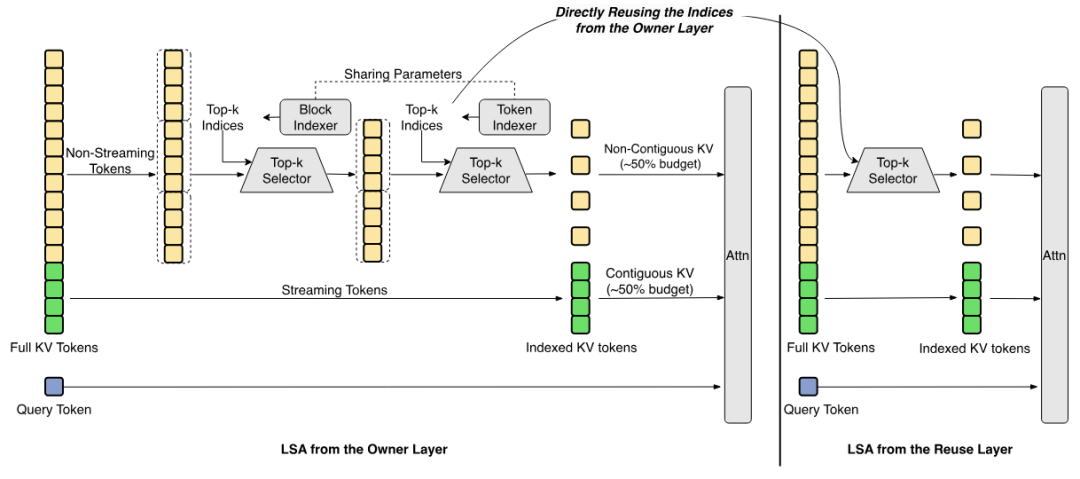
The LongCat Sparse Attention mechanism is specifically engineered to improve the efficiency of long-context processing. In Agentic Coding, models often need to ingest entire repositories or extensive documentation to understand the context of a specific function or bug. By utilizing sparse attention, LongCat-2.0 can manage these long sequences more effectively, reducing the computational overhead that typically scales quadratically with sequence length. This allows the model to maintain high performance even when the input context is exceptionally large.
Complementing this is the N-gram Embedding layer. This feature focuses on enhancing token-level representation. In the context of programming languages, where specific sequences of characters (tokens) carry precise semantic and structural meaning, N-gram Embedding provides a more granular and robust way for the model to represent code. This leads to a deeper understanding of syntax and logic, which is critical for tasks that require high precision, such as code generation and debugging.
Optimized for the Agentic Coding Lifecycle
LongCat-2.0 is not merely a general-purpose model; it is described as being "born for real Agentic Coding tasks." This specialization is reflected in its ability to handle the three pillars of automated programming: understanding, generation, and execution. The model's architecture, which balances a massive 1.6T parameter pool with a 48B dynamic activation strategy, is key to this capability.
Dynamic activation allows the model to allocate its computational resources intelligently based on the complexity of the task at hand. When performing code understanding—such as analyzing a complex class hierarchy—the model can leverage its vast parameter space to capture subtle dependencies. For code generation, it utilizes its refined token-level representations to produce syntactically correct and logically sound code snippets. Finally, for execution-related tasks, the model's enhanced logic processing ensures that the generated code is not just theoretically correct but practically functional within a real-world environment.
By focusing on the "Agentic" aspect, Meituan implies that LongCat-2.0 is designed to function within autonomous or semi-autonomous systems. These agents require more than just predictive text capabilities; they need the ability to reason through coding problems, plan multi-step implementations, and verify their own output—all areas where the 1.6T parameter scale and specialized attention mechanisms provide a distinct advantage.
Open Source Strategy and Hardware Accessibility
A pivotal aspect of the LongCat-2.0 release is Meituan's decision to open-source the inference code for domestic hardware cards. This move addresses a critical bottleneck in the AI industry: the dependency on specific, often restricted, hardware architectures for running massive models. By providing optimized code for domestic cards, Meituan is facilitating the adoption of 1.6T-scale models within the local ecosystem.
This open-source approach extends beyond just the model weights. By sharing the underlying inference logic, Meituan allows developers and researchers to fine-tune the model's performance for specific hardware configurations. This is particularly important for the 48B average activation mechanism, as efficient memory management and compute scheduling are essential to realizing the performance benefits of a sparse 1.6T model. The availability of this code ensures that the broader technical community can contribute to and benefit from the model's advanced architecture, regardless of their hardware constraints.
Industry Impact
The release of LongCat-2.0 has significant implications for both the AI development community and the hardware industry. First, it sets a new benchmark for specialized coding models. By demonstrating that a 1.6T parameter model can be run efficiently through sparse activation and specialized attention, Meituan provides a roadmap for other organizations looking to build domain-specific LLMs. The focus on Agentic Coding also signals a shift in the industry toward models that can perform complex, multi-step tasks rather than simple text completion.
Second, the emphasis on domestic hardware support is a strategic move that strengthens the local AI infrastructure. By ensuring that one of the world's largest open-source coding models runs efficiently on domestic cards, Meituan is helping to decouple AI progress from global hardware supply chain fluctuations. This encourages the development of a self-sustaining ecosystem where software and hardware are co-optimized for high-performance tasks like AI-driven software engineering.
Frequently Asked Questions
Question: What is the difference between the 1.6T total parameters and the 48B average activation in LongCat-2.0?
LongCat-2.0 utilizes a sparse architecture, meaning that while the model contains a total of 1.6 trillion parameters (its total capacity), it does not use all of them for every calculation. On average, only about 48 billion parameters are "activated" or used during a single inference pass. This allows the model to benefit from the knowledge capacity of a massive model while maintaining the speed and efficiency of a much smaller one.
Question: How does LongCat-2.0 improve the processing of long code files?
It uses a specialized mechanism called LongCat Sparse Attention. Traditional attention mechanisms struggle with long contexts because the computational requirements grow very quickly as the input gets longer. Sparse attention focuses only on the most relevant parts of the input, allowing the model to process much longer sequences of code or documentation more efficiently without losing critical context.
Question: Can LongCat-2.0 be used on non-standard or domestic AI hardware?
Yes. One of the key features of this open-source release is that Meituan has provided specific inference code optimized for domestic hardware cards. This ensures that the model can be deployed and run efficiently on a wider range of hardware platforms, specifically targeting the domestic chip ecosystem.