Meituan Officially Open-Sources LongCat-2.0: A 1.6T Parameter Model for Advanced Agentic Coding Tasks
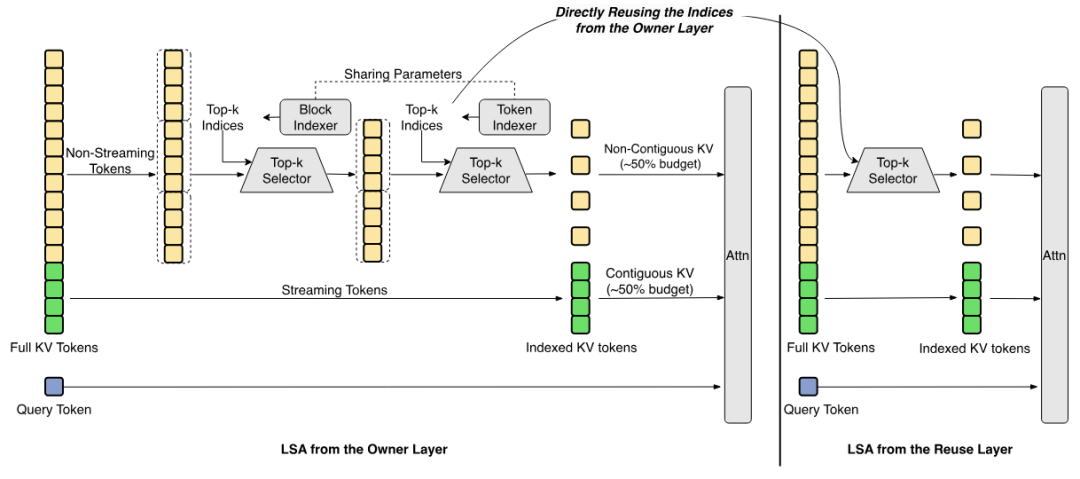
Meituan's technical team has announced the open-source release of LongCat-2.0, a high-performance model boasting 1.6 trillion total parameters with an average of 48 billion active parameters. Designed specifically for real-world Agentic Coding scenarios, LongCat-2.0 integrates innovative architectural features like LongCat Sparse Attention and N-gram Embedding. These advancements significantly improve long-context efficiency and token-level representation. Crucially, the release includes inference code optimized for domestic GPUs, lowering the barrier for high-performance AI deployment. The model's dynamic activation mechanism further bolsters its capabilities in code understanding, generation, and execution, marking a significant milestone in specialized open-source AI for software development and hardware compatibility.
Key Takeaways
- Massive Scale with Efficiency: LongCat-2.0 features 1.6 trillion total parameters while maintaining an average of 48 billion active parameters for optimized performance.
- Specialized for Coding: The model is purpose-built for Agentic Coding tasks, focusing on real-world code understanding, generation, and execution.
- Architectural Innovations: It introduces LongCat Sparse Attention and N-gram Embedding to enhance long-context processing and token-level representation.
- Hardware Accessibility: Meituan has synchronously released inference code specifically optimized for domestic GPU hardware, promoting ecosystem diversity.
- Dynamic Activation: The model utilizes dynamic activation to strengthen its performance across various coding-related operations.
In-Depth Analysis
Architectural Breakthroughs for Long-Context Coding
Meituan's LongCat-2.0 represents a significant leap in the architecture of large language models (LLMs) dedicated to software engineering. At the core of its design are two primary innovations: LongCat Sparse Attention and N-gram Embedding. Sparse attention mechanisms are critical for handling the extensive context windows often required in complex coding projects, where a model must understand dependencies across thousands of lines of code. By implementing a sparse approach, LongCat-2.0 can process these long contexts more efficiently than traditional dense attention models.
Furthermore, the introduction of N-gram Embedding enhances the model's token-level representation. In the context of programming languages, where syntax and local patterns are highly structured, N-gram embeddings allow the model to capture more nuanced relationships between code segments. This dual focus on broad context and granular representation ensures that the model remains accurate even when dealing with the intricate logic found in Agentic Coding tasks.
Balancing Scale and Performance via Dynamic Activation
One of the most striking features of LongCat-2.0 is its massive scale, totaling 1.6 trillion parameters. However, Meituan has addressed the computational challenges of such a large model by ensuring that only approximately 48 billion parameters are active on average. This approach, combined with dynamic activation, allows the model to allocate its computational resources where they are most needed during the understanding, generation, or execution phases of a coding task.
This efficiency is particularly important for "Agentic Coding," a field where the AI is not just a passive assistant but an active participant capable of executing tasks and making decisions within a development environment. The ability to maintain high performance without the prohibitive costs of activating 1.6 trillion parameters simultaneously makes LongCat-2.0 a viable tool for real-world applications.
Supporting the Domestic Hardware Ecosystem
A pivotal aspect of this release is the synchronous opening of inference code for domestic GPUs. By providing optimized code for local hardware, Meituan is directly addressing the need for hardware-software co-design in the AI industry. This move ensures that developers and enterprises utilizing domestic computing infrastructure can deploy LongCat-2.0 effectively, reducing reliance on specific global hardware chains and fostering a more robust local AI ecosystem. This strategic alignment between high-end model architecture and hardware-specific optimization is a key differentiator for the LongCat-2.0 project.
Industry Impact
The release of LongCat-2.0 is poised to influence the AI industry in several ways. First, it sets a new benchmark for open-source coding models, demonstrating that massive parameter counts can be managed efficiently through sparse attention and dynamic activation. Second, by focusing on Agentic Coding, Meituan is pushing the boundaries of what AI can do in the software development lifecycle, moving beyond simple code completion toward autonomous execution and complex logic handling. Finally, the support for domestic GPUs provides a critical blueprint for how large-scale models can be democratized across different hardware platforms, ensuring that the benefits of advanced AI are accessible regardless of the underlying silicon.
Frequently Asked Questions
Question: What is the primary purpose of Meituan's LongCat-2.0?
LongCat-2.0 is specifically designed for real-world Agentic Coding tasks. It aims to improve the efficiency and accuracy of code understanding, generation, and execution through specialized architectural features.
Question: How does the model handle its 1.6 trillion parameters efficiently?
While the model has 1.6T total parameters, it uses dynamic activation to maintain an average of only 48 billion active parameters. This allows for high-level performance while significantly reducing the computational overhead typically associated with such large models.
Question: Does LongCat-2.0 support domestic GPU hardware?
Yes. Along with the model, Meituan has released inference code specifically optimized for domestic GPUs, making it easier to deploy the model on local hardware infrastructures.