Meituan Open-Sources LongCat-2.0: A 1.6T Parameter Model Optimized for Agentic Coding and Domestic Hardware
Meituan's technical team has officially open-sourced LongCat-2.0, a massive language model featuring 1.6 trillion total parameters with an average of 48 billion active parameters. Specifically engineered for "Agentic Coding" tasks, the model introduces architectural innovations such as LongCat Sparse Attention and N-gram Embedding. These features are designed to enhance long-context processing efficiency and token-level representation capabilities. Furthermore, the release includes inference code specifically optimized for domestic Chinese computing cards, facilitating broader accessibility within the local hardware ecosystem. By combining dynamic activation with its specialized architecture, LongCat-2.0 aims to significantly improve performance in code understanding, generation, and execution, marking a significant contribution to the open-source AI coding landscape.
Key Takeaways
- Massive Scale with Efficiency: LongCat-2.0 features 1.6 trillion total parameters while maintaining an average of 48 billion active parameters, balancing power with computational efficiency.
- Architectural Innovations: The model introduces LongCat Sparse Attention and N-gram Embedding to optimize long-context handling and token-level representation.
- Purpose-Built for Coding: Specifically designed for "Agentic Coding" tasks, focusing on the full lifecycle of code understanding, generation, and execution.
- Domestic Hardware Support: Meituan has released inference code compatible with domestic Chinese computing cards, promoting hardware diversity and accessibility.
- Dynamic Activation: The integration of dynamic activation further strengthens the model's performance in complex programming environments.
In-Depth Analysis
Architectural Breakthroughs: Sparse Attention and N-gram Embedding
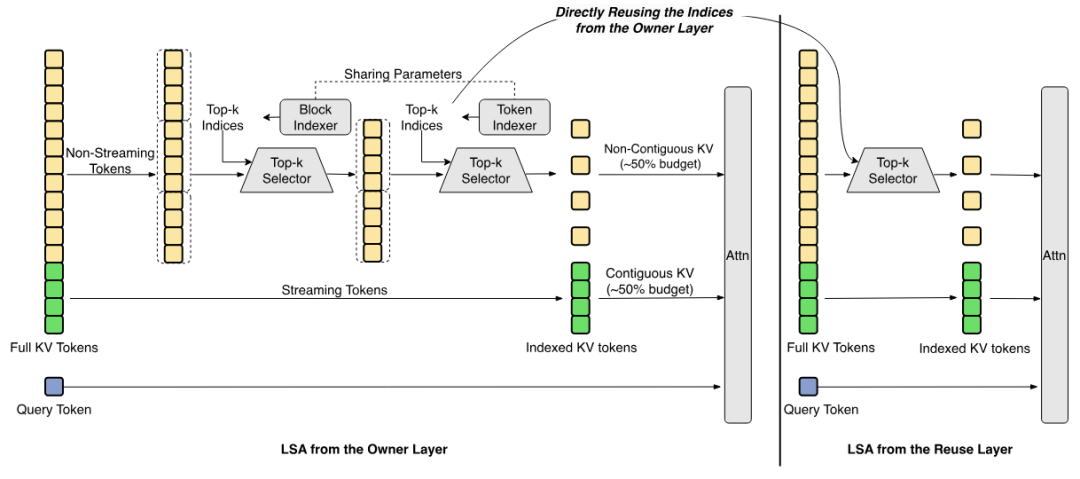
Meituan's LongCat-2.0 represents a significant technical evolution in the architecture of large language models (LLMs) dedicated to programming. At the core of its design are two primary innovations: LongCat Sparse Attention and N-gram Embedding. Sparse Attention is a critical mechanism for handling the extensive context windows often required in software development, where developers must reference multiple files or long codebases. By focusing computational resources on the most relevant parts of the input, LongCat-2.0 improves processing efficiency without sacrificing the depth of understanding.
Complementing this is the N-gram Embedding approach. In the context of coding, where syntax and local patterns are paramount, N-gram Embedding enhances the model's token-level representation. This allows the model to better capture the nuances of programming languages, leading to more accurate code generation and a deeper structural understanding of complex logic. These architectural choices directly address the limitations of standard transformer models when applied to the specialized domain of software engineering.
Optimized for Agentic Coding and Execution
Unlike general-purpose models, LongCat-2.0 is explicitly built for "Agentic Coding." This paradigm shifts the focus from simple code completion to a more autonomous role where the AI acts as an agent capable of understanding requirements, generating solutions, and overseeing execution. The model's 1.6 trillion parameters provide a vast knowledge base, while the 48 billion active parameters ensure that the inference process remains manageable for practical applications.
The inclusion of dynamic activation is a key factor in this performance. By dynamically adjusting which parts of the model are engaged during a task, LongCat-2.0 can refine its output for specific coding scenarios. This results in a model that is not only proficient at writing snippets of code but is also capable of navigating the complexities of full-scale software development tasks, including debugging and architectural planning.
Bridging the Gap with Domestic Hardware Support
A standout feature of this open-source release is the provision of inference code tailored for domestic Chinese computing cards. In the current global landscape, hardware accessibility is a significant bottleneck for deploying massive models like LongCat-2.0. By optimizing the inference path for local hardware, Meituan is ensuring that a wider range of developers and enterprises can utilize the model's capabilities without being restricted by the availability of specific international GPU architectures. This move supports the growth of a self-sustaining AI ecosystem and encourages the adoption of high-parameter models in diverse computing environments.
Industry Impact
The release of LongCat-2.0 is poised to influence the AI industry in several ways. First, it sets a new benchmark for open-source coding models, demonstrating that massive parameter counts can be effectively managed through sparse attention and dynamic activation. Second, by focusing on "Agentic Coding," Meituan is pushing the industry toward more autonomous AI developers that can handle end-to-end tasks rather than just assisting with syntax. Finally, the emphasis on domestic hardware compatibility provides a blueprint for other tech giants to follow, potentially accelerating the development and deployment of AI solutions across different hardware platforms.
Frequently Asked Questions
Question: What is the significance of the 1.6T total and 48B active parameters in LongCat-2.0?
LongCat-2.0 utilizes a Mixture-of-Experts (MoE) style approach where the total capacity of the model is 1.6 trillion parameters, allowing for vast knowledge storage. However, for any given task, only an average of 48 billion parameters are activated. This allows the model to maintain the high performance associated with ultra-large models while significantly reducing the computational cost and latency during inference.
Question: How does LongCat-2.0 improve the handling of long codebases?
Through the implementation of LongCat Sparse Attention, the model can process long-context information more efficiently. This is particularly useful for coding tasks where the AI needs to understand dependencies across large projects or multiple files, as it allows the model to focus on the most relevant code segments rather than processing the entire context with equal weight.
Question: Can LongCat-2.0 be used on non-international hardware?
Yes, one of the primary features of this release is the inclusion of inference code specifically optimized for domestic Chinese computing cards. This ensures that the model can be deployed and run efficiently on a variety of hardware platforms, reducing dependency on specific global GPU providers.