LongCat Open Sources VitaBench 2.0: A New Benchmark for Long-Term Dynamic AI Agents
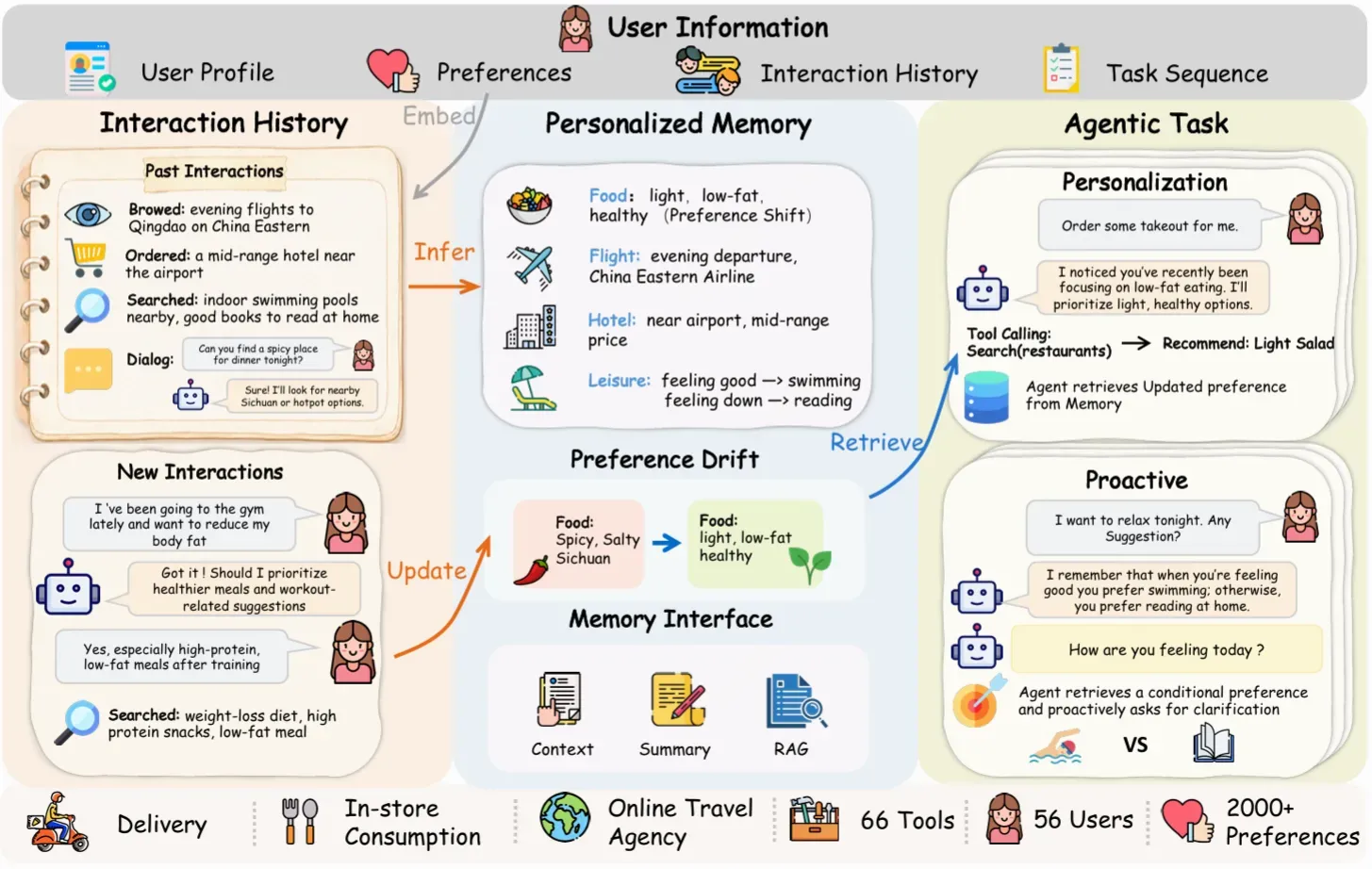
The LongCat team, part of Meituan's technical division, has officially open-sourced VitaBench 2.0. This pioneering benchmark is the first of its kind to focus on long-term dynamic user modeling within real-life scenarios. Designed to push the boundaries of Large Language Models (LLMs), VitaBench 2.0 provides a systematic framework to evaluate how AI agents handle personalization and proactivity over extended periods of interaction. By simulating real-world dynamics, the benchmark addresses a critical gap in current AI evaluation, moving beyond static testing to measure how effectively an agent can adapt to and anticipate user needs in a continuous, evolving environment.
Key Takeaways
- First of its Kind: VitaBench 2.0 is the industry's first benchmark dedicated to long-term dynamic user modeling in real-life scenarios.
- Focus on Personalization: The framework systematically evaluates the ability of Large Language Models to maintain and apply user-specific context over time.
- Proactivity Assessment: It measures the initiative of AI agents, testing their ability to act proactively during long-term interactions.
- Open Source Contribution: Released by the LongCat (Meituan) team, providing a standardized tool for the global AI research community.
In-Depth Analysis
Redefining Agent Evaluation with Long-Term Dynamics
The release of VitaBench 2.0 marks a significant evolution in the evaluation of AI agents. Traditional benchmarks often focus on "snapshot" performance—evaluating a model's response to a single prompt or a short-term conversation. However, real-world utility requires agents to function over days, weeks, or months. VitaBench 2.0 introduces "long-term dynamic user modeling," which requires the AI to not only remember past interactions but to understand how a user's needs and environment change over time. By focusing on real-life scenarios, the benchmark ensures that the evaluation reflects the complexities of human-AI coexistence, where context is never static.
Systematic Measurement of Personalization and Proactivity
Two core pillars of the VitaBench 2.0 framework are personalization and proactivity. In the context of this benchmark, personalization goes beyond simple name recognition; it involves the agent's capacity to build a deep, evolving profile of the user to provide tailored assistance.
Proactivity is perhaps the more challenging metric. Most current LLMs are reactive, waiting for a specific command before executing a task. VitaBench 2.0 evaluates whether an agent can identify opportunities to assist the user without being explicitly told to do so, based on the long-term dynamic context it has modeled. This systematic evaluation allows developers to identify whether their models are truly "agentic" or merely sophisticated text generators. By providing a structured way to measure these traits, LongCat is setting a new standard for what constitutes an intelligent, life-integrated AI assistant.
Industry Impact
The introduction of VitaBench 2.0 is poised to influence the AI industry by shifting the focus toward "agentic" consistency. As companies race to develop autonomous agents for personal and professional use, the lack of a standardized benchmark for long-term interaction has been a significant hurdle.
By open-sourcing this tool, the Meituan technical team provides a common language for researchers to discuss and improve model performance in dynamic environments. This could lead to a new generation of AI agents that are more reliable, less prone to "forgetting" user preferences, and more capable of providing high-value, proactive support in complex, real-world applications. It moves the industry closer to the goal of creating AI that acts as a true partner in daily life.
Frequently Asked Questions
What is the primary purpose of VitaBench 2.0?
VitaBench 2.0 is designed to evaluate Large Language Models and AI agents on their ability to perform long-term dynamic user modeling in real-life scenarios, focusing specifically on how they handle personalization and proactivity over time.
Who developed VitaBench 2.0 and is it accessible?
VitaBench 2.0 was developed by the LongCat team (Meituan Technical Team) and has been open-sourced to the public to serve as a benchmark for the AI community.
Why is "dynamic" modeling important for AI agents?
Dynamic modeling is crucial because real-world user needs and environments are constantly changing. A benchmark that accounts for these dynamics ensures that AI agents are tested for their ability to adapt and remain relevant throughout a long-term relationship with a user.