LongCat Open Sources VitaBench 2.0: A Pioneering Benchmark for Long-Term Dynamic AI Agent Evaluation
The LongCat team has officially open-sourced VitaBench 2.0, marking a significant milestone in the evaluation of artificial intelligence agents. As the industry's first benchmark specifically designed for long-term dynamic user modeling within real-life scenarios, VitaBench 2.0 addresses a critical gap in current Large Language Model (LLM) assessment. The framework provides a systematic approach to evaluating how AI agents handle personalization and proactivity during sustained, evolving interactions with users. By focusing on the complexities of real-world dynamics, VitaBench 2.0 offers a robust standard for measuring the effectiveness of agents in maintaining long-term user relationships and adapting to changing contexts over time.
Key Takeaways
- First-of-its-Kind Benchmark: VitaBench 2.0 is the inaugural evaluation standard focused on long-term dynamic user modeling in real-life contexts.
- Focus on Personalization: The benchmark systematically measures the ability of Large Language Models to provide personalized experiences over extended periods.
- Proactivity Assessment: A core feature of VitaBench 2.0 is its capacity to evaluate the proactive capabilities of AI agents in dynamic user interactions.
- Real-World Application: Unlike static benchmarks, this tool emphasizes realistic, long-term interactions to reflect actual user behavior and needs.
In-Depth Analysis
A New Paradigm in User Modeling: Long-Term Dynamics
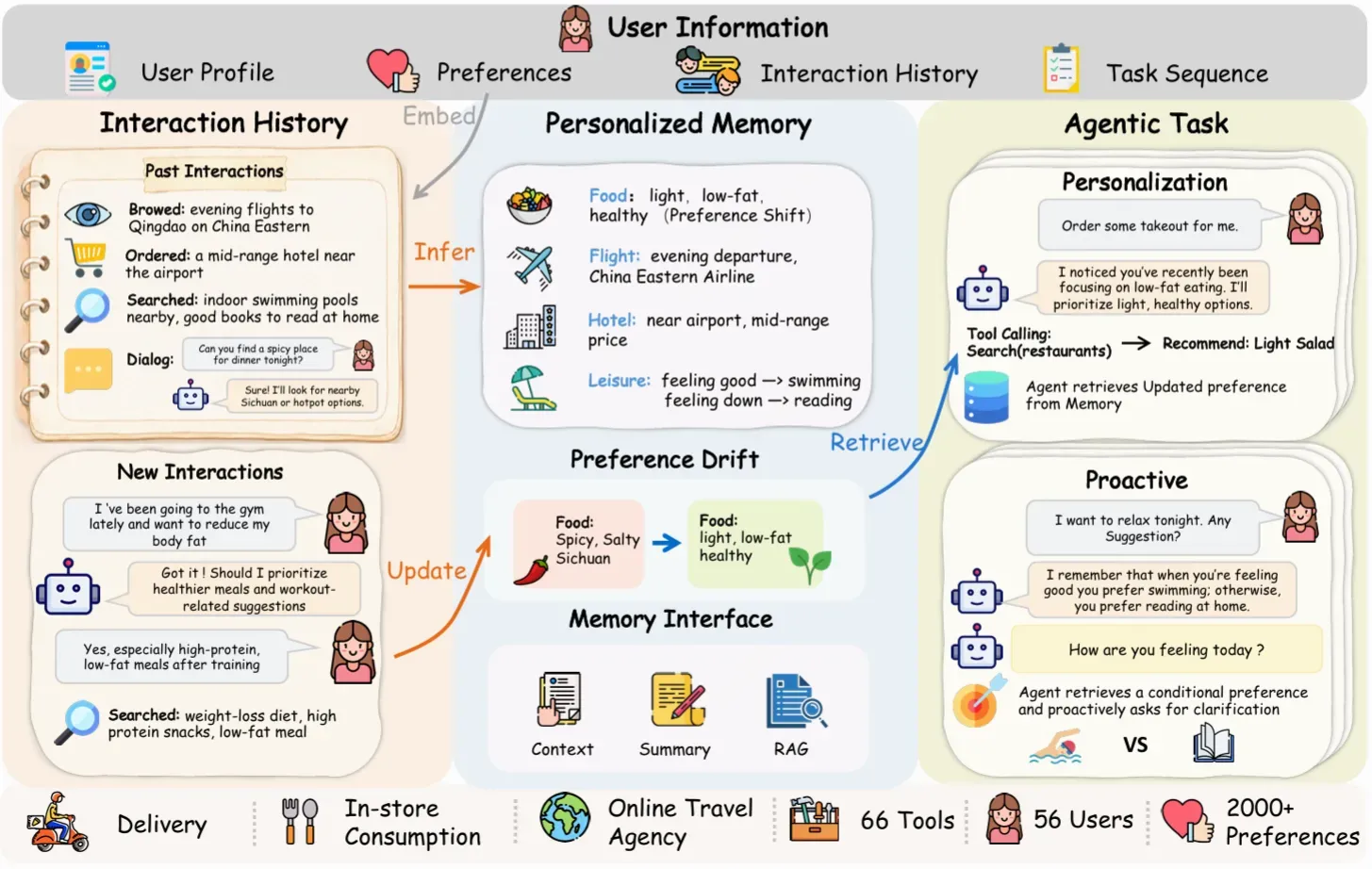
The release of VitaBench 2.0 by the LongCat team introduces a fundamental shift in how AI agents are evaluated. Traditional benchmarks often focus on short-term task completion or static knowledge retrieval. However, VitaBench 2.0 targets "long-term dynamic user modeling," a field that requires AI to not only remember past interactions but also to adapt to the evolving preferences and behaviors of a user over time. By simulating real-life scenarios, the benchmark forces Large Language Models to demonstrate a deeper understanding of context that persists across multiple sessions and changing environments.
This focus on "dynamic" modeling is crucial. In real-world applications, user needs are rarely static; they change based on time, previous experiences, and external factors. VitaBench 2.0 provides the necessary framework to test whether an agent can maintain a coherent and helpful persona while adjusting its responses to match the user's current state. This systematic evaluation ensures that the development of AI agents moves beyond simple chatbots toward sophisticated digital companions capable of sustained engagement.
Evaluating Personalization and Proactivity
Two of the most critical metrics introduced by VitaBench 2.0 are personalization and proactivity. In the context of this benchmark, personalization is not merely about using a user's name; it involves a deep integration of user history and preferences into the agent's decision-making process. VitaBench 2.0 assesses how effectively an LLM can tailor its output to a specific individual based on a long-term record of interactions, ensuring that the AI becomes more useful the longer it is used.
Proactivity, on the other hand, measures the agent's ability to take the initiative. In a dynamic user interaction, a truly intelligent agent should not always wait for a prompt. It should be able to anticipate user needs or suggest actions based on the established long-term model. By open-sourcing a benchmark that specifically targets these two traits, LongCat is providing the industry with a standardized way to measure the "intelligence" of an agent's behavior in a way that aligns with human expectations of helpfulness and intuition.
Industry Impact
The introduction of VitaBench 2.0 is poised to have a significant impact on the AI industry, particularly in the development of consumer-facing agents. By providing a standardized, open-source tool for evaluating long-term interactions, it allows developers to move away from anecdotal evidence of agent performance toward data-driven optimization.
Furthermore, the emphasis on real-life scenarios means that models performing well on VitaBench 2.0 are more likely to succeed in commercial applications, such as virtual assistants, personalized education tools, and long-term health coaching. This benchmark sets a new bar for what constitutes a "capable" agent, pushing the industry to prioritize memory management, contextual awareness, and proactive engagement over simple prompt-response accuracy. As more teams adopt this standard, we can expect a surge in AI agents that feel more intuitive, reliable, and personalized to the individual user.
Frequently Asked Questions
Question: What makes VitaBench 2.0 different from existing AI benchmarks?
VitaBench 2.0 is unique because it is the first benchmark to focus specifically on long-term dynamic user modeling in real-life scenarios. While most benchmarks test static knowledge or short-term logic, VitaBench 2.0 evaluates how well an AI agent can maintain personalization and show proactivity over a sustained period of interaction with a user.
Question: Who developed VitaBench 2.0 and is it accessible to the public?
VitaBench 2.0 was developed by the LongCat team (associated with the Meituan Technical Team). It has been open-sourced, meaning it is available for the broader AI research and development community to use for evaluating and improving their own Large Language Models and AI agents.
Question: Why are personalization and proactivity the main focus of this benchmark?
These two qualities are essential for creating AI agents that can function effectively in the real world. Personalization ensures the agent remains relevant to the specific user over time, while proactivity allows the agent to be truly helpful by anticipating needs rather than just reacting to commands. VitaBench 2.0 provides the first systematic way to measure these complex traits.