Decoy Font: A New TTF Font Designed to Hide Text from Advanced AI Models Using Spatial Frequency Illusions
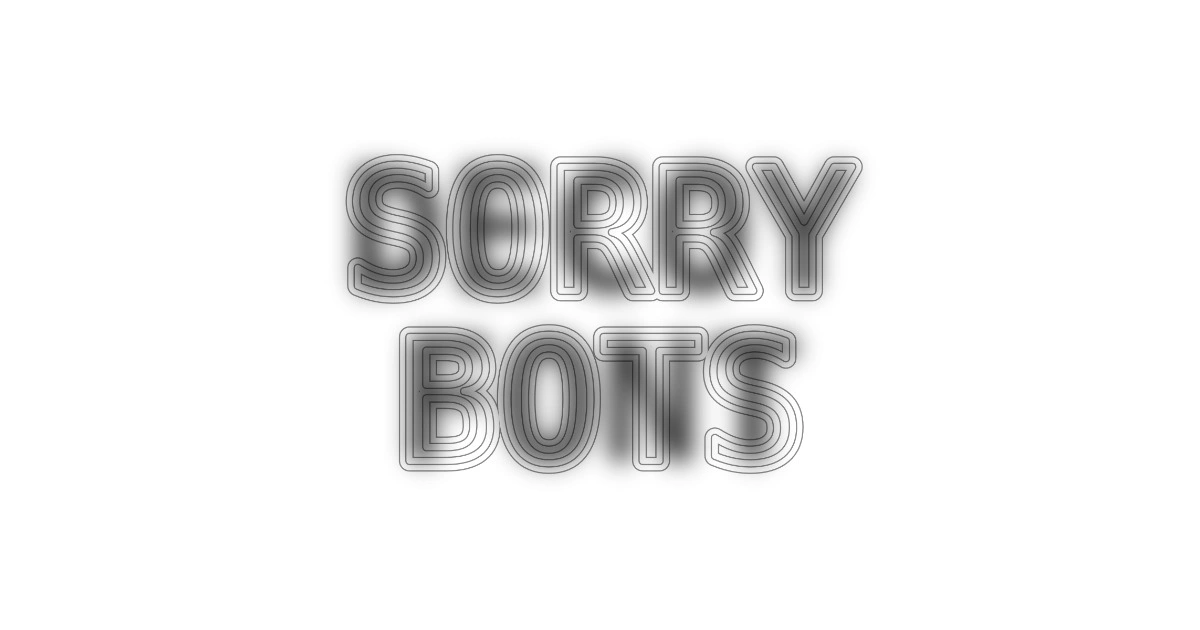
Decoy Font is a specialized TrueType Font (TTF) designed to protect text privacy against AI vision systems. By utilizing spatial frequency manipulation, the font displays two different characters in the same space: a thin-outline decoy for close-up pixel analysis and a blurred, low-frequency mass for human perception at a distance. Testing reveals that advanced models like GPT Sol and Gemini 3.5 with Thinking struggle to decode the hidden messages, instead focusing on the foreground decoys. Derived from DejaVu Sans Mono, the font is free for personal and commercial use, offering a unique method for users to communicate while bypassing automated AI text recognition through a simple yet effective visual illusion.
Key Takeaways
- Dual-Layer Communication: Decoy Font uses spatial frequency to display a decoy letter to AI while hiding the actual message for human readers.
- AI Vision Bypass: Advanced models, including GPT Sol and Gemini 3.5 with Thinking, fail to read the hidden message, focusing instead on the foreground outlines.
- Human-Centric Design: The hidden text becomes visible to humans when viewed from a distance or by squinting, leveraging how the human eye processes low-frequency visual data.
- Universal Compatibility: Available as a standard TTF file, the font can be installed on local systems and used in personal or commercial projects.
- Open Foundation: The letterforms are derived from the well-known DejaVu Sans Mono font, ensuring a familiar mono-spaced structure.
In-Depth Analysis
The Mechanics of Spatial Frequency in Typography
Decoy Font operates on a sophisticated principle of visual perception known as spatial frequency. The font structure is divided into two distinct layers that occupy the same physical space. The foreground layer consists of thin, high-frequency outlines that form the "decoy" character. These sharp lines are what digital sensors and AI algorithms typically prioritize when analyzing an image at the pixel level.
In contrast, the background layer contains a low-frequency mass that is intentionally blurred. This layer represents the actual "hidden" message. Because the background is a soft, diffused shape, it is often ignored by AI models that are trained to identify clear edges and high-contrast boundaries. This creates a functional illusion where the content of the text changes based on the viewer's perspective and the method of observation.
AI Processing vs. Human Perception
The primary reason Decoy Font is effective against Large Language Models (LLMs) with vision capabilities lies in how these systems interpret image data. Most AI systems, such as ChatGPT, process images by reading pixels up close. When a screenshot or an image containing Decoy Font is fed into these models, the algorithm focuses on the most clearly defined elements—the foreground outlines. Even when the text is rendered at a small size, the AI's internal processing logic prioritizes these high-frequency details, leading it to report the decoy message rather than the intended one.
Human perception, however, is more adaptable. By moving the screen farther away or squinting, a human viewer can filter out the high-frequency noise of the thin outlines. This allows the low-frequency blurred mass in the background to coalesce into recognizable letterforms. The result is a "hidden" message that is easily accessible to a person but remains obscured to even the most advanced machine vision systems currently available, such as GPT Sol and Gemini 3.5 with Thinking.
Technical Implementation and Accessibility
Unlike many experimental visual tricks that require specialized software, Decoy Font is delivered as a standard TrueType Font (TTF) file. This means it can be downloaded, installed, and used in any application that supports custom fonts, such as word processors, design software, or even simple note-taking apps. Users can type full paragraphs where each character contains its own decoy.
The font is derived from DejaVu Sans Mono, a popular open-source typeface. This choice provides a stable and readable foundation for the underlying letterforms. Furthermore, the creators have made the font free for use in personal, commercial, and client projects, encouraging wide adoption for those seeking to experiment with AI-resistant communication. The ability to copy and paste text written in Decoy Font into a notepad while maintaining its visual properties highlights its utility as a functional tool rather than just a static image-based illusion.
Industry Impact
Challenges for Multimodal AI Development
The emergence of Decoy Font highlights a significant vulnerability in current multimodal AI models. Despite the rapid advancement of "Thinking" models like Gemini 3.5 and the high-performance capabilities of GPT Sol, these systems still struggle with basic optical illusions that exploit spatial frequency. This suggests that AI vision is still heavily reliant on local pixel features rather than a holistic, human-like understanding of visual context. For the AI industry, this underscores the need for more robust training data that includes adversarial typography and multi-layered visual information.
New Frontiers in Data Privacy and Anti-Scraping
As AI web-scrapers become more prevalent, tools like Decoy Font offer a glimpse into a future where users can protect their digital content from automated harvesting. By using fonts that are unreadable to machines but clear to humans, creators could potentially prevent their text from being used to train models or being indexed by AI-driven search engines without their consent. While currently an experiment, this approach could evolve into a standard for privacy-conscious web design and secure communication in an era dominated by machine learning.
Frequently Asked Questions
Question: How do I see the hidden message if it looks like a jumble of lines?
To see the hidden message intended for humans, you should try moving your screen farther away from your eyes. Alternatively, squinting your eyes can help filter out the thin foreground outlines, allowing the blurred background shapes to become clear.
Question: Which AI models have been tested against Decoy Font?
According to the developers, the font has successfully tricked advanced models including GPT Sol and Gemini 3.5 with Thinking. These models typically fail to read the actual hidden message and instead focus on the decoy characters in the foreground.
Question: Is Decoy Font free for commercial use?
Yes, Decoy Font is free to use in personal, commercial, and client projects. It is based on the DejaVu Sans Mono font, and users should refer to the full font license for specific terms regarding its use and distribution.