Meituan Officially Open-Sources LongCat-2.0: A 1.6T Parameter Model Revolutionizing Agentic Coding and Domestic Chip Inference
Meituan's technical team has announced the open-source release of LongCat-2.0, a high-performance model featuring 1.6 trillion parameters with an average activation of 48 billion. Designed specifically for complex Agentic Coding tasks, LongCat-2.0 introduces architectural breakthroughs including LongCat Sparse Attention and N-gram Embedding. These innovations are engineered to optimize long-context processing and token-level representation. Crucially, the release includes synchronized inference code for domestic hardware, facilitating broader adoption within the local ecosystem. By utilizing dynamic activation, the model achieves significant improvements in code comprehension, generation, and execution, positioning it as a specialized tool for the next generation of AI-driven software development.
Key Takeaways
- Massive Scale with Efficient Activation: LongCat-2.0 features a total of 1.6 trillion parameters, but maintains efficiency with an average activation of approximately 48 billion parameters.
- Specialized for Agentic Coding: The model is purpose-built to handle real-world Agentic Coding tasks, focusing on the full lifecycle of code understanding and execution.
- Architectural Innovation: It introduces LongCat Sparse Attention and N-gram Embedding to solve challenges in long-context processing and token representation.
- Domestic Hardware Optimization: Meituan has simultaneously released inference code specifically optimized for domestic (Chinese) computing cards.
- Enhanced Performance: The combination of dynamic activation and architectural shifts strengthens the model's ability to generate and execute code effectively.
In-Depth Analysis
Architectural Breakthroughs: Sparse Attention and N-gram Embedding
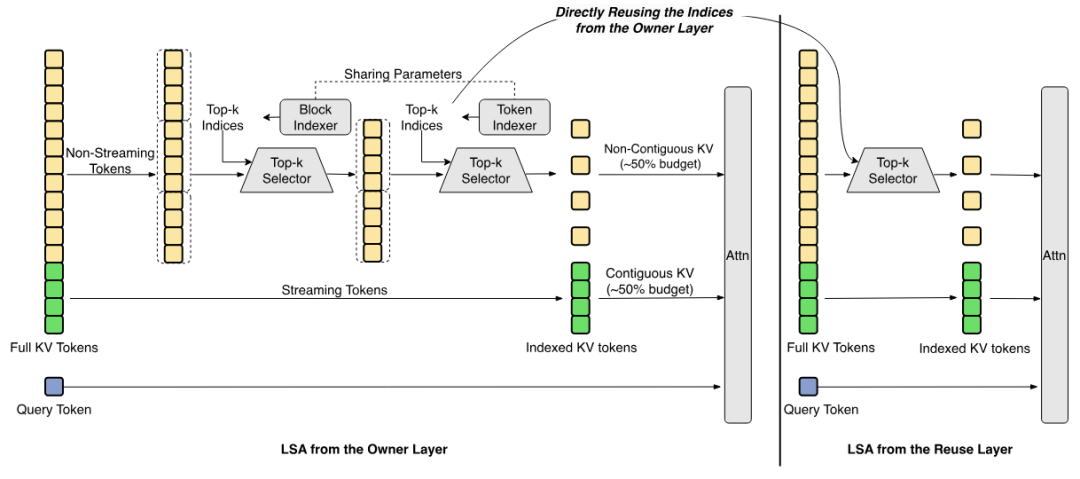
Meituan's LongCat-2.0 represents a significant leap in architectural design for large language models (LLMs) specialized in programming. At the core of its efficiency is the LongCat Sparse Attention mechanism. In traditional transformers, the computational cost of attention grows quadratically with the sequence length, which often limits the model's ability to process massive codebases or long documentation. By implementing sparse attention, LongCat-2.0 can focus on the most relevant parts of the input, significantly reducing the computational overhead while maintaining high performance in long-context scenarios.
Complementing this is the introduction of N-gram Embedding. While standard embeddings treat tokens as isolated units, N-gram Embedding allows the model to capture local context and token-level relationships more effectively from the start. This is particularly crucial for coding, where specific sequences of characters or keywords carry distinct functional meanings. Together, these features ensure that the model doesn't just "see" the code but understands the structural and logical nuances inherent in complex software projects.
Optimizing for the Agentic Coding Era
Unlike general-purpose models that are often evaluated on simple snippets, LongCat-2.0 is built for Agentic Coding. This shift in focus means the model is designed to act as an autonomous or semi-autonomous agent capable of not just writing code, but understanding the broader context of a task, generating solutions, and preparing them for execution. The model's 1.6T total parameter count provides a vast knowledge base, while the 48B average activation suggests a Mixture-of-Experts (MoE) or similar dynamic architecture that selects the most relevant "neurons" for a specific task.
This dynamic activation is key to its performance in code execution. By activating only the necessary parameters, the model can maintain high-speed inference without sacrificing the depth of reasoning required for complex debugging or system design. This makes it a practical tool for developers who require an AI assistant that can navigate large-scale repositories and provide actionable, executable code rather than just theoretical suggestions.
Hardware Synergy and Open Source Strategy
The decision to release inference code specifically for domestic computing cards is a strategic move by Meituan. As the global AI landscape faces hardware constraints and shifting supply chains, ensuring that high-performance models can run efficiently on local hardware is vital for the sustainability of the AI industry in China. By open-sourcing this code, Meituan is lowering the barrier to entry for enterprises and researchers who rely on domestic infrastructure. This move not only promotes the LongCat-2.0 model itself but also strengthens the broader ecosystem of domestic hardware by providing a high-demand use case optimized for its specific architecture.
Industry Impact
The release of LongCat-2.0 signals a transition in the AI industry from "generalist" models to "specialized experts." By focusing on Agentic Coding, Meituan is addressing one of the most high-value applications of LLMs: software engineering. The model's ability to handle long contexts and its optimization for domestic hardware could accelerate the adoption of AI-driven development tools in large-scale enterprise environments. Furthermore, the open-source nature of the project encourages community-driven improvements, potentially setting a new standard for how sparse attention and dynamic activation are implemented in coding-specific models. As AI agents become more integrated into the developer workflow, models like LongCat-2.0 will be essential in bridging the gap between simple text generation and complex, multi-step problem solving.
Frequently Asked Questions
Question: What is the difference between the total parameters and the activated parameters in LongCat-2.0?
LongCat-2.0 has a total capacity of 1.6 trillion parameters, which represents its total learned knowledge. However, during any single inference task, it only "activates" or uses an average of 48 billion parameters. This approach allows the model to have the reasoning power of a massive model while maintaining the efficiency and speed of a much smaller one.
Question: Why is N-gram Embedding important for a coding model?
N-gram Embedding helps the model capture the relationships between adjacent tokens more effectively. In programming, the meaning of a token is highly dependent on its immediate neighbors (e.g., a function name followed by a specific bracket). This architectural choice improves the model's token-level representation, leading to more accurate code generation and a better understanding of syntax.
Question: Can LongCat-2.0 run on non-domestic hardware?
While the announcement highlights the release of optimized inference code for domestic cards to support the local ecosystem, the model's core architecture is based on standard AI principles. However, the specific optimizations provided in this release are tailored to maximize performance on domestic hardware platforms.