Meituan Officially Open-Sources LongCat-2.0: A 1.6T Parameter Model Optimized for Agentic Coding and Domestic Hardware
Meituan's technical team has announced the open-source release of LongCat-2.0, a high-performance model featuring 1.6 trillion total parameters with an average activation of 48 billion. Specifically engineered for real-world Agentic Coding tasks, LongCat-2.0 introduces architectural innovations including LongCat sparse attention and N-gram Embedding. These features are designed to enhance long-context processing efficiency and token-level representation. By leveraging dynamic activation, the model significantly improves capabilities in code understanding, generation, and execution. Crucially, the release includes inference code optimized for domestic (Chinese) GPU hardware, marking a major step forward in the accessibility of large-scale coding models for the developer community.
Key Takeaways
- Massive Scale with Efficient Activation: LongCat-2.0 features 1.6 trillion total parameters, while maintaining an average activation of approximately 48 billion for optimized performance.
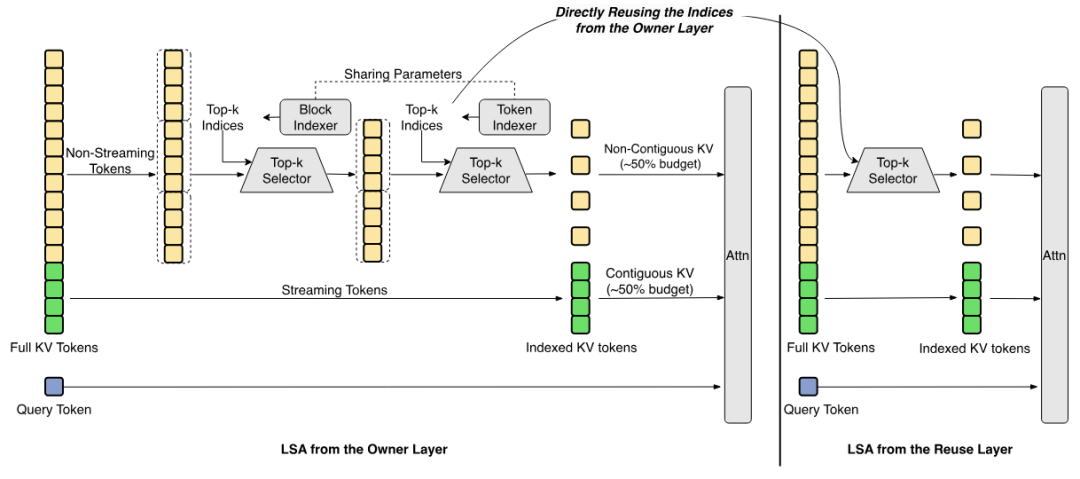
- Architectural Innovations: The model introduces LongCat sparse attention and N-gram Embedding to solve challenges in long-context processing and token-level representation.
- Designed for Agentic Coding: Unlike traditional models, LongCat-2.0 is specifically built for real-world Agentic Coding tasks, focusing on the full lifecycle of code understanding, generation, and execution.
- Enhanced Performance via Dynamic Activation: The integration of dynamic activation further strengthens the model's ability to handle complex coding requirements.
- Domestic Hardware Support: Meituan has simultaneously released inference code specifically optimized for domestic GPU cards, ensuring broader hardware compatibility.
In-Depth Analysis
Architectural Innovation: Sparse Attention and N-gram Embedding
Meituan's LongCat-2.0 represents a significant shift in how large language models handle the complexities of programming languages. At the core of its architecture are two primary innovations: LongCat sparse attention and N-gram Embedding. These features are specifically designed to address the inherent limitations of standard transformer architectures when dealing with extensive codebases.
The implementation of LongCat sparse attention is aimed at improving long-context processing efficiency. In the realm of Agentic Coding, models often need to parse thousands of lines of code across multiple files to understand dependencies and logic. By utilizing sparse attention, LongCat-2.0 can manage these long-range dependencies more effectively without the exponential computational cost typically associated with dense attention mechanisms.
Furthermore, the introduction of N-gram Embedding enhances the model's token-level representation. This is particularly vital for coding tasks where the precise meaning of a token can change based on its immediate neighbors. By improving how tokens are represented and understood at a granular level, the model achieves higher accuracy in interpreting complex syntax and structural patterns within various programming languages.
Optimized for the Agentic Coding Lifecycle
LongCat-2.0 is not merely a code completion tool; it is described as being "born for real Agentic Coding tasks." This distinction is crucial as the industry moves toward AI agents that can not only write code but also understand the broader context of a project and execute the code they generate.
The model's design focuses on three pillars: understanding, generation, and execution. To support these capabilities, Meituan has integrated dynamic activation. This technique allows the model to activate different parts of its 1.6T parameter structure based on the complexity and requirements of the task at hand. With an average activation of 48B parameters, the model balances the depth of a trillion-parameter model with the speed and efficiency required for interactive coding environments. This dynamic approach ensures that the model remains performant during intensive tasks like debugging or multi-step code execution, where deep understanding and logical consistency are paramount.
Industry Impact
The open-sourcing of LongCat-2.0, particularly with its support for domestic GPU inference, carries significant weight for the AI and software development industries. By providing the inference code for domestic hardware, Meituan is lowering the barrier to entry for organizations and developers who rely on local infrastructure. This move promotes a more inclusive ecosystem where high-performance AI tools are not restricted to specific global hardware providers.
Moreover, the focus on "Agentic Coding" sets a new benchmark for what developers can expect from open-source models. As AI continues to integrate into the software development lifecycle, models that can handle the "execution" phase of coding will become indispensable. LongCat-2.0’s emphasis on efficiency through sparse attention and dynamic activation provides a blueprint for future large-scale models that need to remain practical for real-world deployment while pushing the boundaries of parameter scale.
Frequently Asked Questions
Question: What are the primary technical specifications of Meituan's LongCat-2.0?
LongCat-2.0 features a total of 1.6 trillion parameters. However, it utilizes an efficient activation strategy that results in an average of approximately 48 billion parameters being active during processing. It also incorporates LongCat sparse attention and N-gram Embedding architectures.
Question: How does LongCat-2.0 improve long-context code processing?
The model utilizes LongCat sparse attention, which is specifically designed to increase the efficiency of processing long contexts. This allows the model to better understand and manage large-scale code projects and complex dependencies that require a wide context window.
Question: Does LongCat-2.0 support hardware other than standard global GPUs?
Yes, Meituan has officially released inference code that is compatible with domestic (Chinese) GPU cards, ensuring that the model can be deployed and utilized across a variety of hardware platforms.