Meituan Open Sources Innovative AIGC Poster Generation System Featuring a Technical Closed Loop
The Meituan Intelligent Creation Team has officially unveiled and open-sourced its comprehensive technical system for AIGC poster generation. This framework is built around a unique "Generation-Editing-Evaluation" closed loop, designed to handle the complexities of industrial-grade visual content creation. By integrating these three core phases, Meituan has successfully implemented the system within its food delivery (Meituan Waimai) and Brand IP scenarios. The move to open-source this technology provides the global developer community with a structured approach to automated graphic design, emphasizing not just the creation of images, but the refinement and quality assessment necessary for commercial applications. This release marks a significant step in transitioning AIGC from experimental tools to scalable production pipelines.
Key Takeaways
- Comprehensive Technical Framework: Meituan has developed a full-stack AIGC system specifically optimized for poster generation.
- The Three-Pillar Closed Loop: The system operates on a "Generation-Editing-Evaluation" (生成-编辑-评判) workflow, ensuring a complete lifecycle for digital assets.
- Proven Commercial Application: The technology is already active in high-traffic environments, including Meituan Waimai and various Brand IP projects.
- Open Source Commitment: Meituan has made the entire technical system available to the public, encouraging industry-wide innovation in intelligent creation.
In-Depth Analysis
The "Generation-Editing-Evaluation" Technical Closed Loop
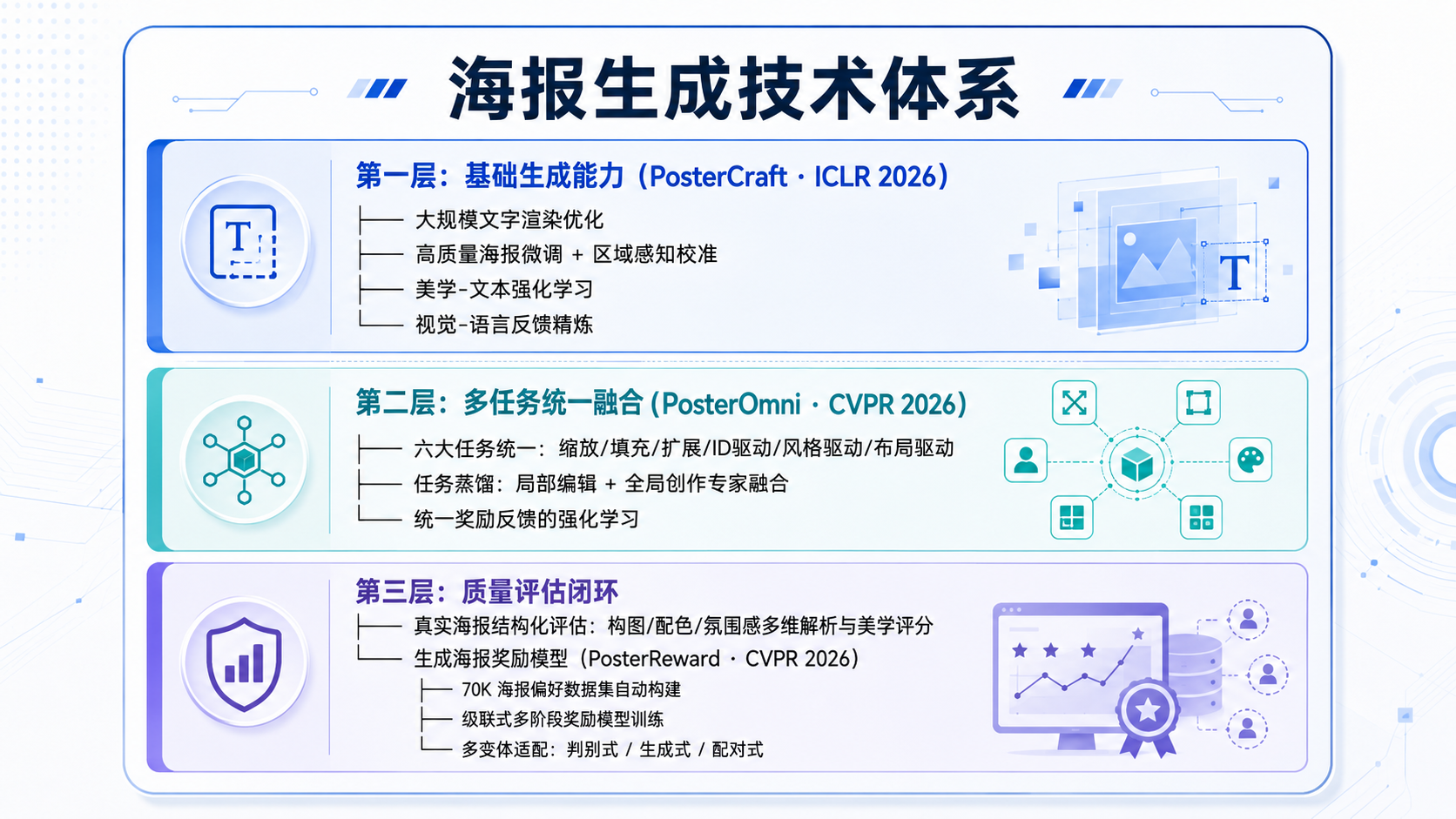
At the heart of Meituan's AIGC breakthrough is the transition from isolated image generation to a structured technical closed loop. Most standard AIGC tools focus solely on the initial output, often leaving a gap between the generated image and a final, usable commercial product. Meituan addresses this by defining three distinct stages:
- Generation: This phase focuses on the core synthesis of visual elements based on specific prompts or data inputs. It leverages advanced AI models to produce the foundational layout and aesthetic of the poster.
- Editing: Recognizing that AI-generated content often requires human-in-the-loop refinement or specific brand adjustments, the editing component provides tools to modify and fine-tune the generated assets. This ensures that the final output meets specific marketing requirements and brand guidelines.
- Evaluation: Perhaps the most critical component for industrial scaling, the evaluation phase uses automated metrics and potentially AI-driven feedback to judge the quality, relevance, and aesthetic appeal of the posters. This creates a feedback loop that can inform and improve future generation cycles.
Implementation in Meituan Waimai and Brand IP
The practical utility of this system is demonstrated through its deployment in Meituan Waimai, one of the world's largest food delivery platforms. In this context, the demand for high-volume, localized, and visually appealing promotional material is immense. The AIGC system allows for the rapid creation of posters that can be tailored to different merchants, cuisines, and promotional events.
Furthermore, the application in Brand IP scenarios highlights the system's ability to maintain visual consistency. By training or fine-tuning the system on specific brand assets, Meituan ensures that the generated posters adhere to the established visual identity of their IP, reducing the manual workload for design teams while increasing the speed of content deployment.
Industry Impact
Standardizing AIGC Production Pipelines
Meituan's release of this system sets a precedent for how large-scale technology companies approach AIGC. By focusing on a "closed loop," they are moving the industry away from "one-off" generations toward a sustainable production pipeline. This is particularly significant for the e-commerce and local services sectors, where the need for fresh visual content is constant.
Democratizing Professional Design Tools
By open-sourcing the entire technical system, Meituan is lowering the barrier to entry for smaller enterprises and independent developers. Access to a proven "Generation-Editing-Evaluation" framework allows others to build sophisticated design automation tools without having to architect the entire workflow from scratch. This contribution is likely to accelerate the adoption of AIGC in marketing departments globally, shifting the focus from manual execution to strategic oversight.
Frequently Asked Questions
Question: What makes Meituan's AIGC poster system different from standard text-to-image models?
Unlike general-purpose models that focus only on the initial image creation, Meituan's system includes dedicated modules for editing and evaluation. This creates a "closed loop" that ensures the output is not only creative but also commercially viable and brand-compliant.
Question: Where is this technology currently being used?
According to the Meituan Technical Team, the system is currently deployed in Meituan Waimai (food delivery) and for various Brand IP scenarios, where it helps automate the creation of promotional posters and visual assets.
Question: Is the code for this system available to the public?
Yes, Meituan has fully open-sourced the technical system, allowing developers to access, study, and implement the "Generation-Editing-Evaluation" framework in their own projects.