LongCat Open Sources VitaBench 2.0: A New Benchmark for Long-Term Dynamic AI Agent Evaluation
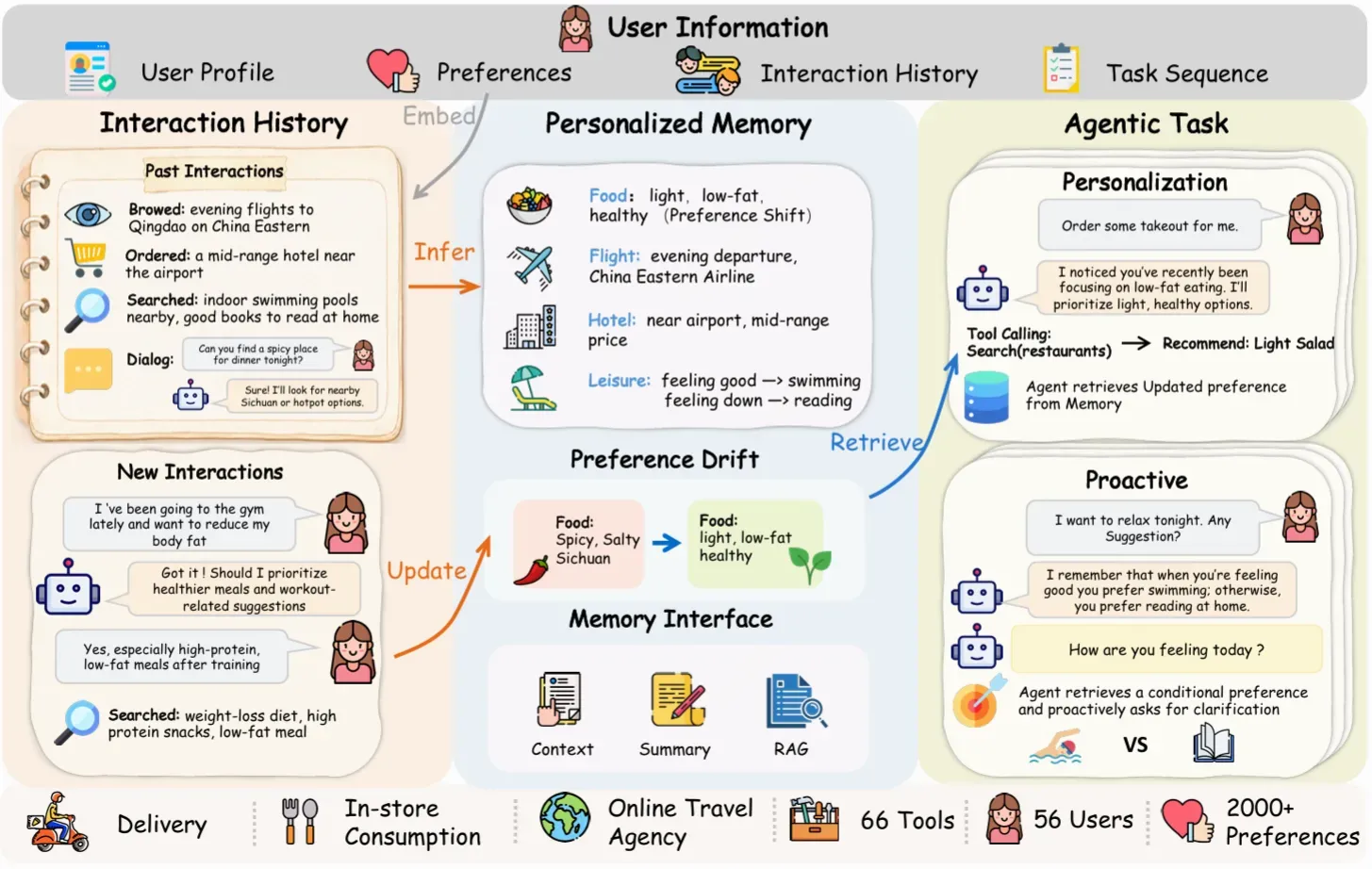
The Meituan technology team, under the LongCat initiative, has officially released VitaBench 2.0, a pioneering open-source benchmark designed for long-term dynamic user modeling. This benchmark represents a significant shift in AI evaluation, focusing on real-life scenarios rather than static tasks. VitaBench 2.0 is specifically engineered to systematically assess the performance of Large Language Models (LLMs) in two critical areas: personalization and proactivity. By simulating long-term, authentic, and evolving user interactions, the benchmark provides a standardized framework to measure how effectively AI agents can adapt to individual user needs over time. This release aims to address the complexities of sustained human-AI engagement in dynamic environments.
Key Takeaways
- First-of-its-Kind Benchmark: VitaBench 2.0 is the inaugural benchmark focused on long-term dynamic user modeling within authentic, real-life scenarios.
- Focus on Personalization: The framework provides a systematic method to evaluate how Large Language Models (LLMs) maintain and apply personalized user data over extended periods.
- Proactivity Assessment: Beyond reactive tasks, the benchmark measures the ability of AI agents to take initiative during user interactions.
- Dynamic Interaction Modeling: It prioritizes the evaluation of agents within evolving, long-term interaction cycles rather than isolated, short-term prompts.
- Open Source Contribution: Released by the Meituan technology team (LongCat), the benchmark is available for the broader AI research community to standardize agent evaluation.
In-Depth Analysis
The Evolution of User Modeling: Long-Term and Dynamic Frameworks
VitaBench 2.0 introduces a paradigm shift in how AI agents are evaluated by focusing on "long-term dynamic user modeling." Traditional benchmarks often focus on static, one-off interactions where the model's performance is measured based on a single prompt or a short dialogue. However, real-world utility for AI agents requires the ability to understand a user's evolving context over days, weeks, or even longer.
By centering on real-life scenarios, VitaBench 2.0 challenges Large Language Models to move beyond simple pattern matching. The "dynamic" aspect of the benchmark ensures that the evaluation accounts for changes in user behavior and environment, requiring the model to update its internal understanding of the user continuously. This approach reflects the complexity of actual human-AI relationships, where the history of interaction significantly influences the relevance and accuracy of the agent's responses.
Evaluating Personalization and Proactivity in LLMs
The core metrics of VitaBench 2.0—personalization and proactivity—address the two most sought-after qualities in modern AI assistants. Personalization, as defined within this benchmark, involves the model's capacity to remember, synthesize, and apply user-specific information across a long-term interaction history. This ensures that the agent's behavior is tailored to the unique preferences and requirements of the individual user, rather than providing generic outputs.
Proactivity, the second pillar of VitaBench 2.0, evaluates whether an agent can anticipate user needs or take necessary actions without explicit, repetitive instructions. In a dynamic user interaction, a proactive agent is one that can identify opportunities to assist or provide information based on the long-term context it has modeled. By systematically evaluating these two capabilities, VitaBench 2.0 provides a clear standard for what constitutes a "smart" or "helpful" agent in a real-world setting. The benchmark's focus on "authentic" interactions ensures that the evaluation results are applicable to actual product development and user experience design.
Industry Impact
The release of VitaBench 2.0 by the LongCat team has significant implications for the AI industry, particularly in the development of personalized digital assistants and autonomous agents. By providing a standardized, open-source tool for measuring long-term interaction quality, it allows developers to move beyond basic accuracy metrics and focus on the nuances of user engagement.
This benchmark fills a critical gap in the current research landscape, where there has been a lack of rigorous, long-term evaluation sets for dynamic modeling. As the industry moves toward "Agentic AI"—models that act as proactive partners rather than just reactive tools—VitaBench 2.0 serves as a vital yardstick. It encourages the development of LLMs that are not only more knowledgeable but also more context-aware and initiative-driven, ultimately leading to AI systems that can better integrate into the daily lives of users.
Frequently Asked Questions
Question: What makes VitaBench 2.0 different from existing AI benchmarks?
VitaBench 2.0 is specifically designed for long-term dynamic user modeling in real-life scenarios. Unlike many existing benchmarks that test short-term task completion, VitaBench 2.0 evaluates how LLMs handle personalization and proactivity over extended, evolving interactions with users.
Question: Who developed VitaBench 2.0 and is it accessible to the public?
VitaBench 2.0 was developed by the Meituan technology team under the LongCat project. It has been open-sourced, making it available for the global AI research community to use for evaluating and improving the long-term interaction capabilities of Large Language Models.
Question: What are the primary capabilities evaluated by VitaBench 2.0?
The benchmark systematically evaluates two primary capabilities: personalization (the ability to tailor interactions to a specific user over time) and proactivity (the ability of the agent to take initiative within a dynamic interaction).