LongCat Open Sources VitaBench 2.0: A New Benchmark for Long-term Dynamic User Modeling in AI Agents
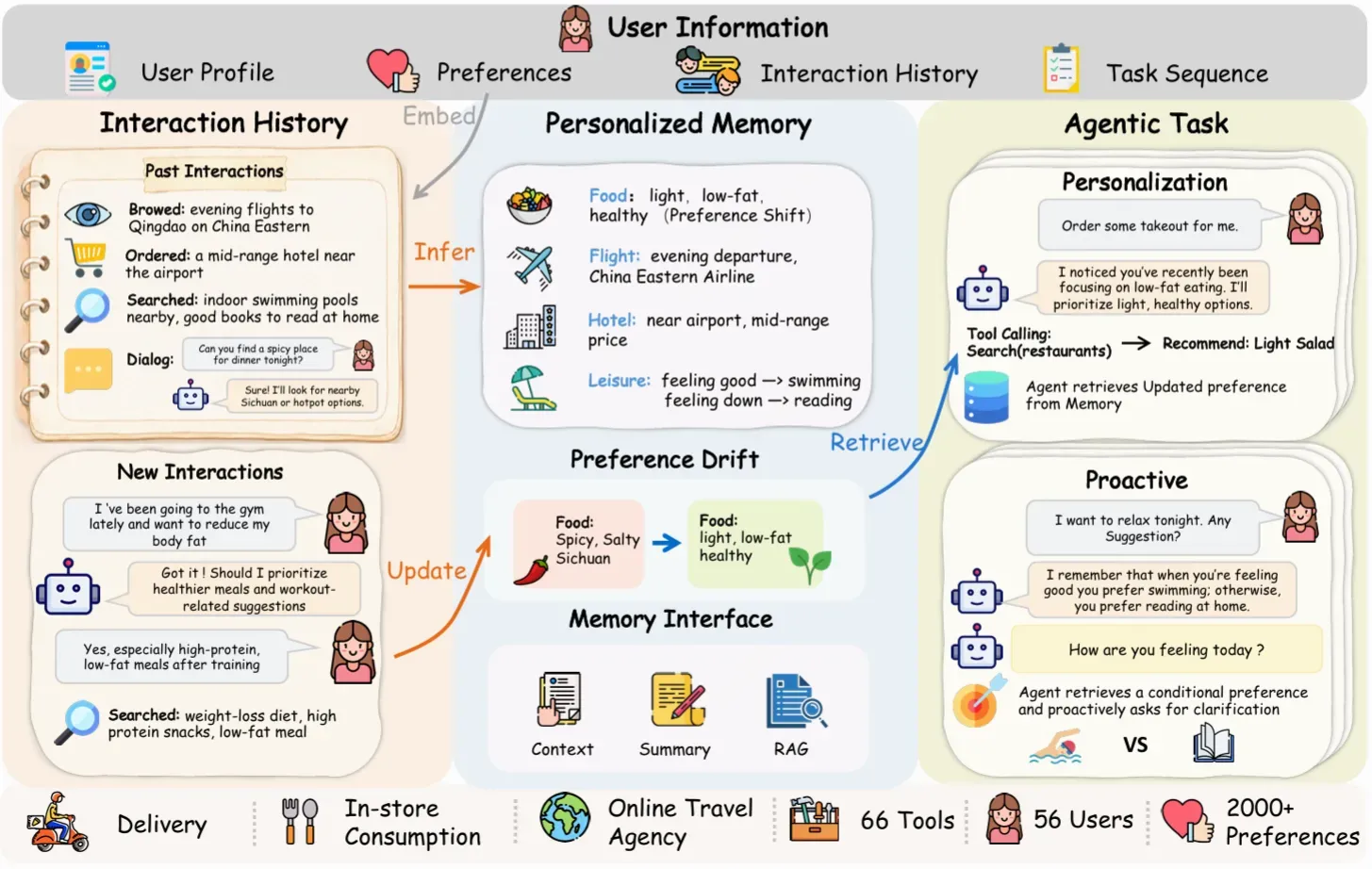
The Meituan Technical Team has announced the open-sourcing of VitaBench 2.0 by LongCat, marking a significant advancement in the evaluation of artificial intelligence. As the first benchmark specifically designed for long-term dynamic user modeling in real-life scenarios, VitaBench 2.0 addresses the critical need for assessing how Large Language Models (LLMs) perform during extended interactions. The framework provides a systematic approach to measuring two vital components of modern AI: personalization and proactivity. By simulating authentic and evolving user behaviors over time, VitaBench 2.0 allows developers to gauge an agent's ability to adapt to individual needs and take initiative in complex environments. This release establishes a new standard for the industry, moving beyond static testing toward more realistic and human-centric AI performance metrics.
Key Takeaways
- First of its Kind: VitaBench 2.0 is the inaugural benchmark dedicated to long-term dynamic user modeling within authentic, real-life scenarios.
- Focus on Core Metrics: The framework specifically targets the systematic evaluation of personalization and proactivity in Large Language Models (LLMs).
- Long-term Interaction: Unlike traditional benchmarks, it assesses AI performance over extended periods of dynamic user engagement.
- Open Source Contribution: Developed by the Meituan Technical Team and released under LongCat, the benchmark is now available to the global AI research community.
In-Depth Analysis
The Shift Toward Long-term Dynamic User Modeling
VitaBench 2.0 represents a fundamental shift in how AI agents are evaluated. Historically, many benchmarks have focused on short-term tasks or static datasets that do not fully capture the complexity of human-AI interaction. By introducing a framework for "long-term dynamic user modeling," LongCat and the Meituan Technical Team are addressing the reality that human behavior is not static; it evolves based on context, previous interactions, and changing needs.
This benchmark is specifically designed for "real-life scenarios," which implies a level of unpredictability and continuity that standard laboratory tests often lack. By modeling the user as a dynamic entity over a long duration, VitaBench 2.0 forces Large Language Models to demonstrate consistency and memory. The ability of an agent to maintain a coherent understanding of a user across multiple sessions and changing circumstances is critical for the next generation of digital assistants and autonomous agents. This systematic evaluation ensures that the "intelligence" being measured is applicable to the messy, ongoing nature of real-world applications.
Evaluating Personalization and Proactivity
A central feature of VitaBench 2.0 is its focus on two specific traits: personalization and proactivity. In the context of this benchmark, personalization refers to the model's ability to tailor its responses and actions to the specific, evolving profile of a long-term user. This goes beyond simple prompt engineering; it requires the model to integrate historical data and user preferences into its core operational logic during dynamic interactions.
Proactivity, the second pillar of the benchmark, evaluates whether an AI agent can take the initiative rather than merely reacting to direct commands. In a long-term user relationship, a proactive agent should be able to anticipate needs or suggest actions based on the dynamic model it has built of the user. VitaBench 2.0 provides the first systematic way to measure these capabilities in a realistic setting. By quantifying how well an LLM can balance being helpful without being intrusive, and how well it remembers individual nuances, the benchmark provides a clear roadmap for improving the "human-like" qualities of AI agents. The focus on "authentic" interactions ensures that the models are tested against the types of challenges they will actually face when deployed in consumer or enterprise environments.
Industry Impact
The release of VitaBench 2.0 is poised to have a significant impact on the AI industry by providing a much-needed standard for agentic behavior. As the industry moves from simple chatbots to complex AI agents capable of handling long-term tasks, the lack of a standardized benchmark for dynamic user modeling has been a major hurdle. VitaBench 2.0 fills this gap, offering a rigorous methodology that developers can use to validate their models' readiness for real-world deployment.
Furthermore, by open-sourcing this benchmark, LongCat and the Meituan Technical Team are fostering a more transparent and collaborative environment for AI safety and performance testing. This allows the broader research community to align on what constitutes "proactive" and "personalized" behavior, potentially accelerating the development of agents that are more useful and reliable. The emphasis on real-life scenarios also encourages developers to move away from "gaming" static benchmarks and instead focus on the long-term value and adaptability of their AI systems.
Frequently Asked Questions
Question: What makes VitaBench 2.0 different from other AI benchmarks?
VitaBench 2.0 is unique because it is the first benchmark to focus specifically on long-term dynamic user modeling in real-life scenarios. While other benchmarks might test logic or short-term memory, VitaBench 2.0 systematically evaluates how an AI agent adapts to a user over a long period of authentic, evolving interaction.
Question: Which specific capabilities of Large Language Models does VitaBench 2.0 measure?
The benchmark focuses on two primary capabilities: personalization and proactivity. It assesses how well a model can tailor its behavior to an individual user's long-term needs and how effectively it can take initiative during dynamic interactions.
Question: Who developed VitaBench 2.0 and is it accessible to the public?
VitaBench 2.0 was developed by the Meituan Technical Team and has been open-sourced under the LongCat name. It is intended to serve as a new standard for the global AI community to evaluate and improve the performance of intelligent agents.