Meituan Technical Team Presents Six Research Papers at ACL 2026 Focusing on Large Model Evaluation and Reasoning Optimization
Meituan's technical team has announced that six of its research papers have been accepted for ACL 2026, a premier international conference in the field of computational linguistics and natural language processing (NLP). The research spans several critical frontiers of artificial intelligence, including large model evaluation, complex process reasoning, and competition-level mathematical thinking optimization. Additionally, the papers explore advancements in reinforcement learning optimization and generative recommendation systems. This collection of work represents Meituan's strategic push toward building a new paradigm for generative AI, focusing on enhancing the reasoning capabilities and evaluation frameworks of modern large language models to meet the demands of complex, real-world applications.
Key Takeaways
- Academic Recognition: Meituan has successfully had six research papers accepted at ACL 2026, highlighting its significant contributions to the global NLP community.
- Diverse Research Scope: The papers cover a wide range of advanced AI topics, including model evaluation, complex reasoning, mathematical optimization, reinforcement learning, and generative recommendations.
- Focus on Reasoning: A primary theme of the research is the optimization of reasoning processes, specifically targeting complex workflows and competition-level mathematical challenges.
- New Generative Paradigm: The collective goal of these research efforts is to establish and refine a new paradigm for generative AI technologies.
In-Depth Analysis
Advancing Evaluation and Reasoning Frameworks
At the core of Meituan's contributions to ACL 2026 is a focus on the evaluation and reasoning capabilities of large language models (LLMs). As AI models become increasingly integrated into complex industrial workflows, the ability to accurately assess their performance and ensure robust reasoning is paramount. Meituan’s research addresses the transition from simple task execution to complex process reasoning. This shift is essential for developing AI systems that can handle multi-step logic and nuanced decision-making, moving beyond basic pattern recognition to a more structured understanding of procedural tasks.
Furthermore, the focus on large model evaluation suggests a move toward more rigorous and comprehensive benchmarking. By refining how models are tested, Meituan aims to provide a clearer roadmap for the development of AI that is not only powerful but also reliable and predictable in its output. This is particularly relevant for the "new paradigm" of generation mentioned in the technical report, which seeks to align model outputs more closely with human-like reasoning and accuracy.
Optimization through Mathematics and Reinforcement Learning
Another significant pillar of Meituan's recent research involves the optimization of mathematical thinking and reinforcement learning (RL). The inclusion of competition-level mathematical thinking optimization indicates a push toward the highest tiers of logical processing. Solving competition-level math problems requires a model to possess deep structural understanding and the ability to apply complex theorems in novel ways. By optimizing for these high-level cognitive tasks, Meituan is pushing the boundaries of what generative models can achieve in terms of pure logic and problem-solving.
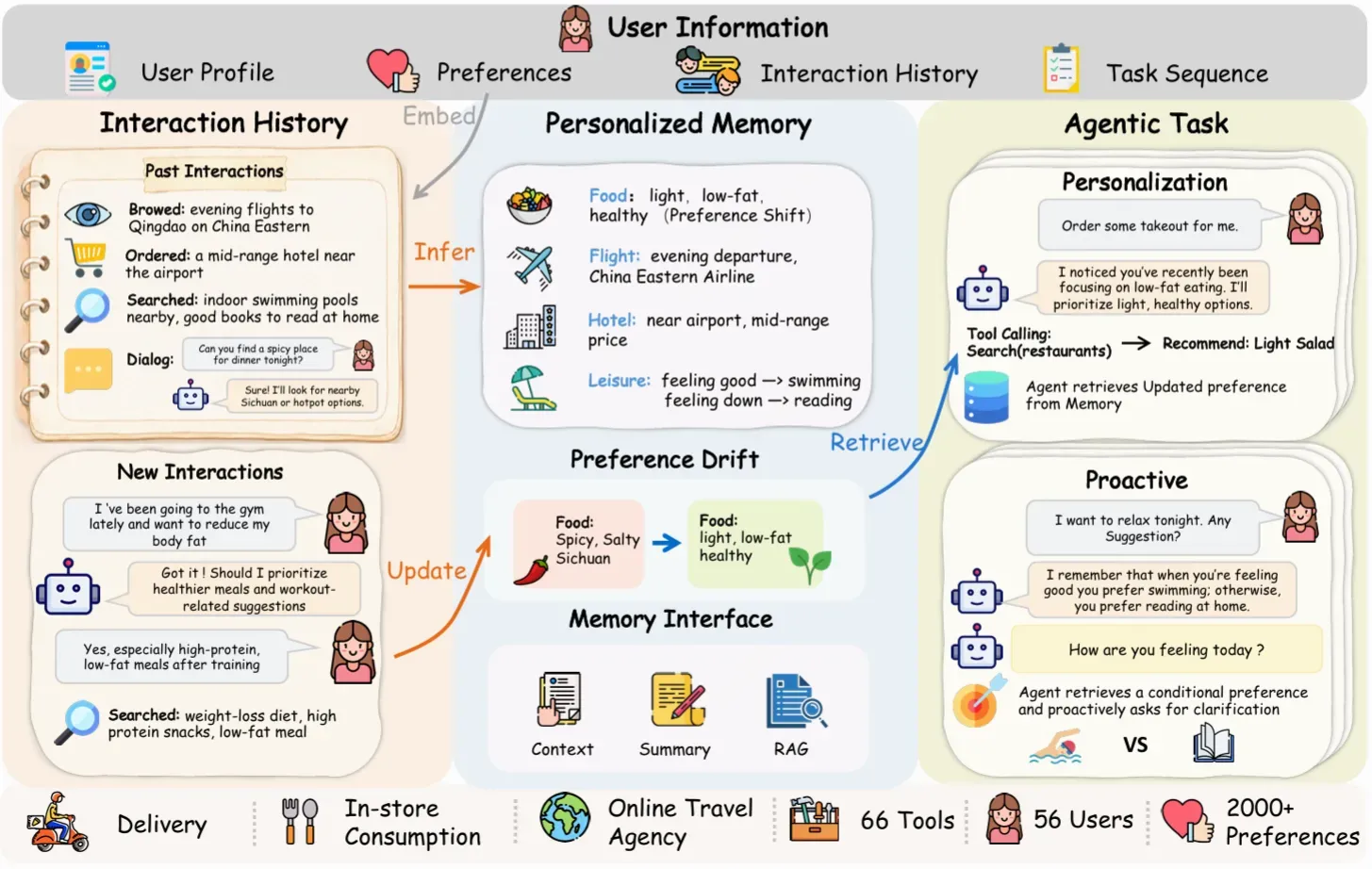
Parallel to this is the work on reinforcement learning optimization. RL remains a critical component in fine-tuning large models to align with specific goals and human preferences. Meituan’s research in this area likely focuses on making these optimization processes more efficient and effective, ensuring that models can learn from feedback more rapidly and accurately. When combined with generative recommendation systems, these optimizations can lead to more personalized and contextually aware AI interactions, significantly improving the user experience in various digital ecosystems.
Industry Impact
Meituan's research output at ACL 2026 has several implications for the broader AI industry:
- Standardization of Evaluation: By contributing to the field of large model evaluation, Meituan helps set higher standards for how AI capabilities are measured, which is crucial for industry-wide transparency and safety.
- Enhanced Problem-Solving Capabilities: The focus on competition-level math and complex reasoning paves the way for AI applications in specialized fields such as engineering, finance, and advanced data analytics, where precision is non-negotiable.
- Evolution of Recommendation Engines: The shift toward generative recommendation systems marks a departure from traditional collaborative filtering, potentially leading to more dynamic and conversational discovery experiences for consumers.
- Operational Efficiency: Optimizations in reinforcement learning can reduce the computational resources and time required to train high-performing models, making advanced AI more accessible for practical deployment.
Frequently Asked Questions
Question: What is the significance of ACL 2026 in the AI field?
ACL (Association for Computational Linguistics) is considered one of the top-tier international academic conferences for natural language processing and computational linguistics. Being published at ACL signifies that the research has undergone rigorous peer review and represents a high level of innovation and technical contribution to the global AI community.
Question: What specific areas of AI did Meituan focus on in their ACL 2026 papers?
Meituan's research covered six key areas: large model evaluation, complex process reasoning, competition-level mathematical thinking optimization, reinforcement learning optimization, and generative recommendation systems. These areas collectively aim to build a new paradigm for generative AI.
Question: How does "competition-level mathematical thinking" differ from standard AI math tasks?
Standard AI math tasks often involve basic arithmetic or common word problems. Competition-level mathematical thinking involves solving highly complex, multi-step problems that require advanced logic, the application of specialized mathematical theories, and creative problem-solving strategies that are typically found in high-level academic competitions.