Meituan Open Sources Innovative AIGC Poster Generation Framework Featuring a Comprehensive Technical Closed Loop
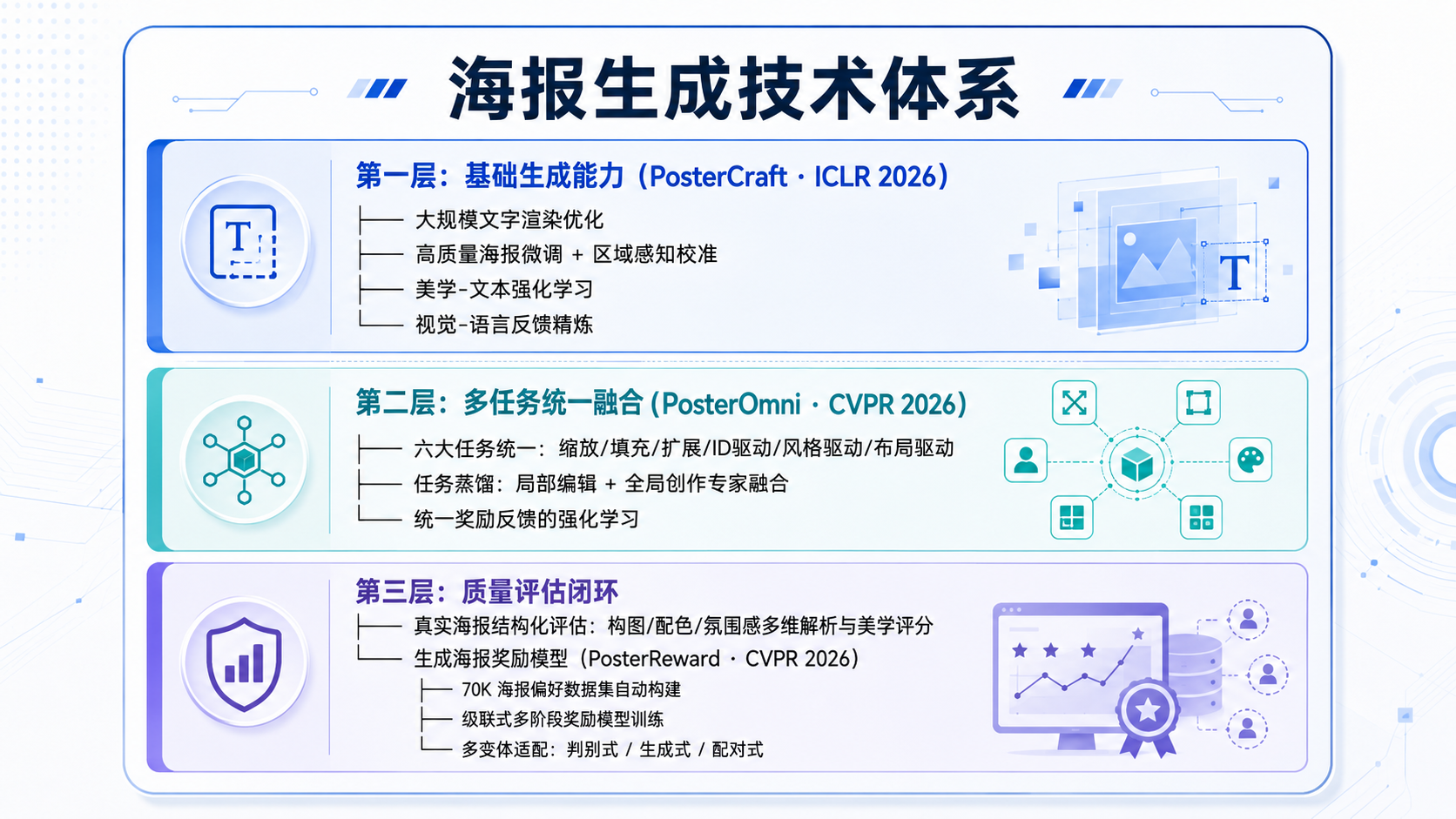
Meituan's intelligent creation team has announced the development and open-sourcing of a robust AIGC technical system designed for automated poster generation. This system is built upon a unique "Generation-Editing-Evaluation" closed loop, ensuring a streamlined workflow from initial content creation to final quality control. The technology has already seen successful implementation in high-traffic commercial scenarios, including Meituan Waimai (food delivery) and various brand IP developments. By open-sourcing this entire technical framework, Meituan provides the global developer community with a proven model for integrating generative AI into professional marketing and design workflows, marking a significant step in the democratization of intelligent design tools.
Key Takeaways
- Comprehensive Technical System: Meituan has established a full-stack AIGC framework specifically for poster generation.
- Closed-Loop Methodology: The system operates on a "Generation-Editing-Evaluation" technical cycle to ensure output quality and relevance.
- Proven Commercial Application: The technology is already deployed in Meituan Waimai and brand IP scenarios, demonstrating its practical utility.
- Open Source Commitment: Meituan has fully open-sourced the technical system to foster industry-wide innovation in intelligent creation.
In-Depth Analysis
The "Generation-Editing-Evaluation" Technical Closed Loop
At the core of Meituan's AIGC innovation is the "Generation-Editing-Evaluation" technical closed loop. This structured approach addresses the common challenges in automated design where purely generative models may lack the precision required for commercial branding.
The Generation phase focuses on the initial creation of visual content based on specific inputs. However, recognizing that AI-generated content often requires fine-tuning, the Editing component provides the necessary tools to refine layouts, text, and graphical elements. The final and perhaps most critical stage is Evaluation. By integrating an evaluation mechanism into the loop, the system can judge the quality, brand alignment, and aesthetic appeal of the generated posters. This feedback loop ensures that the final output meets the high standards required for professional marketing, effectively bridging the gap between raw AI generation and polished commercial design.
Practical Implementation in Meituan Waimai and Brand IP
Meituan's intelligent creation team has moved beyond theoretical frameworks to practical, large-scale implementation. The poster generation technology is currently active within Meituan Waimai, one of the world's largest food delivery platforms. In this context, the ability to rapidly generate high-quality, localized, and context-aware promotional posters is invaluable for merchants and platform marketing.
Furthermore, the system's application in Brand IP scenarios suggests its capability to maintain visual consistency across diverse creative assets. Whether it is for seasonal promotions or specific brand campaigns, the AIGC system allows for the scalable production of visual content that adheres to established brand identities. The successful rollout in these high-stakes environments proves the system's reliability and its ability to handle complex design requirements that involve both artistic creativity and data-driven marketing logic.
Industry Impact
Meituan's decision to open-source its AIGC poster generation system is a significant milestone for the AI industry. While many companies develop internal AI tools for efficiency, open-sourcing a complete "Generation-Editing-Evaluation" framework allows other developers and enterprises to build upon a verified architecture.
This move accelerates the shift toward Intelligent Creation in the marketing and design sectors. By providing a structured method for evaluation and editing, Meituan is helping the industry move past the "black box" nature of early AIGC tools. It sets a precedent for how large-scale platforms can contribute to the open-source ecosystem, potentially leading to standardized workflows for AI-driven visual content creation. For the broader AI community, this provides a blueprint for creating technical closed loops that prioritize both creative freedom and quality control.
Frequently Asked Questions
Question: What makes Meituan's AIGC poster system different from standard image generators?
Unlike general-purpose image generators, Meituan's system is a specialized technical framework that includes a "Generation-Editing-Evaluation" closed loop. This means it doesn't just create an image; it provides the tools to edit that image and a mechanism to evaluate its quality for specific commercial uses like marketing posters.
Question: In which specific areas has Meituan implemented this technology?
The technology has been successfully implemented in Meituan Waimai (food delivery) and for various brand IP scenarios. These applications involve high-volume, high-quality visual content needs where consistency and efficiency are paramount.
Question: Is this technology available for external developers?
Yes, Meituan's intelligent creation team has fully open-sourced the technical system, making it available for the developer community to study, use, and improve upon.