Meituan Open Sources Comprehensive AIGC Poster Generation Framework: A Technical Deep Dive into the Generation-Editing-Evaluation Closed Loop
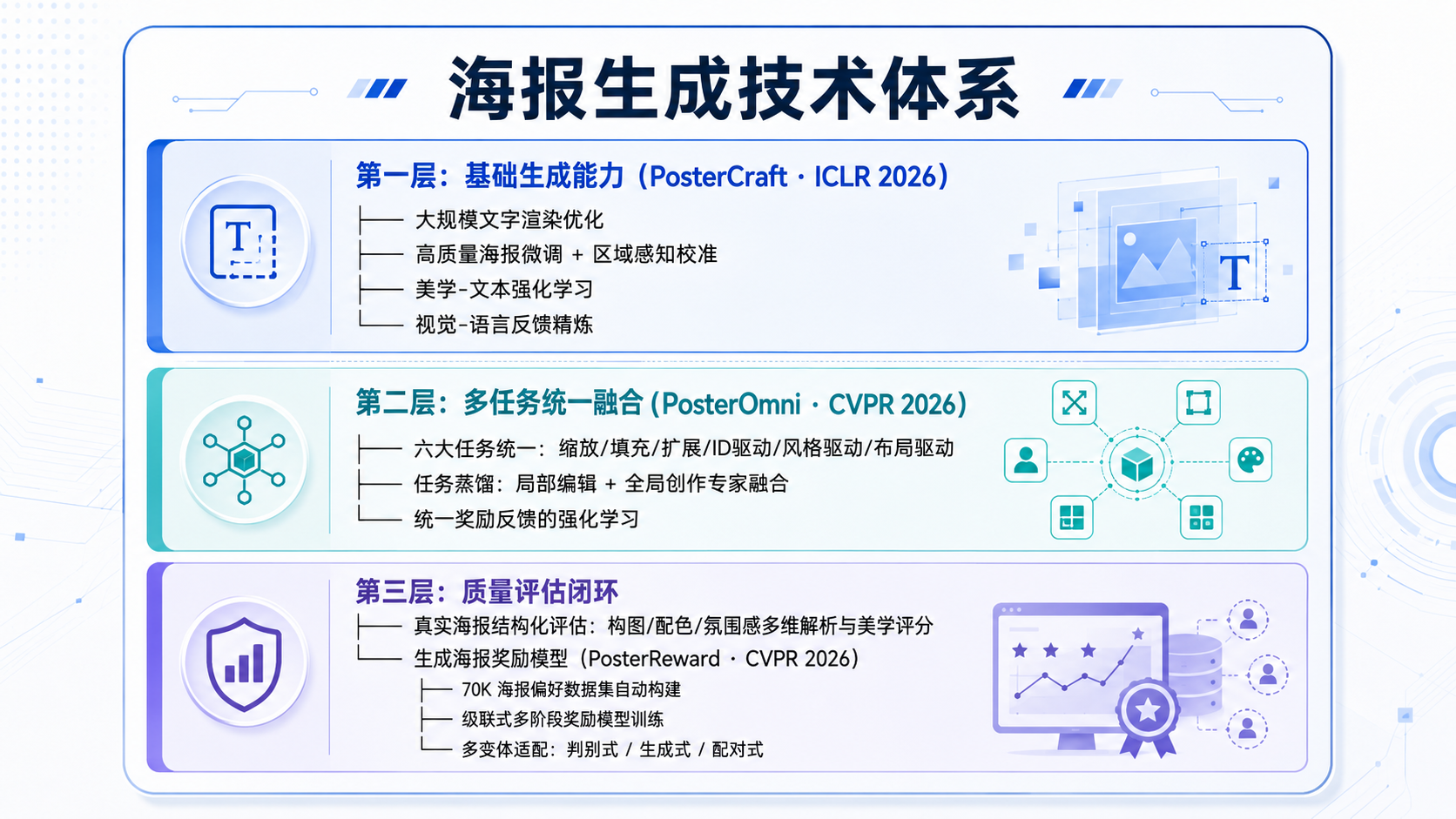
Meituan's Intelligent Creation Team has officially released and open-sourced its full-stack AIGC poster generation technical system. This innovative framework is built upon a "Generation-Editing-Evaluation" closed loop, designed to automate and optimize the creation of visual marketing materials. Currently deployed across Meituan’s core business units, such as Meituan Waimai (Food Delivery) and Brand IP development, the system demonstrates the practical utility of AIGC in high-demand commercial environments. By open-sourcing this technology, Meituan aims to contribute to the AI community and provide developers with robust tools for intelligent content creation. This article analyzes the structure of Meituan's AIGC system and its implications for the industry, highlighting how the closed-loop approach ensures quality and efficiency in automated design.
Key Takeaways
- Full-Stack AIGC System: Meituan has developed a complete technical architecture dedicated to automated poster generation.
- Closed-Loop Methodology: The system operates on a "Generation-Editing-Evaluation" cycle, ensuring a seamless transition from initial creation to final quality control.
- Real-World Deployment: The technology is already active within Meituan Waimai and Brand IP scenarios, proving its scalability in high-traffic commercial environments.
- Open-Source Commitment: Meituan has made the entire technical system open-source, allowing the global developer community to leverage and build upon their AIGC innovations.
In-Depth Analysis
The Architecture of the "Generation-Editing-Evaluation" Closed Loop
At the core of Meituan's AIGC innovation is the "Generation-Editing-Evaluation" technical closed loop. This structured approach addresses the common challenges faced by generative AI in professional design environments—namely, the need for precision, brand consistency, and quality assurance.
The Generation phase leverages advanced AIGC models to produce initial visual concepts based on specific business requirements. However, because raw AI outputs often require fine-tuning to meet strict commercial standards, the Editing component provides the necessary tools for refinement. This allows for the adjustment of layouts, text placement, and brand elements, ensuring that the final product aligns with marketing objectives.
Finally, the Evaluation phase acts as a critical gatekeeper. By implementing automated or semi-automated evaluation metrics, the system can judge the aesthetic quality, brand compliance, and overall effectiveness of the generated posters. This closed loop ensures that the system does not just produce content in a vacuum but continuously improves through a feedback-driven process, making it a robust solution for enterprise-level creative tasks.
Strategic Implementation in Meituan Waimai and Brand IP
Meituan has successfully transitioned this technology from a research phase to practical application within its most prominent business sectors. In the context of Meituan Waimai, the demand for visual content is immense. Thousands of merchants require high-quality promotional posters to attract customers, a task that would be prohibitively expensive and time-consuming if done manually. The AIGC system allows for the rapid generation of localized and personalized marketing materials, significantly lowering the barrier to entry for digital marketing.
Furthermore, the application in Brand IP scenarios highlights the system's ability to handle complex creative requirements. Maintaining the integrity of a brand's visual identity while producing a high volume of content is a significant challenge. Meituan’s framework demonstrates that AIGC can be trained to respect specific brand guidelines, ensuring that every generated poster reinforces the brand's image rather than diluting it. The success in these diverse scenarios underscores the versatility of the "Generation-Editing-Evaluation" model.
Industry Impact
Meituan's decision to open-source its AIGC poster generation system marks a significant milestone in the AI industry. By sharing a system that has been battle-tested in one of the world's largest local service platforms, Meituan is providing a blueprint for other companies looking to integrate AIGC into their workflows.
This move is likely to accelerate the adoption of intelligent creation tools across various sectors, from e-commerce to digital advertising. It shifts the focus from simple image generation to a more holistic "content engineering" approach. Furthermore, by open-sourcing the "Evaluation" part of the loop, Meituan is contributing to the critical area of AI quality control, which remains one of the biggest hurdles for the widespread commercial use of generative models. This transparency fosters trust and encourages collaborative improvement of the underlying algorithms.
Frequently Asked Questions
Question: What makes Meituan's AIGC system different from standard image generators?
Unlike general-purpose image generators, Meituan's system is built as a "closed loop" that includes specific modules for editing and evaluation. This ensures that the generated posters are not only creative but also commercially viable, brand-compliant, and ready for immediate use in professional marketing scenarios.
Question: How does the "Evaluation" phase work in this system?
The evaluation phase is designed to judge the output of the generation and editing stages. It uses specific criteria to ensure the posters meet quality standards and business requirements, effectively acting as an automated quality assurance layer before the content is deployed.
Question: Is this technology available for external developers?
Yes, Meituan has officially open-sourced the entire technical system. This means that developers and organizations outside of Meituan can access the code, study the architecture, and implement similar AIGC poster generation workflows in their own projects.