Meituan Open Sources Innovative AIGC Poster Generation System with Integrated Generation-Editing-Evaluation Closed Loop
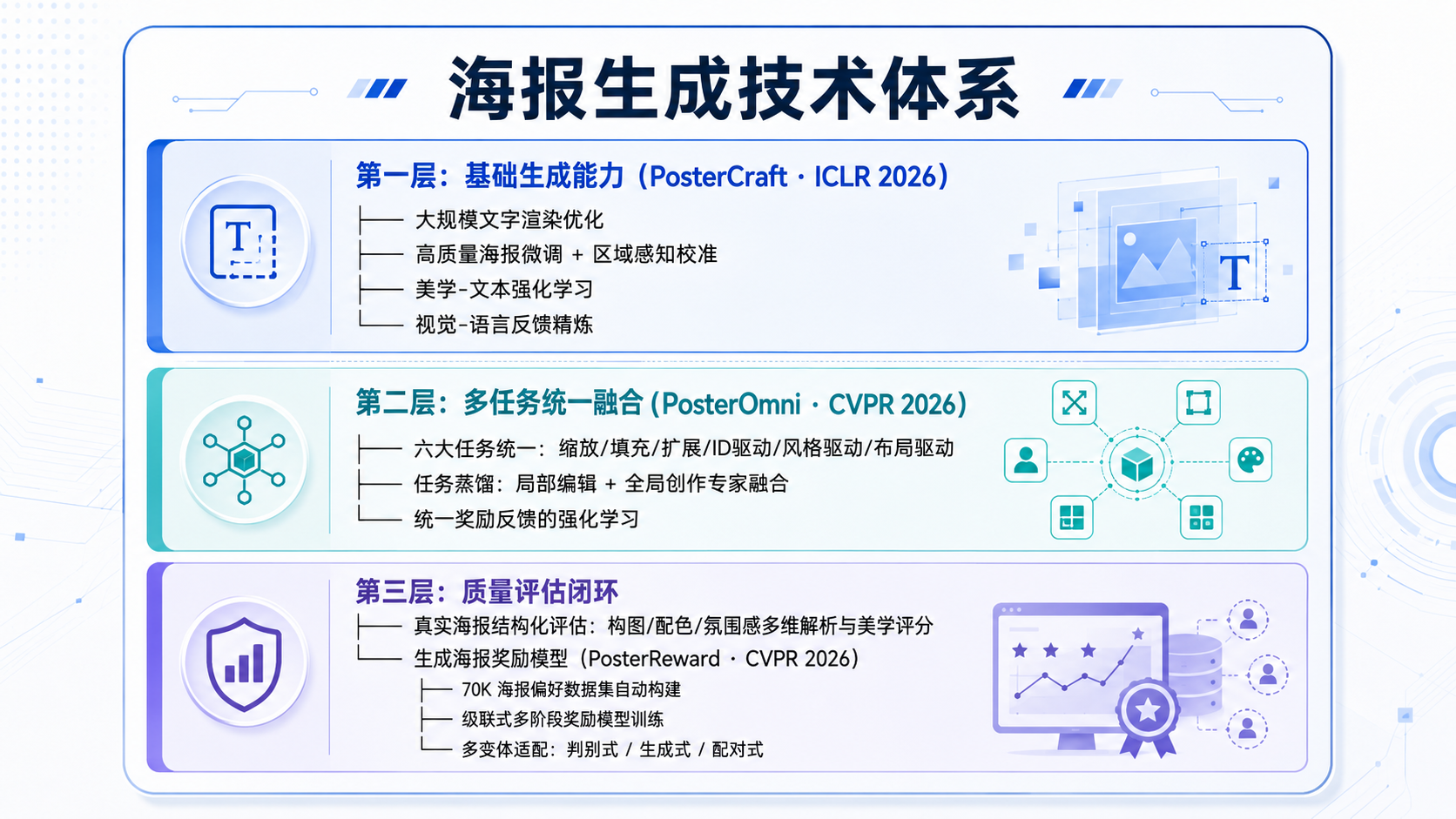
Meituan's Intelligent Creation Team has announced the development and open-sourcing of a comprehensive AIGC technical system dedicated to poster generation. This framework is built upon a unique "Generation-Editing-Evaluation" technical closed loop, designed to streamline the creative process from initial design to final quality assessment. Currently, the technology has been successfully implemented in high-traffic commercial scenarios, including Meituan Waimai (food delivery) and various brand IP projects. In a significant move for the global developer community, Meituan has fully open-sourced this technical stack, providing a robust foundation for automated visual design and marketing efficiency. This initiative highlights Meituan's commitment to advancing AIGC practical applications and fostering collaborative innovation within the AI industry.
Key Takeaways
- Comprehensive AIGC Framework: Meituan's Intelligent Creation Team has developed a full-stack technical system specifically for AIGC-driven poster generation.
- Technical Closed Loop: The system operates on a "Generation-Editing-Evaluation" workflow, ensuring a complete cycle from creation to quality control.
- Proven Commercial Application: The technology is already active in Meituan Waimai and brand IP scenarios, demonstrating its readiness for high-scale production.
- Open Source Commitment: Meituan has officially open-sourced the entire technical system, making these advanced tools available to the wider developer community.
In-Depth Analysis
The "Generation-Editing-Evaluation" Technical Closed Loop
At the core of Meituan's AIGC innovation is the establishment of a "Generation-Editing-Evaluation" technical closed loop. This structured approach addresses the common challenges found in automated design workflows. The "Generation" phase focuses on the initial creation of visual assets using generative AI, while the "Editing" phase allows for the necessary refinements and adjustments to ensure the output meets specific design requirements.
Crucially, the "Evaluation" component serves as a quality gate, utilizing automated metrics or models to judge the effectiveness and aesthetic quality of the generated posters. By integrating these three stages into a single closed loop, Meituan has created a system that not only produces content but also iterates and validates it, significantly reducing the need for manual intervention and ensuring a higher standard of visual consistency across various marketing channels.
Practical Application in Food Delivery and Brand IP
Meituan has moved beyond theoretical research by deploying this AIGC system in real-world, high-demand environments. The application within Meituan Waimai (food delivery) is particularly significant, as this sector requires a constant stream of diverse and localized promotional materials. The AIGC system allows for the rapid generation of posters that can be tailored to different merchants, cuisines, and promotional events.
Furthermore, the system's use in brand IP scenarios indicates its capability to handle complex visual identities. Maintaining brand integrity while generating large volumes of content is a difficult task for traditional design teams. Meituan's technical system demonstrates that AIGC can be trained to respect brand guidelines and IP characteristics, providing a scalable solution for brand management and marketing. The successful landing of these technologies in such prominent scenarios proves the robustness and commercial viability of the Intelligent Creation Team's work.
Industry Impact
The decision by Meituan to open-source its AIGC poster generation system marks a significant milestone for the industry. By sharing a system that has been tested in one of the world's largest local services platforms, Meituan is providing the community with a blueprint for practical AIGC implementation. This move is expected to lower the barrier to entry for other companies looking to automate their creative workflows and could lead to a surge in collaborative improvements to the "Generation-Editing-Evaluation" model.
Moreover, this release emphasizes the shift in the AI industry from general-purpose models to specialized, task-oriented systems. While large language models and general image generators have gained much attention, Meituan's focus on the specific domain of poster generation—complete with editing and evaluation tools—shows the path forward for enterprise-level AI. It highlights how AIGC can be transformed from a novelty tool into a core component of a professional production pipeline.
Frequently Asked Questions
Question: What is the core technical workflow of Meituan's AIGC poster system?
The system is built on a "Generation-Editing-Evaluation" closed loop. This means it handles the initial creation of the poster, provides tools for editing and refining the output, and includes a mechanism for evaluating the final quality to ensure it meets professional standards.
Question: In which specific areas has Meituan implemented this technology?
Meituan has successfully deployed this AIGC technology in its food delivery business (Meituan Waimai) and for various brand IP scenarios. These applications help in generating high volumes of marketing materials efficiently.
Question: Is the code for this AIGC system available to the public?
Yes, Meituan has officially open-sourced the entire technical system, allowing developers and researchers to access, use, and contribute to the technology stack.