Meituan Data Platform Unveils New BI Architecture Centered on Metrics Platform and Enhanced Computing Engines
Meituan's technical team has introduced a transformative Business Intelligence (BI) architecture. By shifting the focus to a centralized metrics platform, the company addresses critical bottlenecks in traditional BI workflows. The new system leverages automatic semantics and enhanced computing to eliminate data caliber confusion—a common issue where different users derive different results from the same data—and to drastically improve query performance. This evolution represents a significant step in Meituan's data strategy, moving away from fragmented, personalized datasets toward a unified, high-performance analytical environment that ensures data integrity and operational efficiency across the enterprise. The practice highlights the importance of semantic consistency and computational optimization in modern data-driven decision-making processes.
Key Takeaways
- Centralized Architecture: Meituan has transitioned to a new generation BI architecture that places the metrics platform at its core.
- Core Capabilities: The system relies on two primary technical pillars: automatic semantics and enhanced computing.
- Data Consistency: The new approach successfully addresses the problem of "data caliber confusion" caused by traditional personalized dataset-driven models.
- Performance Optimization: Enhanced computing capabilities have been implemented to resolve the poor query performance issues inherent in older BI platforms.
In-Depth Analysis
The Shift to a Metrics-Centered BI Framework
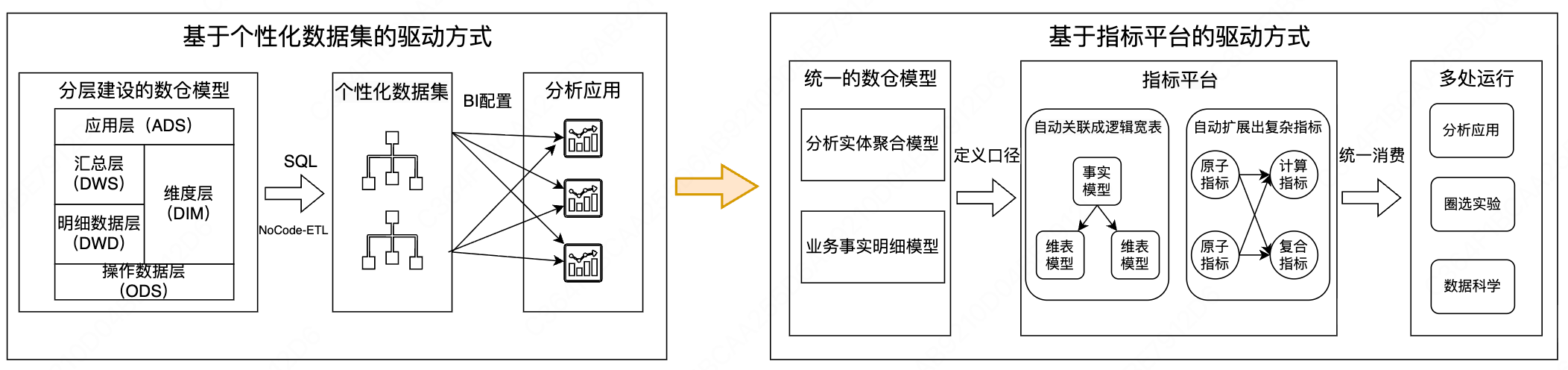
Meituan's data platform team has recognized a fundamental flaw in traditional Business Intelligence (BI) systems: the reliance on personalized datasets. In many legacy environments, individual users or departments create their own data subsets to drive analysis. While this offers flexibility, it often leads to a fragmented data landscape. Meituan’s solution is the construction of a new generation BI architecture that centers entirely on a unified metrics platform. By centralizing the definition and management of metrics, the platform ensures that there is a "single source of truth" for the entire organization. This structural shift moves the logic away from isolated datasets and into a governed, centralized layer, which serves as the foundation for all subsequent analysis and reporting.
Overcoming Data Caliber Confusion with Automatic Semantics
One of the most significant challenges addressed by Meituan is "data caliber confusion." This phenomenon occurs when different business units define the same metric (such as "daily active users" or "revenue") using slightly different logic, leading to inconsistent reports and conflicting insights. Meituan utilizes "automatic semantics" to bridge this gap. By automating the semantic layer, the platform can interpret and apply standardized data definitions across various queries. This ensures that regardless of who is performing the analysis, the underlying logic remains consistent. The implementation of automatic semantics effectively eliminates the manual errors and logic discrepancies that typically arise when users are forced to define their own data parameters in a traditional BI setup.
Enhancing Performance through Advanced Computing Engines
Beyond data consistency, query performance remains a critical pain point for large-scale BI operations. Traditional platforms often struggle with latency when processing complex queries across massive datasets, especially when those queries are driven by unoptimized, personalized data structures. Meituan has integrated "enhanced computing" capabilities into its analysis engine to tackle this issue. This involves optimizing how the system processes and retrieves data, ensuring that even complex, high-dimensional analysis can be performed with high efficiency. By combining a centralized metrics platform with these enhanced computational techniques, Meituan has created a system that not only provides accurate data but does so at a speed that supports real-time or near-real-time business decision-making.
Industry Impact
Meituan's exploration into metrics-centered BI architecture signals a broader trend in the data industry toward "Headless BI" or metrics-first platforms. For large enterprises, the cost of data inconsistency is high, leading to misinformed strategies and operational friction. By successfully implementing automatic semantics and enhanced computing, Meituan provides a blueprint for how technical teams can resolve the tension between user flexibility and data governance. This practice demonstrates that the next frontier of BI lies in the decoupling of metrics from the visualization layer, allowing for a more robust, scalable, and performant data ecosystem. As more companies face the challenges of data silos and performance bottlenecks, the adoption of centralized metrics platforms is likely to become a standard industry practice.
Frequently Asked Questions
Question: What is the primary difference between Meituan's new BI architecture and traditional BI platforms?
Traditional BI platforms are often driven by personalized datasets, which can lead to inconsistent data logic and poor performance. Meituan’s new architecture is centered on a unified metrics platform that uses automatic semantics and enhanced computing to ensure consistency and speed.
Question: How does Meituan solve the problem of inconsistent data definitions (data caliber confusion)?
Meituan utilizes "automatic semantics" within its metrics platform. This technology ensures that data definitions and logic are standardized and automatically applied across the system, preventing different users from generating conflicting results from the same data source.
Question: Why was query performance an issue in the previous system, and how was it fixed?
In traditional setups, personalized and unoptimized datasets often led to inefficient data processing. Meituan addressed this by building "enhanced computing" capabilities into their analysis engine, which optimizes query execution and improves the overall speed of data retrieval and analysis.