
Meituan Unveils LongCat-Next: A Native Multimodal Model for Real-World AI Perception and Interaction
Meituan's technical team has officially announced the release and open-sourcing of LongCat-Next, a native multimodal model designed to bridge the gap between artificial intelligence and the physical world. By treating vision and speech as "native languages," LongCat-Next represents a significant shift toward AI systems that can perceive, understand, and act within real-world environments. Alongside the model, Meituan has open-sourced its discrete tokenizer, providing the developer community with the foundational tools necessary to build sophisticated, multi-sensory AI applications. This initiative underscores Meituan's commitment to advancing the field of physical-world AI through collaborative, open-source research and development.
Key Takeaways
- Native Multimodality: LongCat-Next integrates vision and speech as core components of its architecture, treating them as "native languages" rather than secondary inputs.
- Open-Source Commitment: Meituan has open-sourced both the LongCat-Next model and its essential discrete tokenizer to foster community-driven innovation.
- Physical World Focus: The model is specifically designed to help AI systems perceive, understand, and interact with the physical world more effectively.
- Developer Empowerment: By providing these tools, Meituan aims to enable developers to build AI that can act upon real-world data in practical scenarios.
In-Depth Analysis
The Shift to Native Multimodality in AI
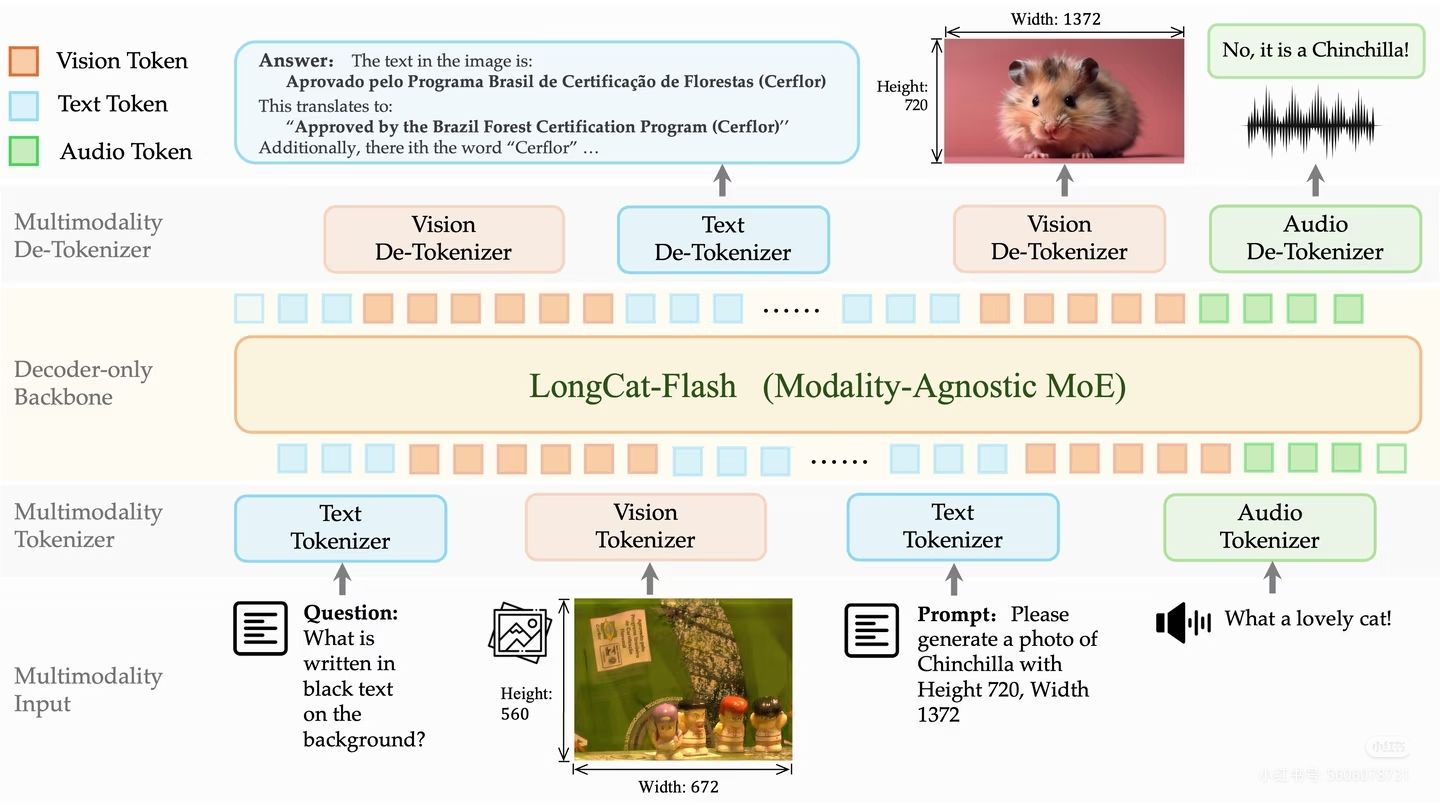
The announcement of LongCat-Next by the Meituan technical team marks a pivotal moment in the evolution of multimodal AI. Traditionally, many AI models have treated different data types—such as text, vision, and speech—as separate streams that are later fused together. LongCat-Next challenges this paradigm by positioning vision and speech as the "native languages" of the model. This native integration suggests a more unified architectural approach where sensory data is processed with the same level of depth and fluidity as textual information. By doing so, the model aims to overcome the limitations of traditional multimodal systems, potentially leading to more coherent and context-aware interpretations of the physical environment.
Open-Sourcing the Discrete Tokenizer
A critical component of the LongCat-Next release is the decision to open-source the discrete tokenizer. In the context of multimodal models, a tokenizer is responsible for converting complex sensory data—like images or audio waves—into discrete units that the model can process. By sharing this core research tool, Meituan is providing the industry with the "building blocks" of their multimodal approach. This transparency allows researchers and developers to understand exactly how the model perceives its environment. The availability of the discrete tokenizer is expected to lower the barrier to entry for other teams looking to develop similar native multimodal systems, accelerating the pace of innovation in the field of real-world AI perception.
Bridging the Gap Between AI and the Physical World
Meituan's stated goal for LongCat-Next is to advance the development of AI that can "perceive, understand, and act upon the real world." This focus on the physical world is a departure from purely digital or text-based AI applications. The ability to process vision and speech natively is essential for AI systems that must operate in dynamic, physical environments—such as robotics, autonomous delivery, or real-time service assistance. LongCat-Next represents an exploration into how AI can move beyond digital interfaces to become a functional participant in physical reality. By open-sourcing the model, Meituan is inviting the global developer community to contribute to this exploration, potentially leading to breakthroughs in how machines interact with their surroundings.
Industry Impact
The release of LongCat-Next has several significant implications for the AI industry. First, it reinforces the trend toward open-source collaboration in high-level AI research. By sharing their core model and tokenizer, Meituan is positioning itself as a key contributor to the global AI ecosystem. Second, the focus on "native" multimodality sets a new benchmark for how integrated sensory models should be designed. This could influence future research directions, pushing the industry away from modular fusion and toward more holistic architectural designs. Finally, the emphasis on physical-world interaction highlights the growing importance of AI in practical, real-world logistics and services, an area where Meituan has significant operational expertise. This release provides a technical foundation for the next generation of embodied AI and autonomous systems.
Frequently Asked Questions
Question: What is LongCat-Next?
LongCat-Next is a native multimodal model developed and open-sourced by the Meituan technical team. It is designed to treat vision and speech as native inputs, allowing AI to better perceive and interact with the physical world.
Question: Why did Meituan open-source the discrete tokenizer?
Meituan open-sourced the discrete tokenizer to provide developers with the core research tools needed to understand and build upon their multimodal approach. It serves as the essential bridge for converting sensory data into a format the AI can process.
Question: What is the primary goal of the LongCat-Next project?
The primary goal is to explore the path toward physical-world AI. Meituan aims to provide a framework that allows AI to not only understand digital data but also to perceive, comprehend, and take action within the real, physical environment.