
Meituan BI Evolution: Implementing Metric Platforms and Analysis Engines for Enhanced Data Consistency
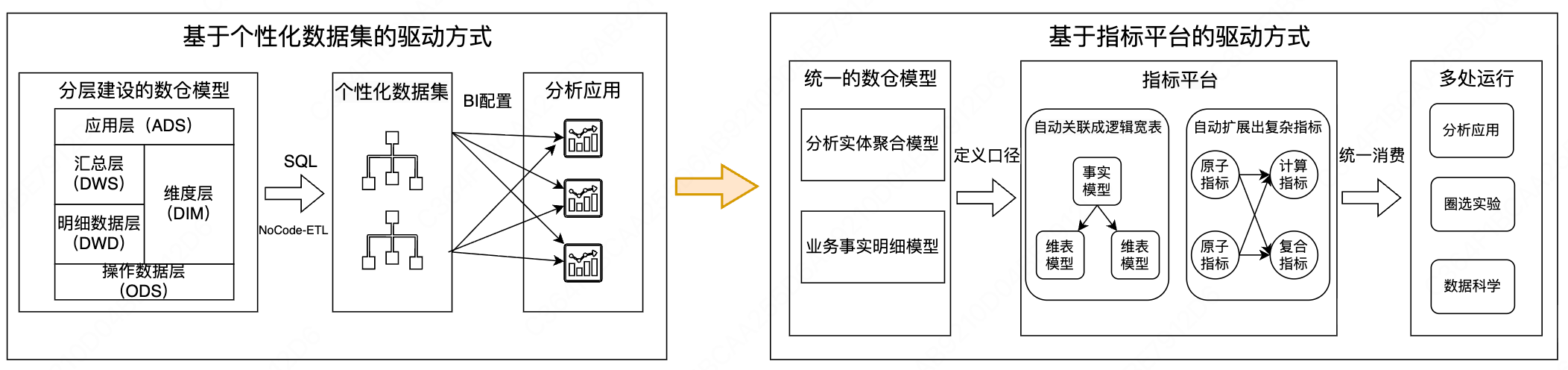
Meituan's technical team has unveiled a new generation of Business Intelligence (BI) architecture centered on a centralized Metric Platform. This strategic shift aims to resolve persistent issues found in traditional BI environments, such as "data caliber confusion" and poor query performance. By developing two core capabilities—Automatic Semantics and Enhanced Computing—Meituan has successfully addressed the limitations of personalized dataset-driven models. This new framework ensures that data definitions remain consistent across the organization while significantly optimizing the speed and efficiency of data analysis. The implementation marks a significant milestone in Meituan's journey toward a more robust and scalable data infrastructure, providing a blueprint for handling complex enterprise-level BI challenges.
Key Takeaways
- Metric-Centric Architecture: Meituan has transitioned to a new BI framework that prioritizes a centralized Metric Platform over fragmented datasets.
- Solving Data Inconsistency: The new system specifically targets "data caliber confusion," ensuring uniform data definitions across different business units.
- Automatic Semantics: This core capability streamlines the translation of raw data into meaningful business metrics without manual intervention.
- Enhanced Computing: Meituan has implemented advanced computing techniques to overcome the performance bottlenecks typical of traditional BI query engines.
- Departure from Personalized Datasets: The architecture moves away from the inefficiencies caused by traditional, siloed, and personalized dataset-driven analysis.
In-Depth Analysis
The Transition to a Metric-Centric BI Framework
Traditional Business Intelligence (BI) systems often struggle with scalability and consistency as an organization grows. Meituan identified that the root cause of many data discrepancies lies in the reliance on personalized datasets. In such environments, different teams might define the same metric—such as "daily active users" or "gross merchandise value"—using slightly different logic, leading to what is known as "data caliber confusion."
To combat this, Meituan's data platform team constructed a new generation BI architecture that places the Metric Platform at its core. By centralizing the definition and management of metrics, the platform acts as a single source of truth. This ensures that regardless of which department is running a report, the underlying logic remains identical, thereby eliminating conflicting results and improving the reliability of data-driven decisions.
Leveraging Automatic Semantics and Enhanced Computing
The success of Meituan's new architecture rests on two technological pillars: Automatic Semantics and Enhanced Computing.
Automatic Semantics addresses the complexity of mapping physical data stored in warehouses to business-level concepts. In traditional setups, this mapping is often manual and prone to error. Meituan's implementation of automatic semantics allows the system to understand the relationships between data points and business logic autonomously. This reduces the technical barrier for analysts and ensures that the semantic layer remains synchronized with the underlying data structures.
Simultaneously, Enhanced Computing capabilities were developed to solve the issue of "poor query performance." As data volumes at Meituan are massive, traditional analysis engines often face significant latency when processing complex queries across personalized datasets. By optimizing the calculation engine and building enhanced computing layers, Meituan has been able to accelerate query response times. This allows for near-real-time analysis, which is critical for a high-frequency service platform where market conditions change rapidly.
Industry Impact
Meituan's exploration into metric platforms and analysis engines sets a significant precedent for the broader AI and data industry. As enterprises move toward "Data Mesh" or "Data Fabric" architectures, the need for a centralized semantic and metric layer becomes paramount. Meituan's success in partially solving data caliber confusion demonstrates that the industry is shifting away from decentralized, ad-hoc data preparation toward a more governed and automated approach.
Furthermore, the integration of automatic semantics hints at the future of "Self-Service BI," where AI-driven layers can interpret user intent and fetch accurate data without requiring deep SQL knowledge. This evolution not only improves operational efficiency but also empowers non-technical stakeholders to leverage data more effectively, potentially standardizing how large-scale tech companies manage their internal data ecosystems.
Frequently Asked Questions
Question: What is "data caliber confusion" in the context of Meituan's BI platform?
Data caliber confusion refers to the problem where different parts of an organization use different logic or formulas to calculate the same metric. This usually happens when BI is driven by personalized, siloed datasets. Meituan's Metric Platform solves this by centralizing definitions so that everyone uses the same "caliber" for their analysis.
Question: How does Enhanced Computing improve the user experience for analysts?
Enhanced Computing optimizes the underlying analysis engine to handle large-scale data queries more efficiently. For analysts, this means significantly reduced wait times for report generation and data exploration, enabling a more fluid and interactive data analysis process compared to the slow performance of traditional BI tools.
Question: Why did Meituan move away from personalized dataset-driven BI?
Personalized dataset-driven BI often leads to fragmented data logic and performance bottlenecks. Because each user or team creates their own data subsets, it becomes difficult to maintain a single version of the truth and optimize the system for speed. Meituan's new architecture replaces this with a centralized metric-centric model to ensure consistency and performance.


