
Meituan BI Evolution: Building a Metrics-Centric Architecture for Enhanced Data Consistency and Performance
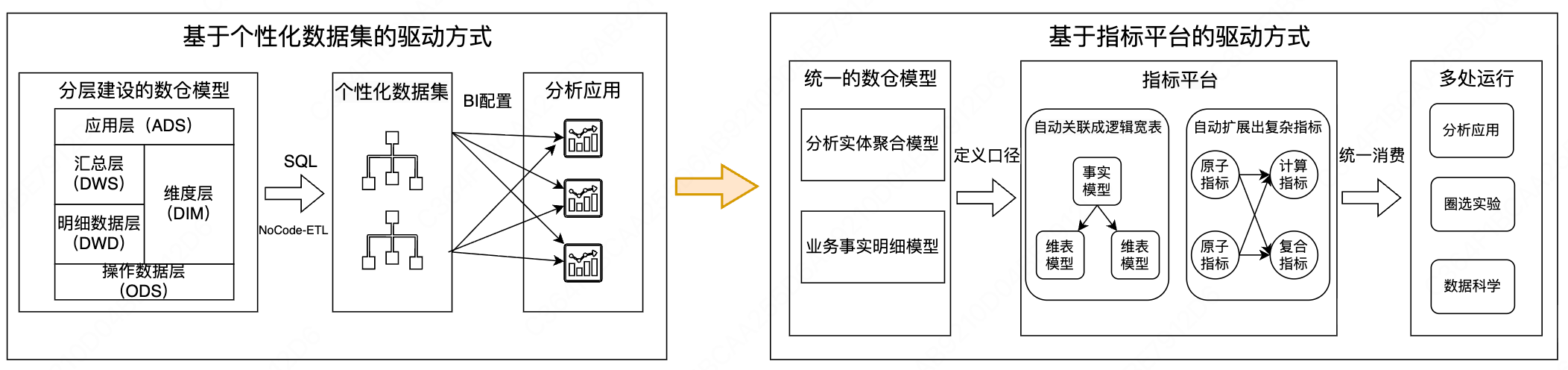
Meituan's Data Platform team has unveiled a next-generation Business Intelligence (BI) architecture centered on a dedicated metrics platform. This strategic shift addresses critical flaws in traditional BI systems, specifically the data logic inconsistencies and poor query performance caused by fragmented, personalized datasets. By developing two core technical pillars—automatic semantics and enhanced calculation—Meituan has successfully streamlined its analytical workflow. The new architecture ensures a single source of truth for data definitions while significantly boosting the efficiency of the analysis engine. This development marks a significant milestone in Meituan's efforts to provide reliable, high-performance data insights across its diverse business ecosystem, solving the long-standing 'data mouthpiece' confusion common in large-scale enterprise environments.
Key Takeaways
- Metrics-Centric Shift: Meituan has transitioned from a traditional dataset-driven BI model to a new architecture centered on a unified metrics platform.
- Core Technical Pillars: The system relies on two primary capabilities: automatic semantics and enhanced calculation to drive efficiency.
- Solving Data Inconsistency: The new approach directly addresses the problem of 'conflicting data mouthpieces' (logic confusion) that arises when users create personalized datasets.
- Performance Optimization: By utilizing enhanced calculation methods, the platform overcomes the query performance bottlenecks inherent in older BI infrastructures.
- Architectural Modernization: This evolution represents a move toward more structured, automated, and reliable data governance within Meituan's data platform.
In-Depth Analysis
Addressing the Pitfalls of Traditional BI Architectures
For years, traditional Business Intelligence platforms have relied heavily on a dataset-driven approach. In such environments, individual users or departments often create personalized datasets to meet specific analytical needs. While this offers a degree of flexibility, Meituan identified that it leads to a significant technical debt: data logic confusion. When multiple users define similar metrics—such as 'daily active users' or 'gross merchandise value'—within their own isolated datasets, the underlying logic often diverges. This results in what is colloquially known as 'conflicting data mouthpieces,' where different reports yield different values for the same business metric.
Meituan's new architecture seeks to eliminate this fragmentation by placing a 'Metrics Platform' at the heart of the BI stack. By centralizing the definition and calculation logic of key business indicators, the platform ensures that every analytical tool and user draws from the same logic. This shift moves the complexity away from the end-user's dataset and into a governed, centralized layer, ensuring that 'data consistency' is maintained regardless of who is performing the analysis.
The Mechanics of Automatic Semantics and Enhanced Calculation
To support this metrics-centric vision, Meituan focused on two critical technical advancements: automatic semantics and enhanced calculation. These are not merely incremental updates but are foundational to solving the performance and usability issues of the previous system.
Automatic Semantics serves as the bridge between raw data and business meaning. In traditional systems, mapping technical table schemas to business concepts was a manual and error-prone process. Meituan's implementation of automatic semantics allows the system to understand the relationships and definitions of data points automatically. This reduces the manual overhead required to set up new metrics and ensures that the 'semantic' meaning of a metric remains constant across different reports and dashboards. It effectively creates a self-describing data layer that simplifies how business users interact with complex data structures.
Enhanced Calculation, on the other hand, targets the 'engine' room of the BI platform. One of the primary complaints regarding traditional BI platforms is poor query performance, especially when dealing with the massive volumes of data generated by a company of Meituan's scale. When metrics are calculated on-the-fly across unoptimized datasets, latency is inevitable. Meituan's enhanced calculation capabilities optimize how the analysis engine processes these requests. By refining the calculation logic and potentially utilizing pre-aggregation or optimized execution paths, the platform can deliver complex analytical results with significantly lower latency, even as the underlying data grows in complexity and volume.
Industry Impact
Meituan's exploration into a metrics-centric BI architecture reflects a broader trend in the global data industry toward the 'Metrics Layer' or 'Headless BI.' As organizations grow, the cost of data inconsistency becomes a major bottleneck for decision-making. Meituan's success in implementing a system that solves both the 'logic' problem (through metrics centralization) and the 'performance' problem (through enhanced calculation) provides a blueprint for other large-scale technology companies.
Furthermore, the emphasis on automatic semantics suggests a move toward more 'intelligent' data platforms that require less manual intervention from data engineers. This allows data teams to focus on high-value modeling rather than constant troubleshooting of divergent report totals. For the AI and data industry, Meituan's practice demonstrates that the next generation of BI will not just be about visualizing data, but about creating a robust, automated, and semantically aware infrastructure that serves as a single, high-performance source of truth for the entire enterprise.
Frequently Asked Questions
Question: Why did Meituan decide to move away from traditional dataset-driven BI?
Traditional BI platforms driven by personalized datasets led to two major issues: inconsistent data definitions (where different users had different logic for the same metric) and poor query performance. Meituan needed a way to ensure all departments were looking at the same numbers with high efficiency.
Question: What are the two core capabilities of Meituan's new BI architecture?
The two core capabilities are automatic semantics and enhanced calculation. Automatic semantics helps in maintaining consistent data meaning and mapping, while enhanced calculation focuses on optimizing the analysis engine to improve query speed and performance.
Question: How does the Metrics Platform solve the problem of 'data logic confusion'?
By centralizing the definition of metrics in a single platform rather than allowing them to be defined within individual, personalized datasets, the Metrics Platform acts as a single source of truth. This ensures that the calculation logic for any given business indicator is unified across the entire organization.


