NVIDIA GTC Taipei at COMPUTEX: Advancing AI Factories, Scaling Infrastructure, and the Rise of Agentic AI
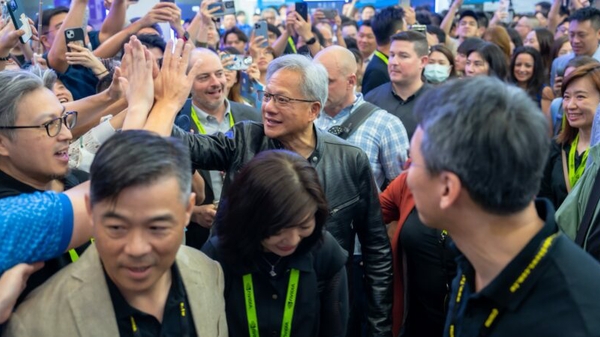
The NVIDIA GTC Taipei event at COMPUTEX 2026 has become a central hub for the global technology community, bringing together developers, researchers, and industry leaders. The event focuses on the latest breakthroughs that are currently redefining industrial standards across the globe. Key themes of the conference include the development and optimization of AI factories, the expansion of scaling infrastructure, and the emerging frontiers of agentic and physical AI. As these technologies converge, they are expected to shape the future of every industry by providing the foundational tools necessary for the next generation of artificial intelligence. This gathering highlights the collaborative effort required to advance complex AI systems and the infrastructure that supports them on a global scale.
Key Takeaways
- Global Collaboration: NVIDIA GTC Taipei at COMPUTEX serves as a primary meeting ground for the world's leading developers, researchers, and industry executives to discuss AI progress.
- Focus on AI Factories: A significant portion of the event is dedicated to the concept of AI factories and the scaling of infrastructure required to support massive computational demands.
- Evolution of AI Types: The discussions are pivoting toward specialized forms of intelligence, specifically agentic AI and physical AI, which represent the next step in autonomous systems.
- Cross-Industry Transformation: The breakthroughs highlighted at the event are designed to impact and shape every major industry, from manufacturing to research.
In-Depth Analysis
The Architecture of AI Factories and Scaling Infrastructure
At the heart of the discussions at NVIDIA GTC Taipei is the evolution of "AI factories." This concept represents a shift in how data and computation are handled, moving toward centralized, high-efficiency environments designed specifically to produce intelligence. As the demand for more complex models grows, the infrastructure supporting these factories must scale accordingly. The convergence of developers and researchers at COMPUTEX highlights the technical challenges and solutions associated with this scaling.
Scaling infrastructure is not merely about adding more hardware; it involves the intricate orchestration of networking, storage, and processing power to ensure that AI factories can operate at peak efficiency. The event emphasizes that these breakthroughs in infrastructure are the bedrock upon which all other AI advancements are built. By focusing on scaling, industry leaders are preparing for a future where AI production is as standardized and streamlined as traditional manufacturing, allowing for the rapid deployment of AI solutions across various sectors.
The Emergence of Agentic and Physical AI
Another critical pillar of the GTC Taipei event is the focus on agentic and physical AI. Agentic AI refers to systems capable of acting autonomously to achieve specific goals, moving beyond simple pattern recognition to active problem-solving and decision-making. This represents a significant leap in the capability of AI models, as they transition from passive tools to active participants in digital and industrial workflows.
Complementing this is the progress in physical AI, which integrates artificial intelligence into the physical world. This includes breakthroughs in robotics and automated systems that can interact with their environment in real-time. The synergy between agentic and physical AI is a major theme for the researchers and developers present at the event. By combining the decision-making prowess of agentic systems with the tangible capabilities of physical AI, the industry is moving toward a new era of automation. These breakthroughs are not limited to a single field but are described as "shaping every industry," suggesting a broad application that ranges from autonomous logistics to advanced healthcare robotics.
Industry Impact
The implications of the breakthroughs discussed at GTC Taipei are profound for the global AI ecosystem. By establishing the framework for AI factories and scaling infrastructure, the industry is creating a sustainable path for long-term growth. The focus on agentic and physical AI signals a shift in the market's direction, where the value of AI is increasingly measured by its ability to perform tasks and interact with the physical world independently.
For industry leaders, these developments mean that the barrier to entry for high-level AI integration is being addressed through better infrastructure. For researchers and developers, the event provides the necessary roadmap to align their efforts with the current trajectory of the industry. As these technologies continue to mature, the collaborative environment fostered at COMPUTEX ensures that the transition to an AI-driven industrial landscape is both rapid and technically sound.
Frequently Asked Questions
Question: What are the primary topics covered at NVIDIA GTC Taipei at COMPUTEX?
The event covers a wide range of topics including the development of AI factories, the scaling of infrastructure, and the latest breakthroughs in agentic and physical AI. These topics are central to how AI is currently shaping various industries.
Question: Who is participating in the GTC Taipei event?
The event brings together a global audience consisting of developers, researchers, and industry leaders who are all focused on the latest advancements in artificial intelligence and its practical applications.
Question: What is the significance of "Physical AI" as mentioned in the event updates?
Physical AI refers to the integration of artificial intelligence into systems that interact with the physical world. It is a key area of focus at the event, highlighting the move toward more advanced, autonomous physical systems and robotics.